SCRANTON – In the coming days, classrooms in the Diocese of Scranton’s 19 Catholic schools will once again be filled with students, teachers, and the excitement of a new academic year.
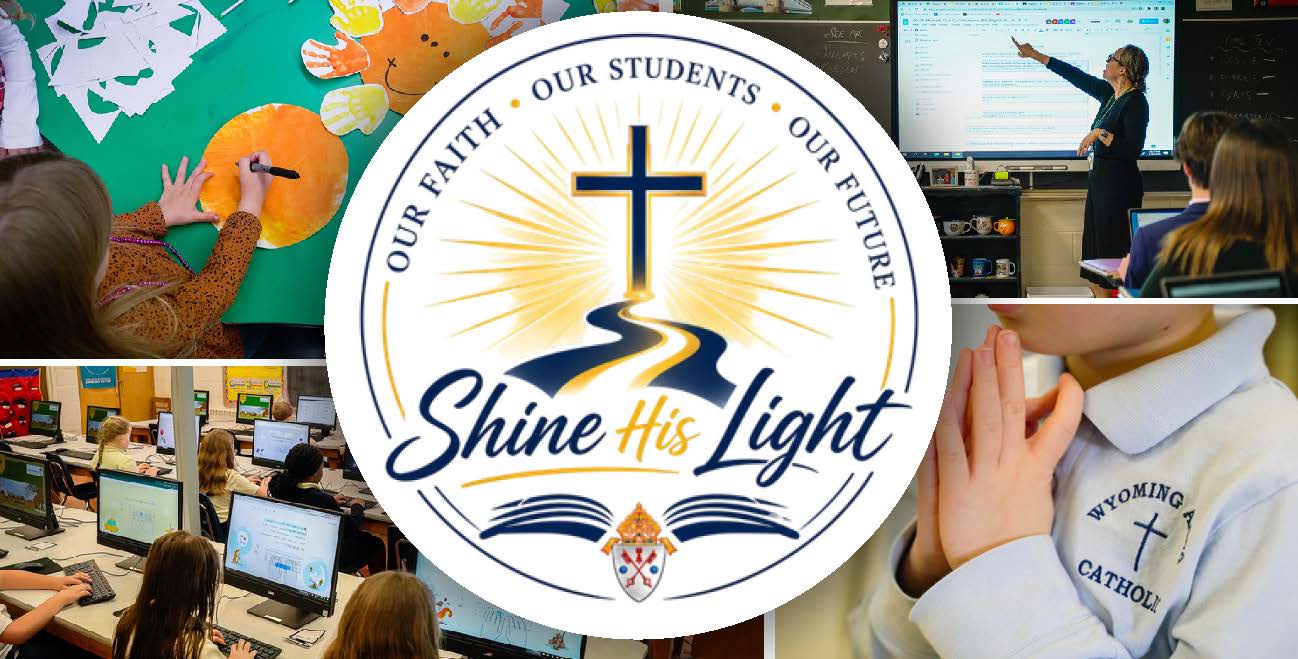
This year, a simple invitation will serve as a guiding light for the year ahead: Shine His Light.
That is the theme for the 2026-2027 school year, calling students, families, faculty, staff, and administrators to live out their Catholic faith not simply in words, but through acts of service, compassion and love.
Rooted in Jesus’ words from the Gospel of Matthew – “Let your light shine before others, that they may see your good works and glorify your Father in heaven” (5:16) – the theme will be highlighted throughout the school year through the principles of Catholic Social Teaching.
Each month, students will explore a unique way of shining Christ’s light, beginning with solidarity. Throughout the rest of the school year, they will also focus on respect for life and the dignity of the human person; care for the poor and vulnerable; call to family, community and participation; rights and responsibilities; care for God’s creation; and ending with the dignity of work and rights of workers.
The goal is not simply to teach students about the seven themes of Catholic Social Teaching, but to help them put their faith into action.
“Catholic education is about forming the whole person,” Kristen Donohue, Diocesan Secretary for Catholic Education/Superintendent said. “As we continue to implement our Catholic Schools Strategic Growth Plan, we want our students to understand their faith is not something they simply learn about in a classroom or experience at Mass on a weekend. It is something they live. Focusing on the theme ‘Shine His Light,’ we will help our students see Christ in others, serve those in need and recognize they have a responsibility to bring His light into the world.”
The implementation of the ‘Shine His Light’ initiative reflects one of the central priorities outlined in the Diocese’s “Our Faith. Our Students. Our Future” Strategic Growth Plan, which was released in January 2025 following two years of consultation. The plan outlined goals in seven areas for continued growth: Catholic Mission & Identity, Academic Excellence, Governance & Leadership, Enrollment Management, Development, Infrastructure and Financial Stability.
Now in its implementation phase, the plan is increasingly visible throughout the Catholic School System, with work underway to strengthen student support and expand development efforts.
SUPPORTING INDIVIDUAL STUDENTS
Brittany Krupski, the former principal of All Saints Academy in Scranton, has joined the Catholic Schools Administrative Office in a new role of Director of Student Services.
Krupski will oversee student data and enrollment while also working with special programs, including the ABC Council and Individualized Instruction Program.
Her work will further advance the Strategic Growth Plan’s goal of ensuring that student support services are clearly defined, assessed, and refined so that data can help inform student learning.
“Our goal has always been to look at each student as an individual and use the information we have to understand where that student is and where he or she needs to go next,” Krupski explained.
The Diocese’s use of NWEA Map Growth assessments several times throughout the school year provides educators with valuable information about individual student progress and helps teachers determine what students are ready to learn next.
“Growth data gives our teachers a valuable tool to differentiate instruction and make sure we are meeting students where they are, while helping them reach their full potential,” Krupski added.
The approach reinforces the Diocese’s commitment to academic excellence while recognizing that every student brings different gifts, needs, and challenges into the classroom.
CREATING SAFER SCHOOLS
The new school year will also bring significant investments in safety.
Diocesan Catholic schools recently received more than $1.1 million in Pennsylvania Commission on Crime and Delinquency (PCCD) safety grant funding. This money will support a wide range of projects designed to strengthen security throughout individual school communities.
The awards will support projects including new security cameras, access-control systems, door and classroom locks, exterior lighting, bollards and school resource officers.
The funds will help fulfill the Strategic Growth Plan’s commitment to infrastructure and ensuring that Catholic schools provide safe, secure environments where students can learn and grow.
NEW MODEL FOR LEARNING
The new school year will also bring a notable change to the academic calendar at Saint John Neumann Jr./Sr. High School in Williamsport, where students in grades 6 through 12 will begin a four-day school week.
With the innovative learning model, students will attend classes Monday through Thursday, with extended school days allowing the school to meet and exceed Pennsylvania’s required instructional hours.
Fridays are being reimagined as opportunities for enrichment rather than simply an additional day away from school. Students will have opportunities for academic support, tutoring, internships, college visits, field trips, guest speakers, and other experiences designed to complement classroom learning.
In line with the Strategic Growth Plan, school leaders believe the change will create new opportunities for academic and personal growth.
INVESTING IN THE FUTURE
The Diocese is also continuing to strengthen the financial foundation of Catholic education through advancement and development initiatives.
A new Diocesan advancement and development position specifically for Catholic schools has been established to assist individual schools with third-source funding, philanthropy, and fundraising.
Sandra Snyder is overseeing this effort, concentrating on growth of the Educational Improvement Tax Credit (EITC) Program, which provides scholarships for eligible students and makes a Catholic education more accessible to families.
“The EITC Program is an incredible opportunity for individuals and businesses to invest in the future of our students. By redirecting state tax dollars you’re already paying to scholarships, donors can make a Catholic education possible for more families while receiving a 90 percent tax credit,” Snyder said. “We are so grateful for the support we have already received and encourage even more people to take advantage of this opportunity.”