
ARCHBALD – In a community that is at the center of the growing debate over artificial intelligence and data centers in northeastern Pennsylvania, the local Catholic parish recently turned to Pope Leo XIV for guidance.
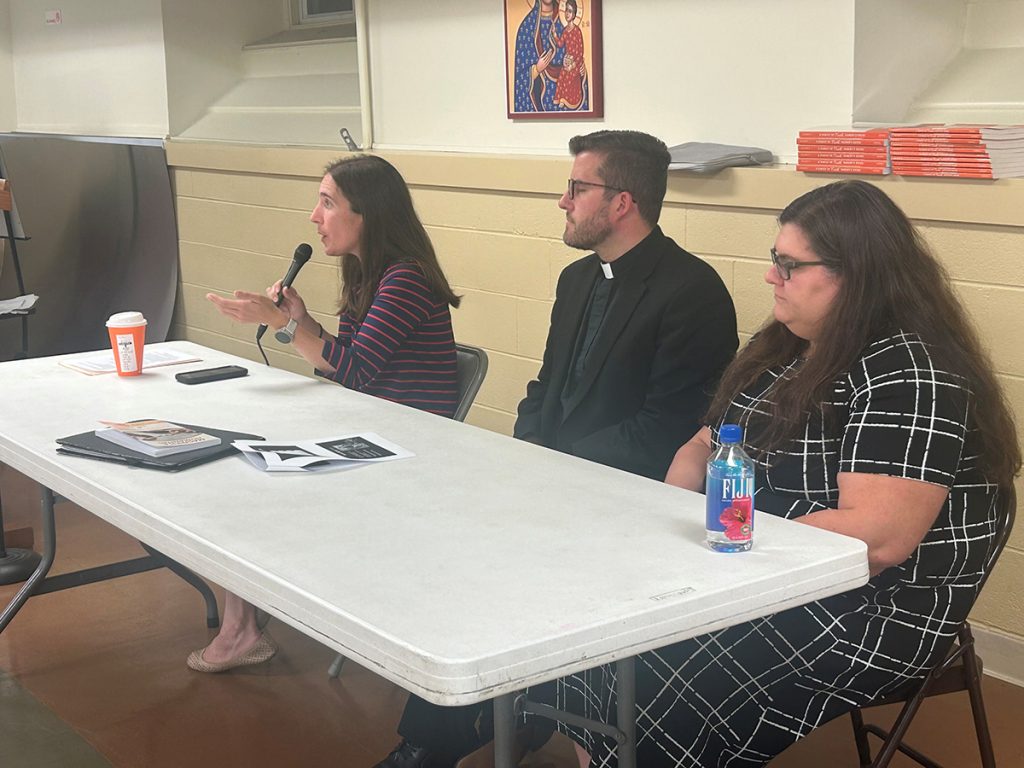
Christ the King Parish in Archbald hosted a panel discussion Sept. 23 examining the impact of artificial intelligence on faith, health and the local community, using Pope Leo’s first encyclical, Magnifica Humanitas, as its guide.
Released in May, Pope Leo’s encyclical calls the Church and the broader world to approach rapidly developing technology through the lens of human dignity, conscience, freedom and the common good.
Father Ryan Glenn, Pastor of Christ the King Parish in Archbald, said the conversation was timely because of the ongoing discussions surrounding proposed data centers in his community.
“There is a lot of debate, a lot of dialogue, a lot of discord over that in our borough where our parish is located,” Father Glenn said. “I thought it was really important for the parish, on behalf of the Church, to provide a forum where we could think, discuss and really hear from the mind and the heart of the Church.”
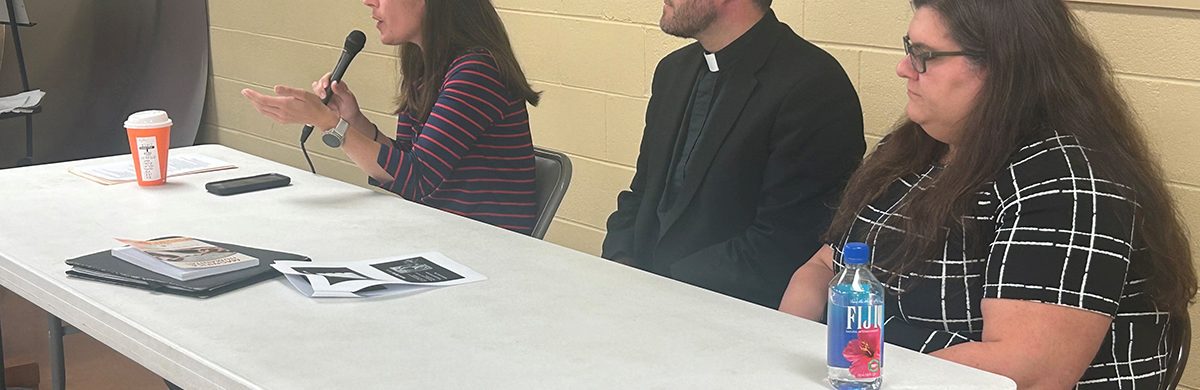
The panel brought together Father Glenn, Megan Ossont, a psychiatric nurse practitioner and assistant professor of nursing at The University of Scranton, and Megan Heeder, assistant professor of theology at the University.
The discussion explored both the opportunities and concerns surrounding AI, but repeatedly returned to a central question raised by Pope Leo.
That question is: Does technological progress ultimately make human life more human?
Heeder said that question from Magnifica Humanitas has become an important starting point for discernment because society does not yet have all the answers about where artificial intelligence will lead.
“We don’t really have a blueprint for best and worst decisions, particularly because in local communities the realities can be so different,” Heeder said.
For Ossont, the implications are especially significant in health care, where AI is increasingly being considered as a tool for diagnosis, decision-making and patient care.
“It can be a helpful tool, but it does not replace human critical thinking for diagnostics or the human experience of care,” Ossont said.
She believes that discernment will be critical for the next generation of health care professionals.
“If we can have the next generation of healthcare providers discern the appropriate use of AI, it can really help start to slow down that trend of replacing human providers with AI,” Ossont added.
Heeder noted that the Church’s concern extends beyond individual applications of technology.
“You lose the human connection behind all of this,” she said. “Providing care to someone is so much more than simply providing a diagnosis.”
That emphasis echoes Pope Leo’s broader message that AI must remain at the service of the human person rather than reducing people to data, productivity or performance.
Father Glenn said another major concern with the use of AI is that it isolates people.
“We believe that a (church) community is a response to that isolation and to that individualism,” he said, pointing to worship, the Eucharist, the sacraments, fellowship and opportunities for education and formation.
The Sept. 23 panel discussion was funded through a Social Justice Grant from the Diocese of Scranton’s Catholic Ministries Appeal. The conversation will continue with an encore presentation at 6:00 p.m. on Thursday, Oct. 22, at The University of Scranton, offering another opportunity for people (especially college students) to consider Pope Leo’s challenge in an increasingly technological age.
As Heeder left the first session, she said the gathering offered a hopeful sign.
“To be able to discuss this together in a place where questions about AI and data centers are so pressing for the daily lives of so many people, it’s just a really beautiful sign of hope,” Heeder said. “And a sign of the Church’s continued ability to speak to the realities that we’re facing now.”