
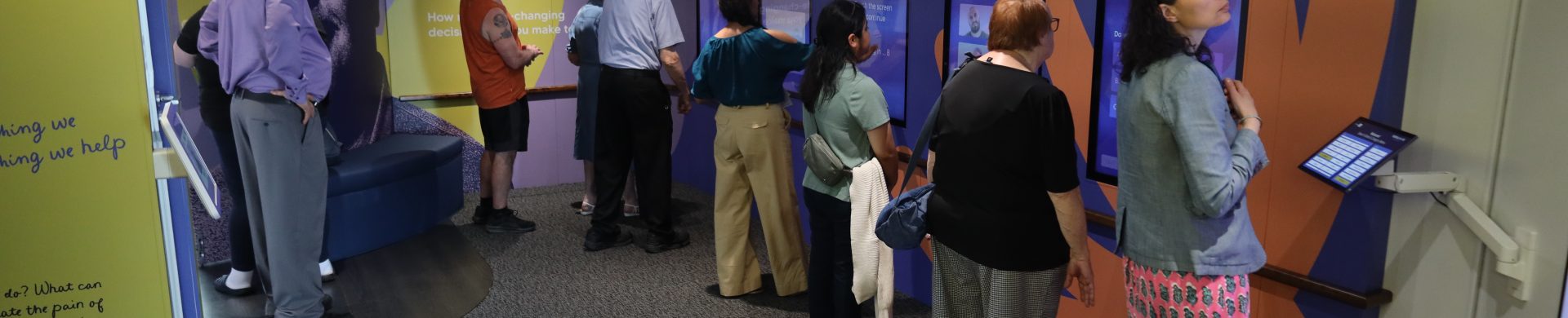
SCRANTON – More than 180 visitors stepped into stories of compassion, resilience and service when the national People of Hope Museum made a stop at Nay Aug Park on June 10.
Hosted by Catholic Social Services of the Diocese of Scranton, the traveling exhibit from Catholic Charities USA welcomed 183 visitors throughout the day, offering an interactive experience designed to foster greater understanding of poverty, community service and the dignity of every human person.
Before the museum opened, the Most Rev. Joseph C. Bambera, Bishop of Scranton, joined Catholic Social Services staff and community leaders for a brief prayer service and blessing.
“I think the most important thing this museum reminds us of is not only need, but opportunities that we are given as a people, as a community, and as a Church to respond to that need,” Bishop Bambera said. “The name of this traveling museum says it all – a people of hope.”
Housed inside a 53-foot tractor trailer, the museum featured video testimonies, storytelling opportunities and an interactive poverty simulation that challenged visitors to navigate the difficult decisions many families face each day.
Joe Mahoney, CEO of Catholic Social Services, said the exhibit offered an opportunity for visitors to better understand both the challenges facing vulnerable individuals and the ways Catholic Charities agencies respond.
“The poverty simulator was eye-opening to me,” Mahoney said. “It’s not easy being poor. There are so many hoops and hurdles to get through – what people in poverty face on a daily basis as they try to feed their families and get through the day.”
Mahoney noted that the museum’s message aligns closely with the mission of Catholic Social Services.
“I’ve been working with Catholic Charities agencies for more than 20 years,” he said. “This is what we are. We are the people of hope.”
Bishop Bambera said the museum also served as an opportunity to highlight the often unseen work of Catholic Social Services throughout the Diocese of Scranton.
“Most of the work that we do, that touches thousands of people, is done quietly,” he explained. “We don’t have cameras at a kitchen or food pantry where people go for help each day. We don’t have cameras in our shelters where people stay each night. We’re content with doing it quietly and helping the people God has placed in our care.”
Launched in March, the People of Hope will travel to more than 150 cities across the country through the first half of 2028.