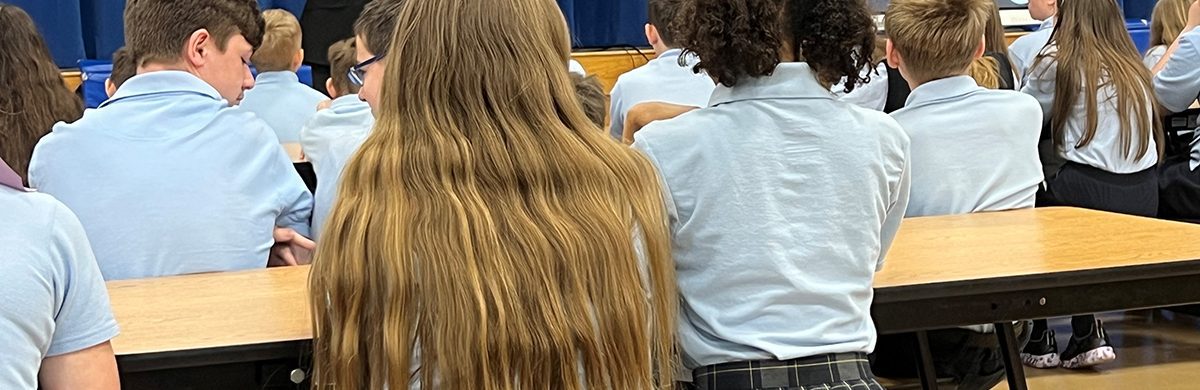
EXETER – Students at Wyoming Area Catholic School recently stepped away from their normal routines to learn a lesson that may shape their digital decisions for years to come.
On Wednesday, April 29, 2026, a representative from the Pennsylvania Attorney General’s Office led several interactive presentations to help students better understand the opportunities – and dangers – of the digital world.
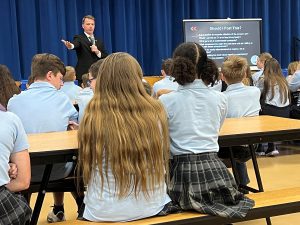
Dana Neely, a former teacher, held three different age-appropriate sessions to help students think critically about their digital footprint and the lasting impact of what they post online.
“The moment you post something, you’ve already lost control of it,” Neely told students in grades 5-8, noting that even deleted content can remain accessible or be shared through screenshots.
Students were quick to name the platforms they use – ranging from YouTube and TikTok to Snapchat and online gaming chats – and openly discussed both the benefits and risks of social media.
While the students recognized the value of social media for connection and entertainment, they also identified concerns such as cyberbullying, scams, and negative effects on mental health.
Using real-life examples, Neely emphasized that online behavior could have serious consequences, from damaged reputations to legal trouble. He encouraged students to take responsibility not only for what they share, but also how they respond to others – especially in situations involving bullying or threats.
For fifth-grade student Chloe Kelly, the message was clear.
“I thought that it was important to be careful with the internet because if you say one thing, it can ruin your entire reputation,” she said, adding that her parents help guide her online activity.
Seventh-grader Hannah Beekman said the presentation reinforced the importance of thinking before posting.
“I learned that it could be a very bad thing, what you post, so make sure you double check on what you post,” she said. “I do think about it and double check what I’m posting, and I make sure all the things I have are private for my friends and family.”
The presentation went beyond warnings, focusing also on forming habits rooted in character and good judgement – values that align closely with the mission of Catholic education.
Students were encouraged to pause and ask themselves key questions before posting things online: Is this a positive or accurate reflection of the person I am? Would I say this on TV or in front of my family? Could it be easily misunderstood? Am I posting out of anger?
As the presentations ended, Neely left the students with a simple but powerful reminder.
“It’s all about making good choices,” he said, “and helping your friends make good choices too.”