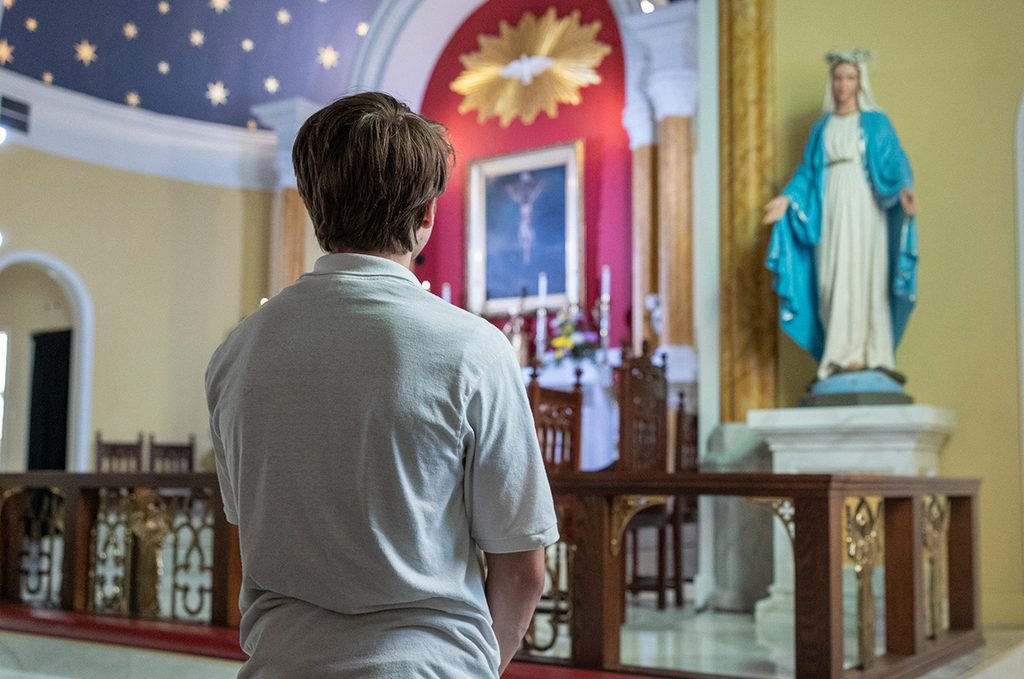
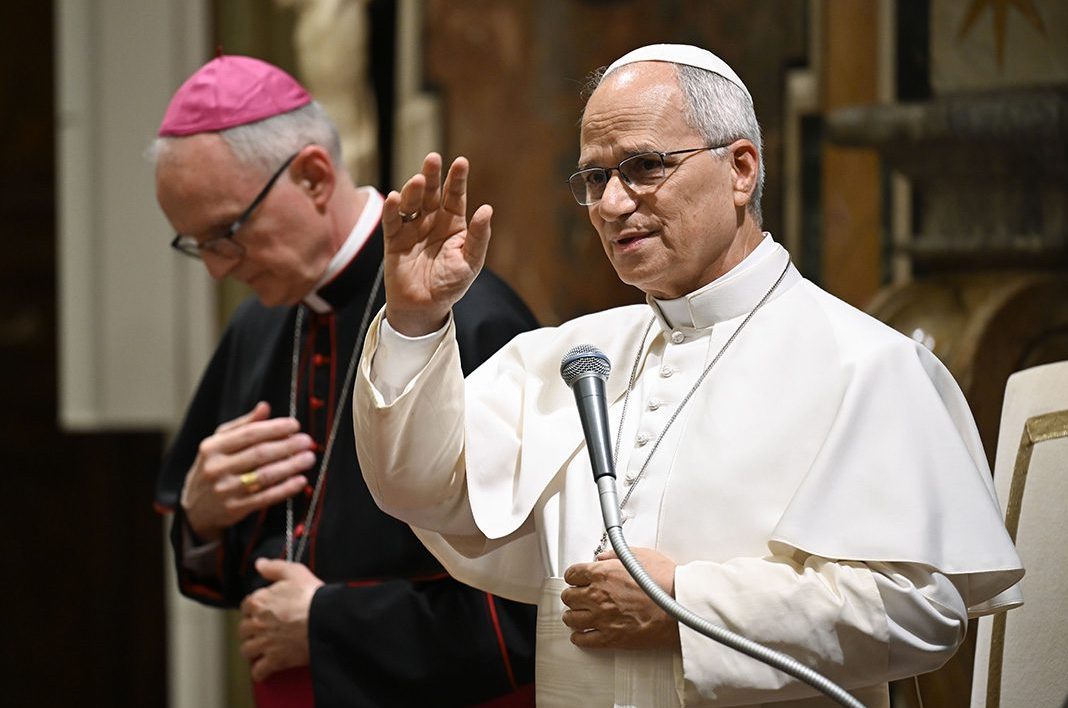
(OSV News) – Pope Leo XIV’s September prayer intention is “for the care of water” as Christians celebrate the Season of Creation.
“We see with pain so many brothers and sisters who lack clean water, who walk for miles to find it, who become ill due to its scarcity,” the pope said in a video published Sept. 1.
U.N. agencies reported in 2025 that around 2.1 billion people still lack access to safely managed drinking water, while 106 million rely exclusively on rivers, lakes, or other untreated surface water.
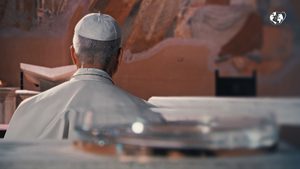
Pope Leo XIV is pictured praying his September 2026 prayer intention “for the care of water” as Christians celebrate the Season of Creation, which began Sept. 1, the World Day of Prayer for the Care of Creation. (OSV News/Pope’s Worldwide Prayer Network)
In his prayer for the month of September, Pope Leo asked the Holy Spirit to guide Christians to denounce waste and pollution and to defend “the right of every brother and sister to drink without fear and without inequality.”
“Forgive us for turning it into a commodity, forgetting that it is a universal gift, a right without borders, meant for all your children,” he prayed.
The pope’s prayer intention comes as Christians around the world celebrate the Season of Creation from Sept. 1, the World Day of Prayer for the Care of Creation, until Oct. 4, the feast of St. Francis of Assisi.
This year’s theme is “Living Water,” recalling the growing scarcity of fresh water and the inequality of access to it.
Pope Leo’s prayer intention is also a call to personal action to consume water responsibly and moderately, according to the Pope’s Worldwide Prayer Network, which is encouraging people to do what they can to take shorter showers, fix leaks, turn off faucets not in use, and to avoid polluting drains and rivers.
In the video produced by the prayer network, the pope reflected on how water is a symbol of God’s “grace and love that renews us through Baptism.” The video shows Pope Leo dipping his hand into a holy water font and making the sign of the cross as he prays inside the Church of San Pellegrino in Vatican City.
Water, he said, “quenches thirst, nourishes the earth, and heals wounds,” describing this gift as a “source of fruitfulness, freshness, and hope.”
“May our care for water be a sign of love for the Creator and a commitment to the lives of the poor, educating new generations to value and protect the Earth’s resources,” Pope Leo said. Father Cristóbal Fones, international director of the Pope’s Worldwide Prayer Network, notes that water is one of the great essentials of life.
“This prayer intention invites us to think deeply about creation, to safeguard it, and to look with God’s eyes on those who today have to walk for miles to obtain a bit of clean water, and to convert what we see into concrete actions that demonstrate moderation, care, and solidarity,” Father Fones said.
“No one should live without water, and no one should die because they lack water.”
Social
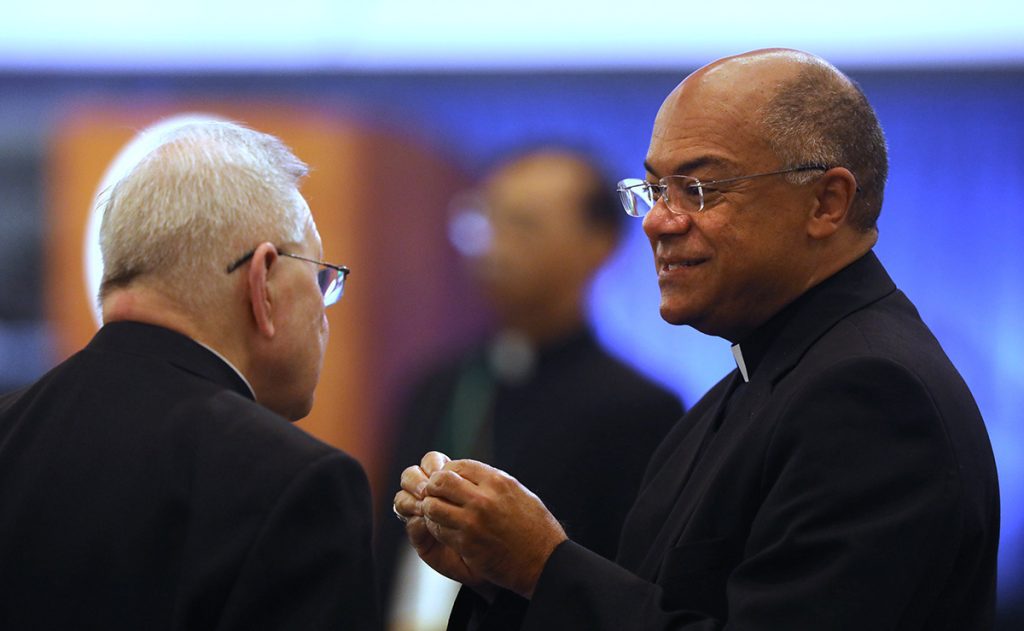
New Orleans Archbishop Gregory M. Aymond, and Archbishop Shelton J. Fabre of Louisville, Ky., speaks during a break at a Nov. 15, 2023, session of the fall general assembly of the U.S. Conference of Catholic Bishops in Baltimore. “Let us foster an economy that values the God given dignity of each person,” said Archbishop Fabre, chairman of the U.S. Conference of Catholic Bishops’ Committee on Domestic Justice and Human Development, in a statement released ahead of Labor Day, Sept. 7, 2026. (OSV News photo/Bob Roller)
(OSV News) – This year’s Sept. 7 observance of Labor Day underscores Pope Leo XIV’s call to be “builders of communion” while safeguarding human dignity, as artificial intelligence “reshapes our economy and our work,” said Archbishop Shelton J. Fabre of Louisville, Kentucky.
The archbishop reflected on the nature of work and labor in a Sept. 1 statement, speaking in his role as chairman of the U.S. Conference of Catholic Bishops’ Committee on Domestic Justice and Human Development.
First established in New York City in 1882, the annual holiday — which developed from labor activist movements of the late 19th century — “is an opportunity to celebrate workers and honor the dignity of work,” said Archbishop Fabre.
He stressed that “work is more than a way to make a living,” but rather — as Catholic teaching affirms — “a form of participation in God’s creation.”
In his message, the archbishop drew particular attention to “young people and vulnerable communities who face uncertainty in today’s economy.”
While “traditional economic indicators tell us the economy is growing,” hiring itself “has slowed, especially for unemployed workers,” and “unemployment remains high for Black workers,” said Archbishop Fabre, citing a June analysis from the Washington-based Joint Center for Political and Economic Studies.
Pointing to research from Washington University, the archbishop said that “roughly one-quarter of the labor force are low-wage workers,” with 72% percent lacking stable jobs.
In addition, the Urban Institute’s WorkRise initiative has found that people of color make up more than half of the low-wage workforce, the archbishop said.
The economic landscape directly impacts decisions on childbearing. Archbishop Fabre observed that a 2025 Brigham Young University survey found “more than 70% of Americans believe having children is unaffordable, an increase of 13 points in just the last year.”
Archbishop Fabre highlighted “widespread concern” that artificial intelligence “will lead to higher unemployment and to fewer jobs that can support a family.”
Young people, he said, “have been the most impacted so far and also experience the most anxiety about AI’s impact on their work.”
“We must listen to the experiences of workers, families, young people, and communities of color as they struggle to find stability,” said Archbishop Fabre.
The archbishop emphasized the timeliness and importance of “Magnifica Humanitas,” Pope Leo’s May 2026 encyclical, which stressed the primacy of Catholic social teaching and human dignity in the development and application of AI.
The encyclical, which affirmed longstanding papal teachings on labor and the common good, warns that “although AI presents new opportunities, it also risks normalizing a vision that is anti-human,” said Archbishop Fabre.
“Pope Leo expressly acknowledges the great risks of AI for workers: de-skilling, surveillance, rigid and repetitive tasks, reduced agency and creativity, unemployment, job insecurity, concentrated power, and increased inequalities,” said the archbishop. “Furthermore, AI relies on low-wage workers, who are often hidden and who endure harsh conditions, caught in an exploitative supply chain.”
Archbishop Fabre admitted that humanity faces a difficult and “daunting” task in grappling with AI’s sweeping impacts on labor.
Among the challenges are the need “to ensure just development of AI systems, with worker participation, transparency and accountability; to protect good jobs, offer retraining where needed, and correct the power imbalances that are exacerbated by technology,” he said.
“And yet, we have been here before,” he said, noting that Pope Leo XIII’s 1891 encyclical “Rerum Novarum,” written in response to the Industrial Revolution, has helped the Church to bring “the sacredness of the human person to the questions of work and labor for these last 135 years.”
Archbishop Fabre also referenced the USCCB’s 1986 pastoral letter, “Economic Justice for All,” which is now marking its 40th anniversary.
“Much of the teaching of this document remains relevant for our shared project in the United States,” said Archbishop Fabre. “As we confront this latest challenge, we invite all to be partners in this work.”
That partnership — spanning “the Church, government, labor unions, civil society groups, corporations, and others” — will help ensure that “innovation and development is for the benefit of all, not just a few, and that each person can contribute to the Kingdom of God through their work,” said Archbishop Fabre.
Social
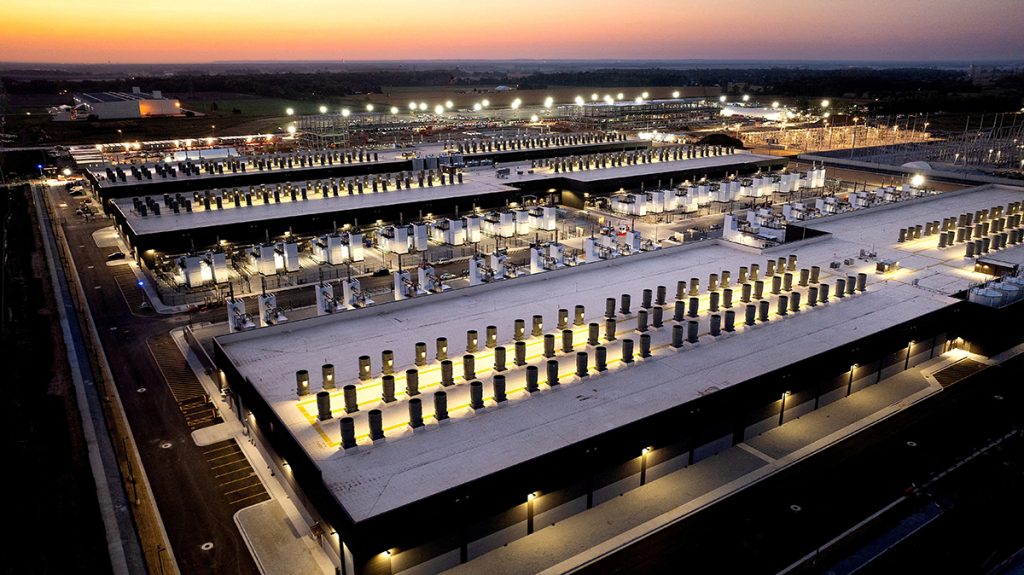
This is an elevated view of the Amazon Web Services AI data center in New Carlisle, Ind., Oct. 2, 2025. A March poll by the Pew Research Center reflected Americans’ growing suspicions of data centers, with respondents finding them “mostly bad” for the environment (39%); home energy costs (38%); and people’s quality of life nearby (30%). (OSV News photo/Noah Berger for AWS via Reuters)
(OSV News) – They’re the new neighbor a growing number of communities across America don’t seem to want – data centers.
But what are they, and why are some people opposed to them?
The multinational technology company IBM provides this definition: “A data center is a physical room, building or facility that houses IT (Information Technology) infrastructure for building, running and delivering (digital) applications and services. It also stores and manages the data associated with those applications and services.”
Which may sound harmless enough — but opponents offer several criticisms: To build, run, deliver, store, and manage the applications and data housed in a data center, its infrastructure consumes massive amounts of electricity and water, potentially driving up local utility bills. The centers can also create industrial noise and may offer very few permanent local jobs.
A March poll by the Pew Research Center reflected Americans’ growing suspicions of data centers, with respondents finding them “mostly bad” for the environment (39%); home energy costs (38%); and people’s quality of life nearby (30%).
A May Gallup poll revealed 7 in 10 Americans oppose the construction of data centers in their area.
“The speed at which these things are going up — and the drain they put on the electrical grid, and the rising cost of electricity — because of that, people ask, ‘Why do we need these in my backyard?'” said Dan Misleh, founder of Catholic Climate Covenant, a coalition of 20 national partners formed in 2006 with help from the U.S. Conference of Catholic Bishops.
Misleh outlined some of the issues through the lens of the Catholic Climate Covenant.
“One is the rising cost of electricity,” he said. “There’s a lot of communities seeing double-digit — even triple-digit — increases in the cost of electricity, rising over the next several years. That’s primarily because some of these centers are huge, and they draw enough electricity to power up to a million homes.”
Misleh continued, “There’s (electrical) grid reliability, and what happens when everyday citizens who live in these communities need more electricity in the summer or winter — and it’s not available to them, because the local AI data center is gobbling up what could be used.”
Community input may also be lacking, because a community was never asked for its opinion.
“A lot of these are sited in places where low-income people live,” Misleh said. “They don’t seem to have a say in whether or not these get sited. There’s a big one Meta is putting in, in Louisiana. And that was done pretty much under cover of darkness; it began to be built without any community input whatsoever.”
While noting gains of efficiency, Pope Leo XIV issued his own warnings concerning AI and data centers in the encyclical letter “Magnifica Humanitas” (“Magnificent Humanity”), released May 15.
“Current AI systems require enormous amounts of energy and water, significantly influencing carbon dioxide emissions, and place heavy demands on natural resources,” the pontiff observed. “It is essential to develop more sustainable technological solutions that reduce environmental impact and help protect our common home.”
The data center boom — fueled by surging interest in AI and appealing state tax breaks — has propelled the construction of almost 4,000 centers, with another 3,000 projected. According to the pro-data center American Edge Project, Virginia leads among the states, with 663 operational data centers and 595 under construction or planned.
American Edge Project is primarily backed by technology companies including Meta, the parent company of Facebook, Instagram, WhatsApp and other social media apps. It recently acknowledged mounting opposition, noting in a July 16 statement, “This weekend, organizers say more than 120 protests will take place across 37 states against data centers.”
However, while AEP agreed communities should “ask hard questions about big projects in their backyards” it also urged consideration of several points it asserted as true — including the AI race should not be lost to China; data centers contribute to local economies; voters back data centers if consumers are protected; and the federal government should set regulations, not individual states.
Can a middle ground be found?
“Data centers have become a kind of unifying issue across a lot of political lines,” Maria Fernanda Chavez, senior analyst at the Union of Concerned Scientists, told OSV News.
Founded in 1969, the UCS is a national nonprofit of nearly 250 scientists, analysts, and policy experts.
“There’s definitely momentum on both sides of the aisle — even at the federal level — to find the best way to protect regular folks from being deprioritized in favor of these larger, big tech interests,” she shared.
Such protections could come with the implementation of a tariff structure separating residential from data center use on shared power grids, requiring data centers to generate their own power, and using clean energy instead of fossil fuels.
“There’s a true cost that comes from the health impacts of having data centers powered by polluting sources of energy,” said Chavez, “and climate implications that translate into real dollar amounts for people that have to deal with them.”
A United Nations University report released in June noted that last year, global data centers used 448 trillion watt-hours of electricity, more than all but 10 countries of the world. That electricity use produced about 208 million tons of carbon dioxide — a naturally occurring greenhouse gas essential for regulating Earth’s temperature, an excess of which contributes to global warming. Producing that energy consumed about 1.2 trillion gallons of water.
President Donald Trump, speaking July 23 in support of the White House’s “Ratepayer Protection Pledge,” invoked automatic utility rate protections, while saying of data centers “you can’t fight it” and that communities will “make a tremendous amount of money.”
The pledge — which was released in March and is voluntary for tech companies to abide by — states that as demand grows, “the American people should not be footing the bill for the benefit of private companies. Instead, the data center boom should be leveraged to address affordability and benefit all American households and businesses.”
So far signed by Google, Meta, Microsoft, Oracle, OpenAI, xAI, Amazon and 23 Republican governors, the pledge has been criticized by the environmental advocacy organization Sierra Club as “a paper-thin commitment.”
“Policy typically does not move at the same pace as the big tech industry,” said Chavez — which is why “we need to make sure to build safeguards into our policy development as soon as possible, to mitigate for the potential impact data centers are bringing not just to the grid, but to communities.”
Opposition will likely come from AEP, which issued a solemn warning in a 2025 report: “Misguided state-level bills risk adding costly red tape, creating new legal risks, slowing innovation, all while undermining U.S. competitiveness.”
In a January 2026 report, the UCS suggested “The United States can meet electricity demand from data centers primarily with clean energy and simultaneously phase down fossil fuel use” and noted that “Data centers must be required to pay a fair share of the nearly $1 trillion in electricity costs attributable to them over the next 25 years.”
While the issue of data centers may seem a fresh topic in the media, “Data centers are not new,” observed Ian Moise, director of the Catholic Energies Service Platform, which supports Church institutions nationwide in advancing renewable energy, storage and efficiency projects.
“It’s not like there was no AI, and then all of a sudden there was AI; these kinds of capabilities have been developing for a long time,” he said. “Reading documents electronically, voice detect — all these things we take for granted in our technologies … all emerge or result in increased computing and energy requirements.”
In other words, this a new chapter in a longstanding environmental and economic struggle.
“This is old environmental justice, NIMBY stuff — not in my backyard,” Moise observed. “If you’re wealthy, you don’t put a data center in your backyard because it affects your property value. If you’re poor, you’re willing to, because it boosts your income a little — but then you’re living with this massive data center.”
Social
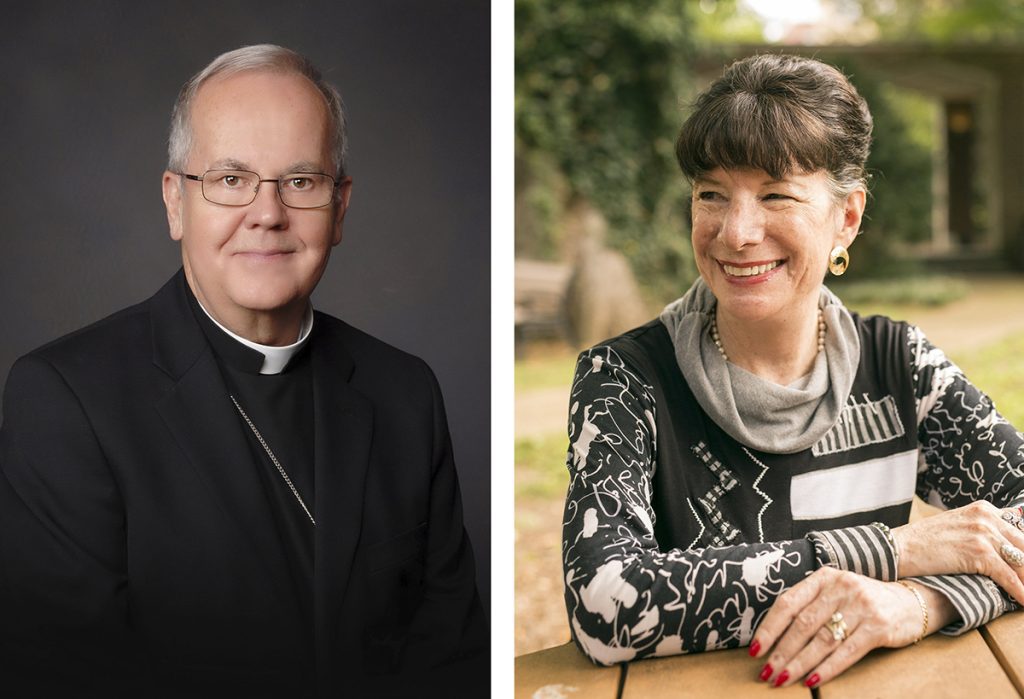
Bishop Joseph C. Bambera of Scranton, Pa., and Biblical scholar Amy-Jill Levine are pictured in a combination photo. Bishop Bambera, chair of the US. bishops’ Committee on Ecumenical and Interreligious Affairs, issued an Aug. 28, 2026, letter endorsing the appointment of Levine as president of the Catholic Biblical Association amid antisemitic backlash to the move. (OSV News photo/courtesy Diocese of Scranton/Daniel DuBois)
(OSV News) – The head of the U.S. bishop’s committee on ecumenical and interreligious affairs has expressed his robust support for biblical scholar Amy-Jill Levine, as she faces antisemitic backlash for her recent appointment as the first Jewish president of the Catholic Biblical Association of America.
The association also issued a statement of support for Levine, noting that “the vitriol of some of the comments only reinforces the need to address the problem” of antisemitism.
In an Aug. 28 letter, Bishop Joseph C. Bambera of Scranton, Pennsylvania, offered his “warmest congratulations” to Levine, who is the Rabbi Stanley M. Kessler Distinguished Professor of New Testament and Jewish Studies at Hartford International University for Religion and Peace, and professor emerita of New Testament and Jewish studies at Vanderbilt University.
Levine is also co-editor with Marc Zvi Brettler of “The Bible With and Without Jesus: How Jews and Christians Read the Same Stories Differently”and “The Jewish Annotated New Testament.”
An internationally recognized New Testament expert, Levine was named president of the CBA in July, with the association — of which she has been a longtime member — announcing the appointment in early August.
“This is a historic moment for the Association,” wrote Bishop Bambera in his letter to Levine.
Founded in 1936, the CBA works to further biblical scholarship and research in related disciplines, and to foster dialogue between Christian and Jewish biblical scholars.
Levine is the first Jewish person to lead the organization, which has previously been directed by various scholars of Roman Catholic and Protestant affiliations. Among the CBA’s past presidents were Paul J. Achtemeier and Charles H. Talbert, who were ministers, respectively, in the United Church of Christ and Baptist traditions.
Bishop Bambera highlighted Levine’s “many years of dedicated service to the CBA,” including her “important work as an editor of The Catholic Biblical Quarterly,” the association’s official, peer-reviewed journal.
News of Levine’s appointment sparked antisemitic backlash on a number of social media platforms, including X and Facebook. In an earlier interview with OSV News, Levine said she had “been denounced as a child of Satan, a baby-eater, out to destroy the Church, a supporter of Palestinian genocide, a hater of Jesus and the Church.”
She shared with OSV News one Facebook message that denounced her as a “satanic (expletive)” and called for her to be burned at the stake. Levine also said “some people have contacted the CBA office to insist that I be removed.”
Both Levine and the CBA reposted Bishop Bambera’s letter, which said that Levine’s appointment is a “fitting celebration of the genuinely interfaith character of biblical scholarship and of the many years of faithful Jewish-Catholic collaboration in the study of Scripture.”
“This spirit of collaboration reflects the vision articulated in Nostra Aetate,” said Bishop Bambera, referencing the Second Vatican Council’s declaration on the Catholic Church’s relationship with Judaism and other non-Christian religions.
The document “called Catholics to deeper understanding and mutual respect with the Jewish people,” said Bishop Bambera. “I am confident that the Catholic Biblical Association will continue to be enriched by your leadership, scholarship, and longstanding commitment to Jewish-Catholic dialogue.”
In an Aug. 26 statement posted to its website, the association addressed the antisemitic backlash to Levine’s appointment.
CBA board chair Gregory E. Sterling and executive director Archie Wright said that “unfortunately, some neither understand the role of the president nor the nature of a professional society.
“She was not elected because she is Jewish, but because she is an exceptional scholar and has played a very important role in Catholic-Jewish dialogue,” said Sterling and Wright.
They noted that in 2019 Levine became “is the first Jewish scholar to teach New Testament at the Pontifical Biblical Institute in Rome.”
The two pointed out Levine “had three audiences with Pope Francis,” and as a featured speaker for the association, she spoke both in the U.S. and Australia to address antisemitism.
“We need to live and practice the values of our faith, values that are not evident in the criticisms,” they said. “At a time when polarization is problematic, we need to stand for open dialogue and support those willing to engage in the delicate and hard work it requires. We stand by President Levine.”
Social
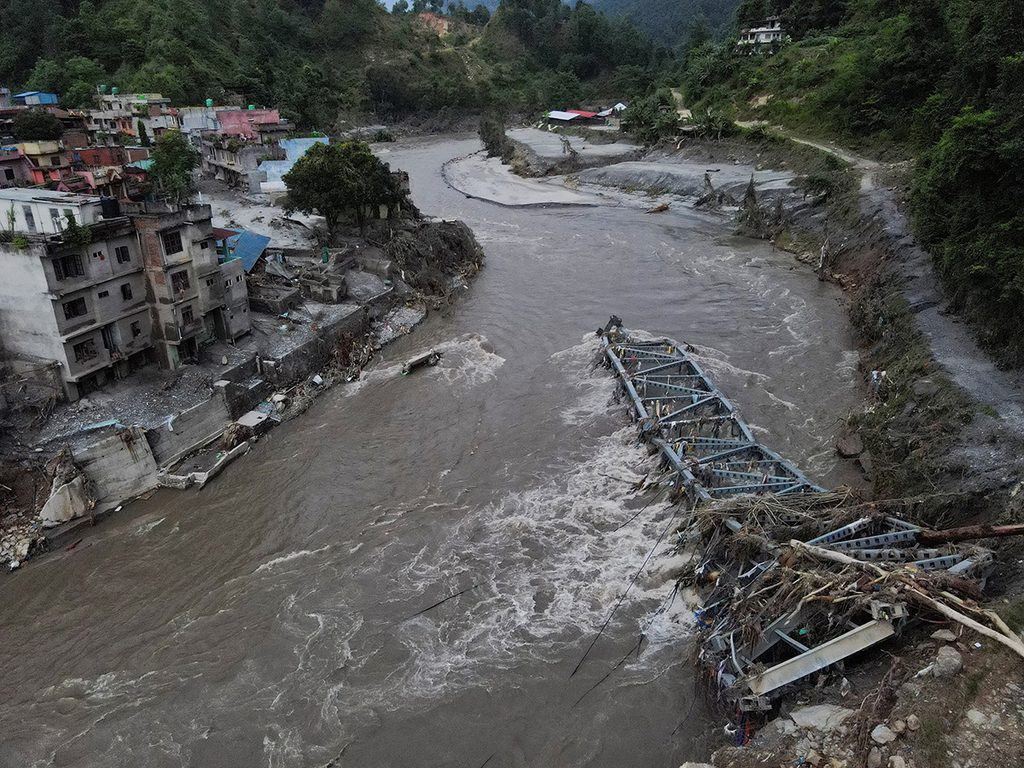
A drone view of a broken bridge and damaged houses after the flash floods and mudslide, at Devighat, Nuwakot district, Nepal, Aug. 28, 2026. (OSV News photo/Francis Mascarenhas, Reuters)
(OSV News) – A U.S. Catholic bishop is calling on the international community to step up aid after devastating torrents of water and mud raged along the Nepal-China border, killing more than 580 with over 1,900 still missing.
“As we learn more about the devastating flash floods in Nepal, I offer the prayers and solidarity of the Catholic community in the United States for our brothers and sisters impacted by this disaster,” said Bishop A. Elias Zaidan of the St. Louis-based Maronite Eparchy of Our Lady of Lebanon of Los Angeles in an Aug. 27 statement.
The disaster was triggered by a glacial collapse in Nepal’s Langtang National Park shortly after 8:30 a.m. Aug. 26, according to the U.S. Geological Survey. Debris from the 5.2 magnitude event flowed more than 60 miles, resulting in “catastrophic impacts downstream” in communities along the Trishuli and Bhote Koshi Rivers, said the agency.
Among the missing are close to 670 individuals from some 32 nations, 65 of whom are from the U.S. Many are part of tour groups and Hindu pilgrimages.
Amid rescue efforts, the region is bracing for a possible secondary flooding due to ongoing rainfall, according to the United Nations’ World Meteorological Organization.
Speaking in his role as chair of the U.S. Conference of Catholic Bishops’ Committee on International Justice and Peace, Bishop Zaidan said, “I exhort the international community to mobilize greater humanitarian assistance support for vulnerable families and communities in Nepal.”
The bishop also encouraged “long-term efforts to help affected communities rebuild their homes, livelihoods, and critical infrastructure.”
He said that Catholic Relief Services, the USCCB’s international humanitarian and development agency, is “closely monitoring the emergency.”
CRS — part of Caritas Internationalis, the Catholic Church’s global humanitarian network — is also “coordinating with Caritas Nepal and local partners to assess urgent needs and determine how best to support affected communities,” said Bishop Zaidan.
Caritas emergency aid coordinator Raju Pradhan told German Catholic news outlet KNA that “the extent of the destruction” from the flooding “is almost beyond comprehension.”
Disaster alerts the Nepalese government said it had issued “came too late” for those “near the source of the flood,” said Pradhan. “But further downstream, without these warnings, many more people would likely have lost their lives.”
Still, KNA reported, many did not fully grasp the urgency of those warnings.
Like CRS, Germany’s Freiburg-based Caritas is working with Caritas Nepal to provide assistance, including food, water, blankets and sleeping bags, as well as emergency shelters for kids and teens.
“In just one small town where we’ve been active for some time, 400 homes were destroyed,” said Pradhan, who also expressed concerns over the risk of secondary flooding.
Pradhan stressed to KNA the need for long-term relief efforts in addressing the scope of the disaster — which “will require a lot of money, which we don’t have at the moment.”
CRS has set up an emergency relief fund in response to the flooding, with donations accepted by a number of online giving platforms, as well as phone and mail.
In his statement, Bishop Zaidan expressed his gratitude for “the partnership of the U.S. government in supporting CRS’ essential work in these communities.”
He added, “We are also grateful to hear that the U.S. Department of State is closely monitoring the situation and deploying key personnel to support response efforts.”
Bishop Zaidan invoked Mary’s Immaculate Heart to “provide consolation and shelter to all those affected by this disaster.”
And, he said, “May she inspire the international community to work together, as one family, to address the urgent needs of the Nepalese people.”
Social
ST. PAUL, Minn. (OSV News) — Archbishop Bernard A. Hebda is encouraging the faithful of the Archdiocese of St. Paul and Minneapolis and all community members to be “beacons of light” as the one-year mark of a fatal shooting during an all-school Mass at Annunciation School and Church in Minneapolis is marked.
In a newsletter released Aug. 24, the archbishop wrote that Aug. 27, 2025, “continues to have an impact on so many others connected with the parish, its school, and its families.”
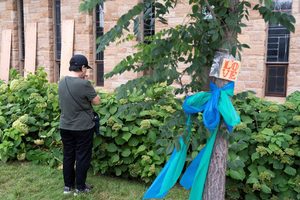
A woman prays outside Annunciation Church in Minneapolis Sept. 2, 2025, following a shooting Aug. 27. A shooter opened fire with a rifle through the windows of the parish church and struck children attending Mass during Annunciation School’s first week, killing two and wounding two dozen others in an act of violence the police chief called “absolutely incomprehensible.” (OSV News photo/Tim Evans, Reuters)
In reflecting on the loss of 10-year-old Harper Moyski and 8-year-old Fletcher Merkel that day, the archbishop wrote that “I have no doubt that their absence will be forever felt. My heart continues to go out to all who feel their loss.”
The archbishop also wrote that “I give thanks to God for the many ways in which he continues to bring healing into the lives of the others who were directly impacted by last year’s shooting. How blessed we are to have such excellent first responders and medical care here in our corner of Minnesota! I know that the Lord was compassionately working through them and through the perseverance and courage demonstrated by each of those who were injured.”
The archbishop also acknowledged an Aug. 19 gathering of parishioners and visitors in Edina, a Minneapolis suburb.
“The four speakers who shared their experiences from last Aug. 27 (an Annunciation teacher, two parents, and a student wise beyond her years) each provided proof that even in the midst of such tragedy, there can be an outpouring of compassion, a meeting of hearts, a deepening sense of solidarity, and a turning to the Lord,” the archbishop wrote.
The archbishop continued: “I am grateful that the over 300 attendees who were privileged to hear their stories, to pray with them, and to break bread with them could walk away that evening with assurances that faith had been shaken, but not destroyed. While many hearts are understandably still hurting, we can also see how they have been fortified by the love, prayers and support that have been poured out in response to this tragedy. I sure hope that the Annunciation Light Alliance, the sponsor of the event, will be welcomed into other parishes and schools for similar evenings.”
Archbishop Hebda wrote that as Annunciation’s theme for the 2026-2027 school year — “Guide our feet into the way of peace” (Lk 1:79) — was announced, the school’s Principal Matt DeBoer “explained that ‘peace is not passive — we must work towards it.'”
“That certainly resonates in my heart, and I hope that it will touch the hearts of the Annunciation community and your hearts as well,” the archbishop wrote. “We are blessed that the families of Annunciation continue to choose ‘to be beacons of light and to pursue peace.’ What a necessary and powerful reminder for our world.”
As Annunciation leaders encourage acts of service and prayer on Aug. 27, the city of Minneapolis will hold a community remembrance event at Pearl Park.
“The City and our partners invite community members to join us to plant flowers and trees, assemble care kits for youth and collect school supplies,” officials wrote on the city’s website, which includes details about Annunciation Remembrance Day.
“As we approach Aug. 27, I invite you to find a way to be a beacon of light within your own community, no matter your state in life,” Archbishop Hebda wrote in his reflection. “Our sisters and brothers at Annunciation will be spending the day engaged in acts of service, and they have invited us — in our own communities and homes — to do the same. Please join me in praying for Annunciation and for all those in need of healing as we are guided to walk together in the way of peace.”
Social
(OSV News) – The Diocese of Knoxville, Tennessee, is remembering the late Dolly Parton — whose career as a singer, songwriter, actress, businesswoman and philanthropist spanned decades — as “one of our own.”
Bishop Mark Beckman said he was “very sorry to hear of her passing” and “praying for those who are mourning her loss.”
“She made a wonderful contribution to our world and our community, and she will be greatly missed,” said Bishop Beckman.
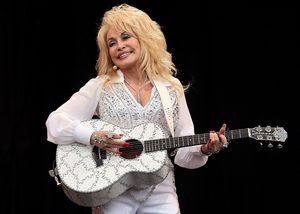
American country music star Dolly Parton performs on the Pyramid Stage at Worthy Farm in Somerset, England, during the Glastonbury Festival June 29, 2014. The iconic singer-songwriter-actress, whose glittering country music stardom was matched by her pop fame and popular parallel careers in film and TV, died Aug. 25, 2026, at age 80, after a brief battle with cancer. (OSV News photo/Cathal McNaughton, Reuters)
The 80-year-old Parton, whose many honors included 10 competitive Grammy Awards, a Grammy Lifetime Achievement Award, and a National Medal of the Arts, died Aug. 25 at Nashville’s Vanderbilt-Ingram Cancer Center, following what her representatives described as a “brief battle with cancer.”
Her late husband of 58 years, Carl Thomas Dean — whom she met at a laundromat in 1964 on her first day in Nashville — died in 2025 at the age of 82.
Born in 1946 in Locust Ridge, Tennessee, Parton — the fourth of 12 children — was “a daughter of Sevier County,” said the Diocese of Knoxville in an Aug. 26 statement.
Parton spoke candidly about the poverty she and her family had experienced, as well as the faith and the musical gifts they shared in the heart of Appalachia.
As a child, she sang in both church and on television, even debuting at the Grand Ole Opry — the self-described “mother church of country music” — in 1959 when she was just 13.
“Dolly was born and raised in the foothills of the Great Smoky Mountains,” said the Diocese of Knoxville in its statement. “She first sang in a small Pentecostal church, long before the world knew her name. She never hid her faith. It showed up in the hymns she recorded across six decades, in how openly she talked about God.”
Parton’s choir-backed cover of Don Francisco’s song “He’s Alive” — which recounts the Resurrection from Peter’s perspective — galvanized fans at the 1989 Country Music Awards, with Parton often performing and posting the song on social media over the years.
As she ascended in the entertainment industry — finding success in the fields of country and pop music, developing a career in film, launching multiple business enterprises and supporting numerous charitable efforts — Parton’s impact spread.
“Her life carried the spirit of our mountain home far beyond the Smokies,” said the Diocese of Knoxville in its statement.
In particular, the diocese noted Parton’s Imagination Library, which began in 1995 as an effort to provide books to children in Sevier County and now delivers free books to kids throughout the U.S., Canada, the United Kingdom, and Ireland. As of 2025, the library had distributed close to 305 million books in total.
Parton had launched the effort in honor of her father, a sharecropper who had never learned how to read or write.
“East Tennessee knew Dolly Parton as more than a world-famous star,” said the diocese. “We knew her as one of our own. She was shaped by these hills and these churches. Her life shows what can grow from faith, perseverance, imagination, and love for one’s neighbors — even from humble beginnings.”
Social
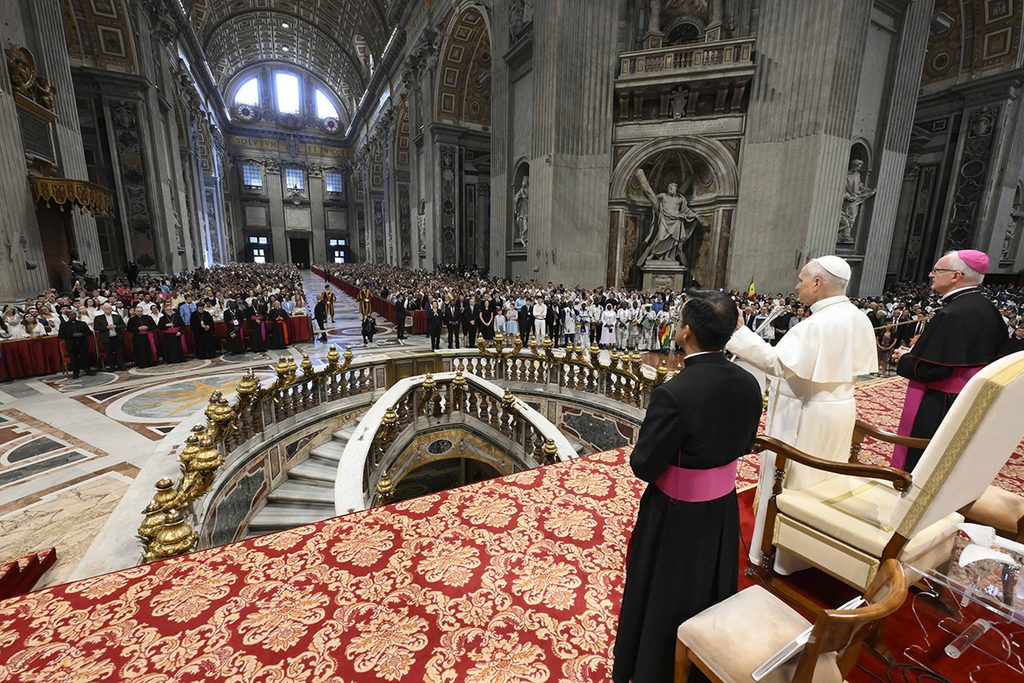
Pope Leo XIV greets visitors and pilgrims during his weekly general audience in St. Peter’s Basilica at the Vatican Aug. 26, 2026. (CNS photo/Vatican Media)
VATICAN CITY (CNS) – “Firmly rooted” in the Church’s living tradition, the liturgical reform put forth by the Second Vatican Council grew from the need for the faithful to celebrate the liturgy more “consciously and actively,” and not “as strangers and silent spectators,” Pope Leo XIV said.
“The faithful ‘cannot and must no longer remain silent and passive. Their physical presence cannot be reconciled with their spiritual absence,'” he said, quoting Cardinal Giovanni Battista Montini of Milan, the future Pope Paul VI and saint, who was attending the council’s first session at the time in 1962.
The Council Fathers expressed “a renewed awareness of the value of the liturgy,” Pope Leo said during his general audience talk in St. Peter’s Basilica Aug. 26, which focused on the constitution on the sacred liturgy, “Sacrosanctum Concilium,” and why the council sought to promote the liturgy’s reform.
It was the pope’s final catechesis dedicated to the council’s first constitution after beginning his new series of talks on the documents of the Second Vatican Council Jan. 7, so people would be motivated to reread and reflect on them rather than base their understanding of the texts on “hearsay” and the interpretations of others, he had said.
While the liturgical reform promoted by the council is “firmly rooted in the living tradition of the Church,” Pope Leo said, the reform must also be properly understood.
“A correct understanding of it also enables us to reject the abuses that occurred in certain sectors of the Church during the post-conciliar period, and which, unfortunately, still occur from time to time today, where some of the principles underlying the reform itself have been taken to extremes or misunderstood,” he said.
During the liturgy, “the memorial of the work of salvation is celebrated,” and the Church’s ritual actions also provide an opportunity “to experience a true relationship with God, coming into contact with the salvific event,” the pope said. “Since the gestures and words of the sacred liturgy are critical to realizing this experience, the participation of the faithful cannot be passive.”
The council’s reform put “at the center that which constitutes the heart of the ecclesial experience,” he said. Therefore, the intention was “to allow the liturgy to shine forth as ‘the primary source of that divine exchange in which the life of God is communicated to us.'”
Because of the importance of language, teaching and “intelligibility,” there was “the need to make the richness of the biblical texts and prayers more accessible to all the faithful, and to streamline the order of the celebration compared with that set out in the liturgical books then in use,” he said.
The liturgy is “a living entity,” he said, and it has always been subject to developments and changes over the centuries.
Therefore, it is “not surprising that the Second Vatican Council, too, with the utmost respect for the heritage of tradition, and precisely in order to make it more accessible, considered it necessary to revise the liturgical books,” Pope Leo said.
Quoting the conciliar constitution, he said, “the liturgy is made up of immutable elements divinely instituted, and of elements subject to change. These not only may but ought to be changed with the passage of time if they have suffered from the intrusion of anything out of harmony with the inner nature of the liturgy or have become unsuited to it.”
Texts and rites should thereby be “drawn up so that they express more clearly the holy things which they signify; the Christian people, so far as possible, should be enabled to understand them with ease and to take part in them fully, actively, and as befits a community,” he said, citing the constitution.
“In this way, the Christian people learn to recognize sacred realities, offer themselves with and through the hands of the priest, and become more open to receiving God’s grace,” he said in his summary to English speakers.
In his main catechesis in Italian, he said it is still the primary responsibility of bishops and priests “to safeguard and promote a liturgy which, while respecting liturgical norms, shines with noble simplicity and thus manifests the one, holy, catholic and apostolic Church.”
As the council teaches, “Liturgical services are not private functions,” but are celebrations that pertain to the whole body of the Church, “which is the ‘sacrament of unity,’ namely, the holy people united and ordered under their bishops,” he said, quoting from the constitution.
“At every celebration of the Sacraments, especially the Eucharist, let us ask for God’s help to be strengthened on our journey and to enter into a deeper relationship with the Lord,” he said in his English summary.
Social
A counselor with the St. John’s Summer Program prays in front of a statue of Mary during Eucharistic adoration July 21, 2026, at St. John Francis Regis Church in Hollywood, Md. (OSV News photo/Mihoko Owada, Catholic Standard)
HOLLYWOOD, Md. (OSV News) – Teenagers and young adults serving at St. John’s Summer Program at St. John Francis Regis Parish in Hollywood told the Catholic Standard, Washington’s archdiocesan news outlet, what draws young people to the Church and gives them a reason to stay.
They talked about friends who invited them, Catholics they admired, communities where they felt at home and moments that helped the faith become their own.
For many, those experiences helped them come to know Christ personally.
Start with an invitation
Several of the young people at St. John’s, a Catholic day camp for ages 4 to 14, said they found their way into Catholic community because someone invited them or encouraged them to come.
Betsy Pieniadz, 19, came from New Mexico after hearing about the program through people connected to St. John’s. Ethan Lansing, 18, learned about it from a friend at Ave Maria University in Florida.
Carmen Davidson, 21, arrived from Baylor University in Texas after a friend urged her to apply, while Caroline Grifone, 21, came from Pennsylvania through people already connected to the program.
Authentic relationships matter
Grifone said young people need to meet Catholics whose faith is part of their everyday lives.
“I met people who were involved in their faith but were also athletic, fun and outgoing,” she said. “That drew me in.”
Pieniadz said negative experiences with Catholics had caused her to drift away from the Church.
“Then I came here and met people who really lived their faith,” she said.
Addie Lyons, 19, said relationships can make young people more open to the faith. Rather than beginning with a theology talk, she said, counselors build friendships, have fun with the children and let questions about faith come naturally.
Build a place where they belong
Rachel Mroz, 22, became more involved in her faith through the Catholic Student Center at the University of Maryland and returned to St. John’s looking for that same kind of community during the summer.
She said young Catholics need people around them who encourage them in the faith, “other people who want to run to heaven with us.”
Rollins Don-Simmons, 19, said the community at St. John’s gave him confidence to seek out Catholic life at the University of Maryland.
For Summer Phan, 16, and Maria Northrup, 17, older staff members offered an example to follow. Both saw teenagers and college students return year after year, showing them what staying active in the faith could look like as they grew older.
Teach the faith so they can understand it
Don-Simmons said parishes hoping to reach young people should think carefully about how they communicate the faith.
“I think we can best engage young people in the faith by explaining the faith in a way that they can understand,” he told the Catholic Standard.
Carlton Costanzo, 17, made a similar point.
“Stay rooted in our tradition while also presenting it in a way that’s accessible to younger generations,” he said.
Christopher Damron, 19, said young people respond when the faith is explained clearly and in a way they can understand.
Keep Christ at the center
Many pointed to the Eucharist as central to Catholic life.
Lansing said helping young people understand what happens at Mass can change the way they see the Church.
“If more people really understood what is happening at Mass and believed it with their whole hearts, I think it would completely change the way they look at the Catholic faith,” he said.
Hannah Lawrence, 29, said friendships first brought her to St. John’s, but daily Mass and Eucharistic adoration helped transform her faith.
Help them ask what God wants for their lives
Several also spoke about faith in terms of vocation and discernment.
Pieniadz said she initially did not want to come to St. John’s, but eventually believed God was asking her to go.
“God called me to,” she said. “God told me to.” she said.
Lansing had spent months asking St. Joseph the Worker to help him find a summer job before his friend told him about St. John’s.
“This was the opportunity that opened up,” he said. “I took it as God showing me where he wanted me to be.” he said.
Costanzo is considering college, military service, the trades and priesthood as he discerns his future.
“I think every Catholic man should be open to the possibility of seminary until he’s called to marriage,” he said.
For the young people at St. John’s, faith has grown through friendships, invitations and the example of people who took their relationship with Christ seriously.
And many of them are now doing the same for someone else.
Social
Pope Leo XIV gives a blessing as he meets with participants of the XVII Annual Meeting of International Catholic Legislators Network at the Vatican Aug. 21, 2026. (OSV News photo/Matteo Pernaselci, Vatican Media)
(OSV News) – Pope Leo XIV called on Catholic legislators to establish oversight of artificial intelligence so that technology serves the common good rather than eroding human dignity.
“The world does not need an artificial intelligence that diminishes humanity; rather, it needs human intelligence enlightened by wisdom, political authority guided by conscience and technological innovation directed by charity,” the pope told members of the International Catholic Legislators Network Aug. 21.
“Only then will artificial intelligence become not a rival to humanity but a servant of the common good,” he said.
According to its website, the ICLN, which was founded in 2010, seeks to provide “Christians in public office with faith formation, expert education and a global network of peers and friends” to encourage leadership “that is committed to the dignity of every human being.”
The group held its annual meeting Aug. 20-23 in Rome to discuss the theme, “Human Dignity and Artificial Intelligence: Challenges, Chances and Control.”
Reflecting on the meeting’s theme, the pope said its focus on artificial intelligence was an “opportunity to reflect upon one of the defining questions of our age.”
“The extraordinary progress of artificial intelligence is opening horizons that previous generations could scarcely have imagined,” he said. “Yet every technological achievement also confronts humanity with a moral question: not merely what can we do, but what ought we to do?”
Citing his encyclical on safeguarding the human person in the age of artificial intelligence, “Magnifica Humanitas” (“Magnificent Humanity”), Pope Leo said humanity is facing “a decisive choice.”
Humanity, he said, can either “be tempted to construct a new Tower of Babel, where power, efficiency and control obscure the face of the human person; or we can build a civilization in which technology serves the integral development of every person.”
The pope told the Catholic legislators that their vocation places them “at the heart of this challenge” and that the Church’s social teaching can help them discern whether technology helps people “become more fraternal and responsible toward themselves and toward one another.”
“Sound legislation should encourage scientific and technological creativity while safeguarding fundamental human rights and freedoms,” he said. “It should protect users from exploitation, preserve personal privacy, ensure transparency in the use of emerging technologies and guarantee that they strengthen democratic institutions.”
Independent oversight and legal frameworks, the pope continued, are necessary guardrails for artificial intelligence that help ensure “that no single ideology or interest dictates the values embedded in artificial intelligence systems.”
Nevertheless, he added, AI’s rapid development “risks creating new forms of technological dependence, with poorer nations increasingly reliant on wealthier ones.”
Pope Leo warned that such developments “reveal a new face of the ancient temptation to domination and mastery without service.”
“We must remain vigilant in this regard, lest innovation become another vehicle for ideological or economic colonialism,” he said. “Sadly, we are presented with a subtle form of domination when algorithms decide who is seen and who remains invisible, when digital platforms shape public discourse without accountability, and when the dignity of workers is subordinated to the optimization of systems.”
For this reason, the Catholic Church proposes “the civilization of love” as a response to the “culture of power,” which would govern artificial intelligence through “charity, compassion and responsibility.”
The family, the pope said, is at the heart of this response as the first place one learns “trust before calculation, generosity before competition, dialogue before division, and love before power.”
Pope Leo encouraged the group of Catholic lawmakers to promote policies that “strengthen marriage and families,” as well as support parents in “their educational mission and enable young people to look to the future with confidence.”
“Artificial intelligence must never be allowed to erode this primary cell of society — whether by reducing persons and relationships to data and simulations, by flooding young minds with content that distorts desire, or by economic models that make family life economically precarious,” he said.