(OSV News) – For seminarians navigating years of study and discipline in formation for the priesthood, Pope Leo XIV had a reminder Sept. 3: The key to preparing for priestly ministry is focusing on “your relationship with the One who called you.”
Pope Leo encouraged future priests to use their years in seminary to ground every aspect of their formation in a deep personal relationship with God.
“The heart of the seminary experience lies here: learning to be with the Master, the Lord Jesus,” the pope said in an audience with Italian seminarians in the Vatican’s Clementine Hall.
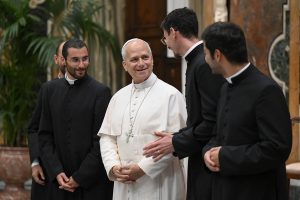
Pope Leo XIV smiles during a private audience with seminarians at the Vatican Sept. 3, 2026. Pope Leo shared his advice with the seminarians on how to best prepare for the vocation to the priesthood. (OSV News photo/Mario Tomassetti, Vatican Media)
“Every vocation is born from an intimate dialogue with God, cultivated in silence and prayer, which often occurs despite the sometimes deafening noise of the world,” the pope said.
The pope met with seminarians from two seminaries in southern Italy: the Pius XI Regional Seminary in Puglia and the Episcopal Seminary of Aversa in Campania.
“In a world so eager to celebrate self-realization, it is truly important to reiterate that none of you and none of us are here because we deserve it, but only because of a free choice made by God the Father, a sign and pledge of a gratuitous love that always anticipates us and never disappoints,” Pope Leo told the young men.
“There is no competition, no ranking, nor is it written anywhere that he chose the best: He chose those he wanted,” he added.
The pope underlined that the time spent in seminary is more necessary than ever today “in a world that is in a hurry.”
“Precisely because our times are fast-paced and noisy, we need a place and a season in life where we can learn to be present, to discern, and to allow ourselves to be formed without taking shortcuts,” he said. “The seminary is not a postponement of the mission, but rather a prerequisite for it.”
He encouraged them to remember that they are being prepared to be sent to communicate the newness of life in Christ to the world “to those families who are barely getting by, to young people in their 20s who pack their bags to look for work, to the elderly living alone, to the marginalized, and to those who have lost their sense of purpose.”
“The priest is sent to all people so that he may proclaim to all the beauty of faith in Jesus Christ, the good news of our salvation,” he said.
Pope Leo thanked the young men for their “yes” to God’s call, adding “your very presence in the seminary is a sign of hope for the entire Church.”
“As I look at each of you, I contemplate the wonder of God, who never tires of whispering to the hearts of young people the beauty of giving one’s life for him and for the Church,” the pope said.
Social
(OSV News) – On Sept. 11, 2001 – the date of the worst terrorist attack in American history, when four hijacked jets became deadly weapons — there was no shortage of heroic first responders who confronted danger instead of avoiding it.
Many Catholic clergy and religious ministered among them – including priests, friars and sisters. Some of their stories are perhaps less well known – but the help and healing they also brought to those who experienced the devastating losses of 9/11 are worth remembrance as the 25th anniversary approaches.
“I remember like it was yesterday,” Father Brian Jordan told OSV News.
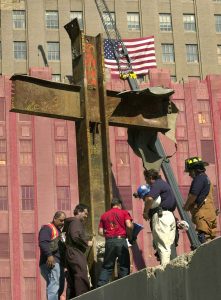
Franciscan Father Brian Jordan, standing with laborers and emergency workers Oct. 5, 2001, blesses a 17-foot-tall cross formed by steel beams and recovered from the rubble of the World Trade Center in New York brought down nearly a month earlier in the 9/11 terrorist attacks. (OSV News photo/Kathy Willens, Reuters)
A Franciscan friar of his order’s Province of Our Lady of Guadalupe, the priest is the current pastor of the Church of St. Francis of Assisi on West 31st Street in New York City.
That morning, Father Jordan was at New York Presbyterian Hospital. Hearing of the strike, he returned to the Franciscan friary on 31st Street — attached to St. Francis of Assisi Parish — where he lived, determined to go to the disaster site.
Uncertain what he might find — but expecting both victims and perpetrators — he retrieved holy water and a pair of brass knuckles. “I said, ‘I’ll bless them with one hand, and just in case there’s any bad guys, I’ll bless them with the other hand.”
Before he left, another friar had devastating news: Their fellow Franciscan, Father Mychal Judge, was dead. Still, Father Jordan knew what Father Judge would want him to do — go help.
After stopping at Manhattan’s St. Vincent’s Hospital — the only patients were those being treated for dust inhalation after the Twin Towers collapsed — Father Jordan headed to ground zero, encountering a police captain he knew.
“He gave me a mask; he gave me a pair of gloves. He said, ‘Father, put the mask on, put on the gloves and go to work.’ And so I went up and down for a couple blocks, and there were bodies and body parts. I just blessed them all.”
On Sept. 16, Father Jordan said his first Mass at ground zero; he would continue to have Mass there for nearly 10 months.
Then on Sept. 23, there was a surprise.
“A big burly construction worker from Local 731 comes up to me and says, ‘Hey, Father, you want to see God’s house?'”
“So we go into the ruins of 6 World Trade Center,” recalled Father Jordan. “I had like 25 fighters next to me, and the construction worker says, ‘What do you see there, Father, right in the middle?’ I said, ‘I can’t believe this … I see a cross.'”
Two intersecting steel beams had been sheared into a crucifix, as 6 WTC was struck by debris from the collapse of the North Tower.
The stunning artifact became known as the “Cross at Ground Zero” and eventually became part of the 9/11 Memorial & Museum collection.
It was excavated, placed on a concrete abutment, and blessed. On Oct. 7, a Mass was celebrated near it, at the corner of Vesey and West streets.
“It gave a boost of energy to people at the time,” explained Father Jordan, who wrote his own memoir — “The Ground Zero Cross” (Xlibris) — and was given the distinction of being its unofficial guardian.
On 9/11, Sister Margaret O’ Brien, a Sister of Charity working in the Sisters of Charity Health Care System, was in her office at the Bayley Seton Hospital on Staten Island, briefing a colleague just returned from vacation.
“Her secretary came in and said, ‘I just got a call. A plane went into the World Trade Center,'” Sister Margaret remembered. “We went down the hall to a window we could see from, and we realized, this is going to be bad.”
The sisters quickly prepared to go to St. Vincent’s Hospital “to set up the emergency and trauma response,” explained Sister Margaret. “And the doctors were there, the stretchers were there, all waiting at the entrance — but after a short while, nobody came.”
Sister Margaret worked the hotline in the sisters’ hospital command center, taking calls from people searching for loved ones.
“The telephone was really hard,” she reflected. “Because people would give you a name and you’d check your list, and you didn’t have them. … It was very, very emotional the whole time — and for the first couple of days, the phone just kept ringing.”
Nonetheless, she found a reason to be thankful.
“I remember being so grateful I had something to be part of, to help,” said Sister Margaret, now assistant to the president of the Sisters of Charity New York.
Trauma was a persistent feature of the sisters’ shifts — especially for one colleague who assisted first responders sent for care from recovery work at ground zero.
“Sometimes people would talk, but most of the time they just couldn’t,” Sister O’Brien explained. Her colleague “remembered one person — he was very quiet — and then he said, ‘I can take the arms and the legs. But when I turned over a stone and saw a face, just a head, flattened into the ground.'”
“He lost it,” said Sister O’Brien.
Father Stephen McGraw — at the time a priest in the Diocese of Arlington, Virginia, just outside of Washington — also saw unspeakable sights.
On the morning of 9/11, he had just concluded a school Mass — and was on his way to Arlington National Cemetery for a burial when he missed the appropriate exit.
“I remember about 9:35, I’m just sitting in this traffic, right in front of the Pentagon.”
He was distressed that he would now almost certainly be late for the burial.
“And then without warning, the plane came roaring right over the tops of our cars — very, very low,” Father McGraw said. “I can’t say which of my senses was most impacted — there was the vibration and roar of the plane, and a light pole was clipped and fell over on a taxi driver’s car just a few cars away.”
Looking to his right, he watched as American Airlines Flight 77 plowed into the Pentagon.
“I saw it crashing, disappearing, with a huge fireball billowing out from the building in the moment after the crash.”
Because his radio wasn’t on to hear what was happening in New York City, “I just assumed it was a terrible, tragic accident.”
Commuters came to a frozen stop, and Father McGraw leapt from his car — stole, anointing oils and prayer book in hand — vaulting the highway guardrail to the lawn of the Pentagon to reach the victims.
“Basically, my message to them was, ‘Jesus is with you.’ That’s what I kept saying to the several victims I attended,” said Father McGraw.
One victim who identified himself as Catholic — Juan Cruz, the civilian accounting division manager in the Office of the Administrative Assistant for the Secretary of the Army — was given the sacraments.
Another — Antoinette Sherman, an Army budget analyst, who later died — lay face down on the grass, severely burned on her back, a single shoe on one foot. Father McGraw gently removed it at her request.
“Then she just said, to perhaps whomever could hear her, ‘Tell my mother and father that I love them.’ And so I assured her that I would.”
Father McGraw — now a missionary priest and church pastor in the Diocese of Arlington’s Bánica Mission in the Dominican Republic — doesn’t think his unplanned detour was a coincidence.
“I had a strong sense of divine providence,” he told OSV News. “I was meant to be there.”
The attacks killed 2,977 people and injured thousands more: 2,753 people died in the Twin Towers collapse, brought down by two hijacked commercial airliners; 184 people died when a third hijacked airliner flew into the Pentagon; and 40 people died in Shanksville, Pennsylvania, when passengers and crew fought back against hijackers on a fourth airliner, forcing it to crash in a field near Shanksville. Officials believe the fourth plane was headed for the U.S. Capitol or the White House.
The 25th anniversary of 9/11 will not only be a time of solemn remembrance — it also leaves some longing for the national unity Americans once demonstrated.
“We saw evil at its worst,” declared Father Jordan. “But we also saw goodness at its best. New York City came together. The country came together. The world came together.”
Social
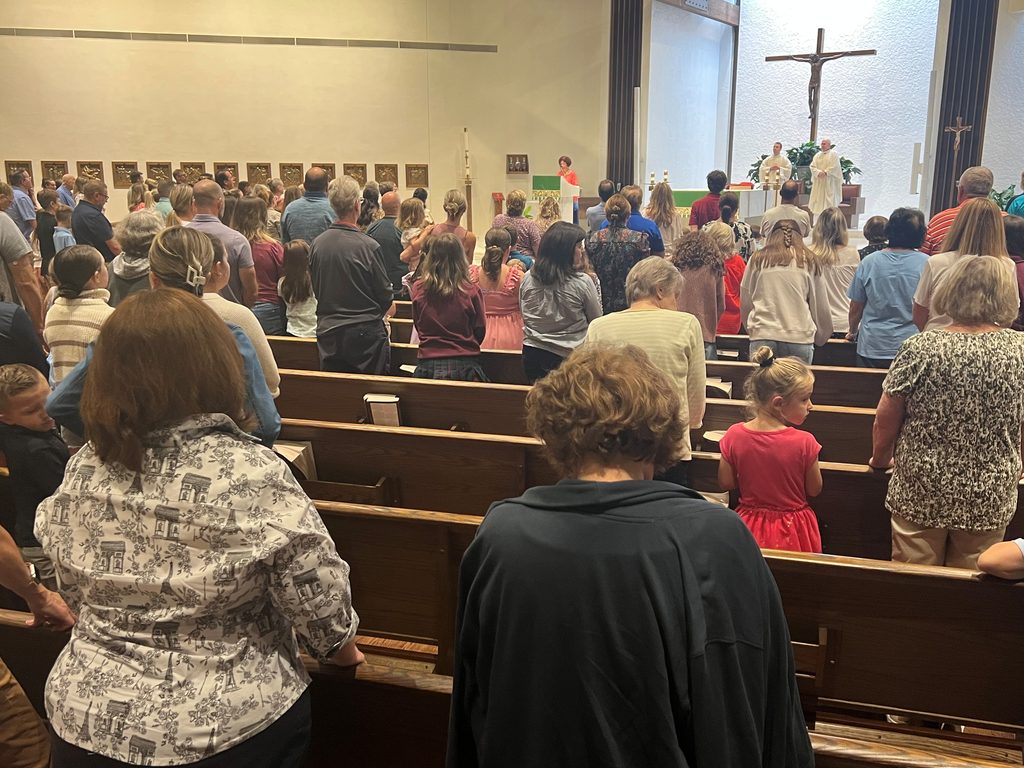
Students and families from Wyoming Area Catholic School attend Mass at Saint Maria Goretti Parish in Laflin, one day after a fire caused damage to their school building. (Photo/Eric Deabill)
LAFLIN – Just 24 hours after fire forced the evacuation of Wyoming Area Catholic School in Exeter, its students, families, teachers, staff, and administrators gathered at Saint Maria Goretti Parish – not simply to pray – but to express gratitude.
The school community came together Wednesday morning, Sept. 2, 2026, grateful that every student and adult made it safely outside the building.
“This is step one, to come together before God, to come together as a school community to give thanks to one another and to be thankful for our safety,” Father Michael Drevitch, Pastor of Saint Maria Goretti Parish, said during his homily at the 11:00 a.m. Mass.
Throughout his homily, Father Drevitch returned to a theme he had shared with the students just two days earlier at their first school Mass of the year: Sometimes, God is found in the least expected places.
On Monday, he had encouraged students to recognize God’s presence not only in the Eucharist and the Word of God, but also through sports, academics, the arts, and other ordinary moments of school life.
“Then yesterday,” he said, “we came to recognize that God definitely presents himself in unexpected ways.”
Father Drevitch acknowledged the fire could be viewed as a disaster and a loss. Classrooms were damaged and books and supplies were lost.
But Father Drevitch urged the community to see something more.
“You can look at what happened yesterday as a disaster, as an emergency, as a loss,” he said. “Or you can look at it and recognize how God was present in our teachers and staff, how God was present in the first responders who literally put their lives at risk for our sake, and you can recognize how God was present in our children who stayed safe, brave, and listened to instructions and did what they were expected to do.”
Near the end of his homily, Father Drevitch, who teaches religion at Wyoming Area Catholic School, added a short example to emphasize how the situation had students reflecting God’s love.
“As students were dismissed, I saw some siblings come out, who sometimes would normally be fighting with one another, yesterday, they were holding hands and embracing one another. I saw it in a very beautiful way,” he said.
For Wyoming Area Catholic Principal Eileen Rishcoff, the sight of so many families gathered at Mass made her emotional.
“I am overwhelmed at the number of people that are here,” she told families and students before Mass.
Rishcoff reminded them that a school is about far more than books, supplies and belongings that were left behind when students evacuated.
“Sometimes things happen,” Rishcoff said. “But the most important thing is that we got out of the school safely.”
And they did so quickly.
Just after 10:00 a.m. Tuesday, Sept. 1, a teacher noticed that lights were flickering in the lower end of the school, near the younger grades.
When Amy Rosencrance, School Safety and Security Coordinator, went to investigate, she noticed smoke coming from the area.
“We quickly evacuated all of the kids from there and basically made sure that everyone got out of the building,” Rosencrance said. “At that moment, as I was checking to make sure everyone was safe and all of the kids were out, there were flames.”
The fire alarm was pulled, and students immediately began evacuating.
Seventh grader Victoria Sabetta had just finished math class when the fire alarm sounded.
“I was about to put my books away and all of a sudden we heard the fire alarm, so I dropped my books and I just went out,” Sabetta said.
It wasn’t until Sabetta was outside that she first saw smoke.
“It wasn’t until we got outside and the police officers started coming,” she added.
Ironically, the school had planned to conduct its first fire drill of the school year that same day. Instead, the students and staff found themselves responding to a real emergency.
“It was definitely well executed,” Rosencrance said while thanking first responders for their quick response. “I absolutely thank each and every one of them. Two police officers showed up immediately and we were inside the building together and they started to put out the fire. Within minutes, we had Exeter, West Pittson, Hughestown, Pittston city, Pittston Township, Kingston, every fire person was here. We had the Greater Pittston Ambulance and their response and how quickly they got here, I’m so thankful for that, because that really helped contain it and save this building.”
Students were transported to Wyoming Area High School, where they were reunited with their families.
The Pennsylvania State Police fire marshal is investigating the cause of the fire. School officials said there was considerable damage to at least two classrooms, with smoke and water damage affecting other portions of the building.
As school administrators face the work of beginning cleanup and restoration, students will be continuing their education at Saint Maria Goretti Parish in Laflin.
The parish has opened its religious education facilities, including classrooms and other spaces, to Wyoming Area Catholic School beginning Tuesday, Sept. 8, following Labor Day.
For Father Drevitch, the temporary relocation is itself an expression of what a parish is meant to be.
“A parish isn’t just a group of people who go to church,” he said. “A parish is a community who helps people when they need something. A parish is God’s hands at work as we take care of our children, as we keep them safe and provide them an education.”
Social
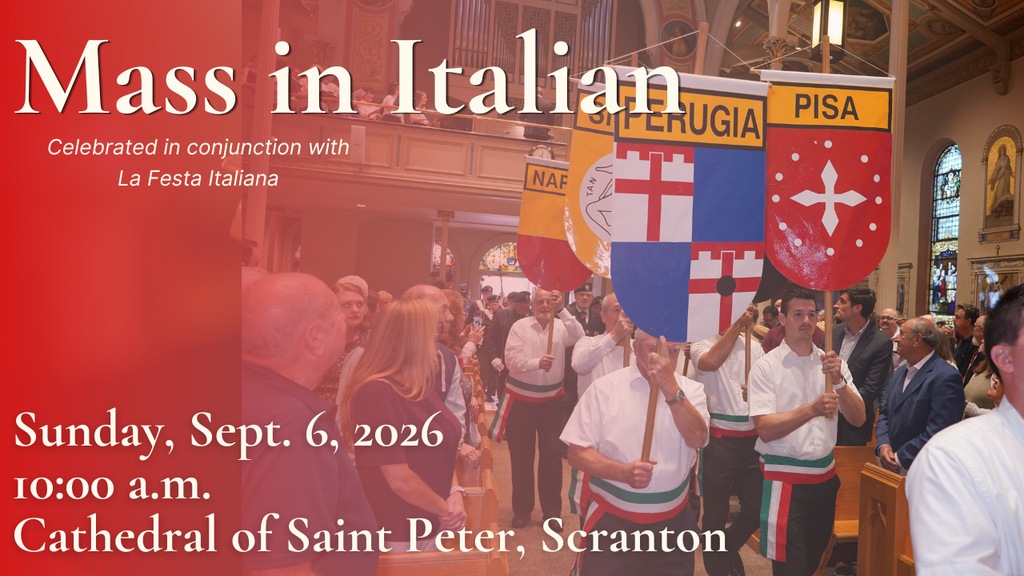
SCRANTON – The annual Mass in Italian will be celebrated on Sunday, Sept. 6, 2026, at 10:00 a.m. in the Cathedral of Saint Peter in Scranton.
All are welcome to attend.
The liturgy is celebrated in conjunction with La Festa Italiana, which occurs over the Labor Day weekend, Friday through Monday, Sept. 4-7, on Courthouse Square, only one block away.
The Mass in Italian is one of the most cherished traditions of La Festa Italiana, which is celebrating the 50th anniversary of its founding. Priests and volunteers from Italian parishes played a prominent role in organizing and conducting La Festa from its inception in 1976.
The Most Rev. Joseph C. Bambera, Bishop of Scranton, will preside at this year’s liturgy and give the homily.
Reverend David P. Cappelloni, La Festa Chaplain and pastor of Saint John Paul II Parish in Dunmore, will be the principal celebrant.
Concelebrants will include Monsignor Constantine V. Siconolfi, La Festa Chaplain Emeritus, and Reverend Joseph J. Adonizio, who just celebrated his 100th birthday and has been a priest for 70 years.
Deacons from the Diocese will also participate.
The Mass will be broadcast live by CTV: Catholic Television of the Diocese of Scranton and will be rebroadcast on Tuesday, Sept. 8, at 10:30 a.m. and 8 p.m., and Friday, Sept. 11, at 10:30 a.m.
In addition to airing live on CTV, the Mass will be livestream on the Diocese of Scranton website, YouTube channel and on social media platforms. It will also be available on demand after the live broadcast concludes.
This year’s Italian Mass is being offered in memory of all those members and friends of La Festa Italiana who passed away since the last Mass was celebrated, including Carlo J. Celli, Lawrence Chiorazzi, Rocco Cipriano, Vince Marrone, Michael Musheno, Melanie Naro, Ann Marie Noto, Gene “Dempsey” Passarella, Chuck Romano, Charles “Rocky” Sabatelle, Helen Siconolfi, Sam Tomaino, “Uncle” Floyd Vivino and Mayor David Wenzel.
Music ministry for the Italian Mass will be provided by the Saint John Paul II Parish Choir, Dunmore, accompanied by a brass quartet, all directed by Joseph Moffitt.
Dominick DeNaples, mandolin; Patrick Loungo, Nicholas Luongo, Eugene Mentz, organist, and Monica Spishock, timpani, will also accompany.
Ashley Yando-DeFlice is the cantor and the leader of prayer. The featured soloist will be T.J. Capobianco from the New York City Metropolitan Opera.
The lector in Italian will be Anna Gallo, and the lector in English is the Honorable Joseph F. Saporito, Jr.
The Prayer of the Faithful will be led by Diane Alberigi, Atty. Frank T. Blasi and Atty. Frank Castellano.
The offertory gifts will be presented by the Honorable Robert Mazzoni; Robert W. Pettinato, La Festa Founder; Sister Catherine Iacouzze, M.P.F.; along with Mrs. Mary Marino and Mrs. Rosann Bordo Piraino Zaleski, both 100 years old, who never missed a La Festa.
Serving as flag bearers are Mike Linko, UNICO National; Dino Darbenzio, President, Scranton Chapter of UNICO; and Rich Pirrami, Saint Ubaldo Society.
Patrick Caramanno, Joshua Cillo, Carmen DiPietro Jr., Jonathan A. Eboli, Stephen A. Eboli, Richard Garofalo and Joseph Wentline will be ushers.
At the conclusion of Mass, members of The Italian Colony of Saint Lucy will process out of the Cathedral with a statue of Saint Lucy onto the festival grounds to the Heritage Piazza on Spruce Street.
For news and updates on La Festa Italiana, including the festival entertainment schedule, visit lafestaitaliana.org or visit La Festa’s official social media pages on Facebook and Instagram.
Social
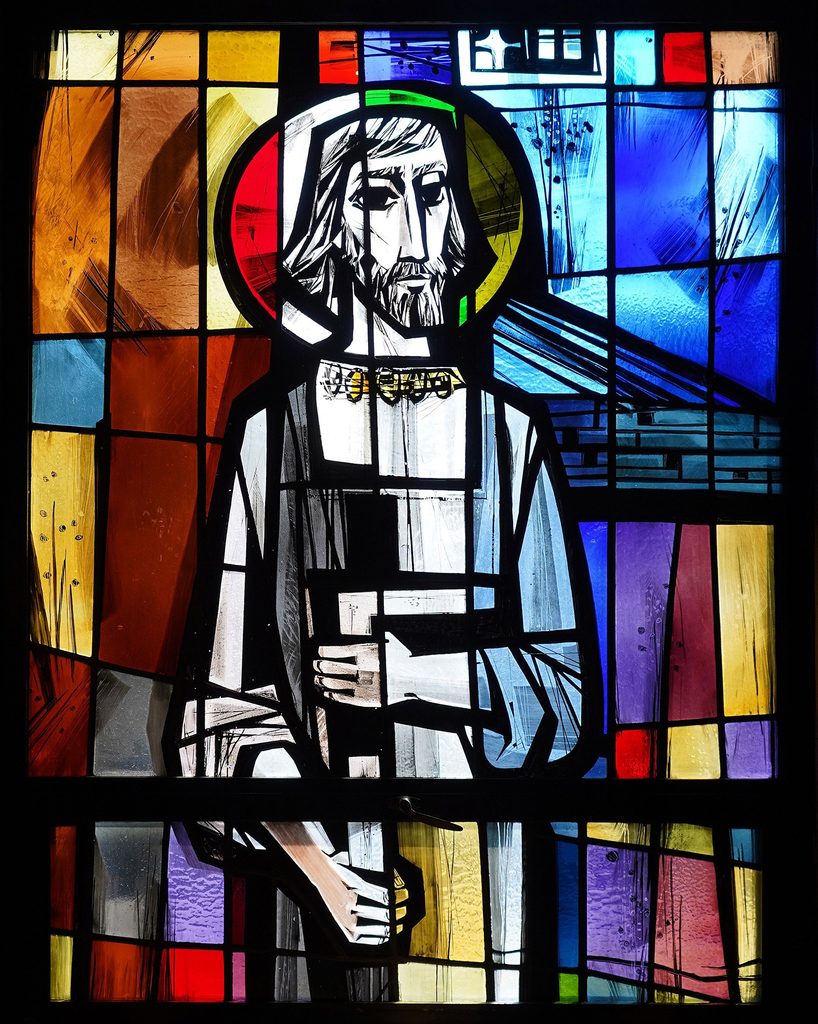
A depiction of St. Joseph holding a carpenter’s square is seen in a stained-glass window in the chapel of St. Joseph’s College in Patchogue, N.Y., in this 2020 photo. Work “anoints us” with dignity, Pope Francis once said in an address for the feast of St. Joseph the Worker. (CNS photo/Gregory A. Shemitz)
LAFLIN — The Congregation of the Oblates of Saint Joseph, located at 1880 Route 315, Laflin, is preparing for the annual Triduum and special Labor Day Mass honoring Saint Joseph the Worker in September.
A three-day preparation of Masses during the Labor Day weekend will be held Friday, Saturday and Sunday, Sept. 4-6, with liturgies celebrated at noon in the Saint Joseph Oblates chapel in Laflin.
Devotions to Saint Joseph will be offered after each Mass, especially for all workers and the unemployed. A blessing with the first-class relic of Saint Joseph Marello, founder of the Oblates religious order, will conclude the devotions.
A special Mass is planned for Labor Day morning, Monday, Sept. 7, at 11 a.m., honoring Saint Joseph as the Patron Saint of Workers. Bread will be blessed and distributed following the Mass to all faithful in attendance as a symbol of the “fruit of our labor.”
Serving as celebrant and homilist for this year’s Labor Day Eucharistic celebration will be Saint Joseph Oblate Father Paul McDonnell, a member of the OSJ religious community in the Pittston area, who also serves as pastor of Divine Mercy Parish in the Minooka section of Scranton.
The Triduum devotions and Labor Day morning Mass will be broadcast live on JMJ Catholic Radio 104.5 FM.
For further information, contact the main office at (570) 654-7542 or email: osjseminary@comcast.net.
A three-day preparation of Masses during the Labor Day weekend will be held Friday, Saturday and Sunday, Sept. 4-6, with liturgies celebrated at noon in the Saint Joseph Oblates chapel in Laflin. Devotions to Saint Joseph will be offered after each Mass, especially for all workers and the unemployed. A blessing with the first-class relic of Saint Joseph Marello, founder of the Oblates religious order, will conclude the devotions. A special Mass is planned for Labor Day morning, Monday, Sept. 7, at 11 a.m., honoring Saint Joseph as the Patron Saint of Workers. Bread will be blessed and distributed following the Mass to all faithful in attendance as a symbol of the “fruit of our labor.” Serving as celebrant and homilist for this year’s Labor Day Eucharistic celebration will be Saint Joseph Oblate Father Paul McDonnell, a member of the OSJ religious community in the Pittston area, who also serves as pastor of Divine Mercy Parish in the Minooka section of Scranton. The Triduum devotions and Labor Day morning Mass will be broadcast live on JMJ Catholic Radio 104.5 FM. For further information, contact the main office at (570) 654-7542 or email: osjseminary@comcast.net.
Social
ROME (OSV News) – The International Theological Commission published a new document Sept. 2 calling for ecological conversion due to “sin against creation and the Creator.”
The more than 29,000 word text, titled “Caring for Our Common Home: A Responsible and Fraternal Response to the Triune God,” was approved by a majority of members of the commission in a July vote and authorized for release by Cardinal Víctor Manuel Fernández, prefect of the Dicastery for the Doctrine of the Faith, after being presented to Pope Leo XIV.
Waves roll in along the shoreline of the Pacific coast near Gold Beach, Ore., Aug 12, 2026. The International Theological Commission published a new document Sept. 2, 2026, calling for ecological conversion due to “sin against creation and the Creator.” (OSV News photo/Bob Roller)
More than a decade after the release of Pope Francis’ landmark encyclical “Laudato Si’,” the theological commission goes beyond Pope Francis’ use of the phrase “ecological sin” by proposing what it describes as more precise terminology: “sin against creation and the Creator.”
“As Pope Leo XIV emphasized, we believe it is appropriate to favor a formulation that simultaneously implies both the harm inflicted on nature and the failure to recognize, or even the rejection, of the Creator’s plan, which entails entrusting to human beings the stewardship and care of our common home,” the document says.
“We propose understanding this sin against our Common Home as a ‘sin against creation and against the Creator,’ insofar as it violates the meaning of creation intended by God the Creator.”
— Challenges of ‘ecological turning point’ —
The commission explained that by failing to care for “our Common Home” with sufficient wisdom and long-term vision, “we not only fail to respect God’s plan and mistreat creation, but we also harm our neighbors, especially the poorest and future generations.”
“Sin against creation,” it says, “therefore, concerns our relationship with God the Creator, with our neighbors, and with creation itself, distorting the three relationships that define us.”
Published only in Italian, the document is divided into three chapters, describing a “threefold transformation” in culture’s relationship to nature since the 16th century: the loss of the perception of nature as God’s creation; the emergence of an increasingly anthropocentric and predatory vision in the relationship between humanity and Creation; and the spread of an ecological crisis on a planetary level.
Msgr. Piero Coda, the secretary general of the International Theological Commission, said that the document’s “proposal to ‘understand sin against the environment in a similar way to how the notions of social sin and structures of sin have progressively consolidated’ is of particular importance.”
“This underscores the profound seriousness of the ‘ecological turning point’ that challenges our conscience today, calling for a conversion that — in order to be fully effective on the cultural, social, economic, and political levels — must first and foremost find expression on the spiritual and religious levels,” he wrote in a commentary on the document published by Vatican News.
— Creation reflects the Trinity —
The first chapter examines how all creation carries an imprint of the Trinity — Father, Son, and the Holy Spirit — arguing that since creation bears the Creator God’s imprint, ecological questions always have a religious dimension.
It quotes St. Hildegard of Bingen’s idea of creation as “a second Scripture,” as well as other Doctors of the Church — St. Augustine of Hippo, St. Bonaventure, and St. Thomas Aquinas. The commission also develops a dialogue with some scientific and philosophical views of the cosmos, examining how the Big Bang and quantum physics are compatible with faith.
The second chapter focuses on the human person’s place in the created world, using the creation narrative in Genesis to examine how humanity was given the original task of dominion, custody, and cultivation of the land, placing exploitation of the land, pollution, and biodiversity within the Genesis narrative of the fall of man.
Citing United Nations environmental reports, the document catalogs what it calls alarming levels of biodiversity loss, air and water pollution, and the environmental toll of armed conflict, noting that the poorest nations and communities suffer the worst consequences despite bearing the least responsibility for causing them.
The document rejects the two extremes of “predatory anthropocentrism,” or treating creation as mere property for exploitation, and radical biocentrism and “deep ecology” movements that strip humanity of its unique status within creation. Instead the theological commission puts forward the idea of “situated anthropocentrism” — an expression first used by Pope Francis which has been taken up by Pope Leo XIV that describes the human vocation as a “steward” and a “servant of creation.”
This twofold vocation finds its culmination in the Eucharist, which the document describes as an “ecological school” from which flows “a spirituality capable of supporting and encouraging the ecological conversion that we so urgently need to undertake as a human family.”
— Practical guidelines for ecological conversion —
The third chapter offers some practical guidelines and principles for “ecological conversion,” organized around different fundamental relationships of the person with God, with oneself, with creation, and with others, highlighting the importance of mindful consumption, balanced rhythms of work and rest with the Benedictine idea of “ora et labora,” respect for life, asceticism, reverence for creation, and listening to the cry of the Earth and the poor. It also surveys the contribution of other world religions to ideas of environmental stewardship.
“From the standpoint of the Christian faith, the doors are open to interreligious cooperation in the common task of respectfully caring for all Creation, in the service of the flourishing of life and communion with the Transcendent, who is at the origin and is the foundation of all life,” it says.
The document, written by a subcommission that met between 2022 and 2025, was published during the Church’s Season of Creation established by Pope Francis, which runs from the World Day of Prayer for the Care of Creation on Sept. 1 until Oct. 4, the feast of St. Francis of Assisi.
Social
Pope Leo XIV celebrates Mass for the Care of Creation on the grounds of the Borgo Laudato Si’ ecology center in Castel Gandolfo, Italy, Sept. 1, 2026.(CNS photo/Vatican Media)
VATICAN CITY (CNS) – Pope Leo XIV began the five-week Season of Creation by calling on the faithful to step away from the frenzy of daily life to “hear the melodious voice of creation,” stressing that “it is not yet too late” to repair humanity’s relationship with the environment.
Celebrating Mass on the World Day of Prayer for the Care of Creation in the gardens of the papal villa and the Borgo Laudato Si’ ecology project in Castel Gandolfo, Sept. 1, the pope said contemplating creation and its Creator should lead people to recognize their responsibility for protecting it.
“Thus, as we become conscious of our shortcomings and failures, we can renew our commitment to restoring the relationships among all creatures according to the will of their Creator,” he said.
The theme chosen for the 2026 World Day of Prayer for the Care of Creation echoes the biblical call to “beat swords into plowshares” and connects armed conflict with environmental destruction.
In a June 2 statement, the Dicastery for Promoting Integral Human Development said that “the now widespread awareness of the impact of war on natural resources has not led to the creation of adequate institutions or to responsible decisions aimed at preventing conflicts and resolving disputes peacefully.”
In his homily during the Mass, Pope Leo said the call to transform weapons into instruments that sustain life remains urgent.
“What has been used for destruction can be redirected toward life, toward the care of the poor, the nourishment of the hungry, and the safeguarding of creation,” he said, quoting his message for the day.
Militaries account for about 5.5% of global greenhouse gas emissions and contribute to water pollution, soil contamination and waste generation, according to a joint study by the UK-based Scientists for Global Responsibility and the Conflict and Environment Observatory. The World Wide Fund for Nature estimated that the first three years of the Russia-Ukraine war alone generated the equivalent of about 230 million metric tons of carbon dioxide — a greenhouse gas that traps heat from sunlight, warming the planet.
Pope Leo also focused on access to clean water in his September prayer intention, released Sept. 1 by the Pope’s Worldwide Prayer Network.
Thanking God for the gift of water, the pope prayed for the “right of every brother and sister to drink without fear and without inequality.”
“Forgive us for turning it into a commodity, forgetting that it is a universal gift, a right without borders, meant for all your children,” he prayed. “We see with pain so many brothers and sisters who lack clean water, who walk for miles to find it, who become ill due to its scarcity.”
During the Mass, Pope Leo said passages from the Book of Wisdom and Psalm 18 encourage Christians to recognize God through the “beauty and power of creation.”
“All creation speaks to us of the greatness of its Creator, if only our eyes and hearts remain open to such a great mystery,” he said.
By looking with wonder at the birds of the air and the flowers of the field, the pope said, Christians can better understand the greatness of God’s love for humanity.
“If the Lord does not fail to bestow such splendid beauty upon plants and animals and provide for all their needs, how much more attentive will he be to the needs of his beloved sons and daughters,” he said.
The Season of Creation runs from Sept. 1 through Oct. 4, the feast of St. Francis of Assisi. The Catholic Church’s observance of the World Day of Prayer for the Care of Creation was established by Pope Francis in response to an initiative of Orthodox Ecumenical Patriarch Bartholomew of Constantinople. The Orthodox Church has observed Sept. 1 as a day of prayer for creation since 1989.
The 2026 season will conclude as the Church marks the 800th anniversary of the death of St. Francis of Assisi, who is the patron saint of ecology.
Pope Leo closed his homily by reciting portions of St. Francis’ Canticle of the Creatures:
“Praised be you, my Lord, with all your creatures, especially Sir Brother Sun… Praised be you, my Lord, through Sister Moon and the stars… Praised be you, my Lord, through Brother Wind… Praised be you, my Lord, through Sister Water… Praised be you, my Lord, through Brother Fire… Praised be you, my Lord, through our Sister Mother Earth, who sustains and governs us.”
Social
(OSV News) – Pope Leo XIV’s September prayer intention is “for the care of water” as Christians celebrate the Season of Creation.
“We see with pain so many brothers and sisters who lack clean water, who walk for miles to find it, who become ill due to its scarcity,” the pope said in a video published Sept. 1.
U.N. agencies reported in 2025 that around 2.1 billion people still lack access to safely managed drinking water, while 106 million rely exclusively on rivers, lakes, or other untreated surface water.
Pope Leo XIV is pictured praying his September 2026 prayer intention “for the care of water” as Christians celebrate the Season of Creation, which began Sept. 1, the World Day of Prayer for the Care of Creation. (OSV News/Pope’s Worldwide Prayer Network)
In his prayer for the month of September, Pope Leo asked the Holy Spirit to guide Christians to denounce waste and pollution and to defend “the right of every brother and sister to drink without fear and without inequality.”
“Forgive us for turning it into a commodity, forgetting that it is a universal gift, a right without borders, meant for all your children,” he prayed.
The pope’s prayer intention comes as Christians around the world celebrate the Season of Creation from Sept. 1, the World Day of Prayer for the Care of Creation, until Oct. 4, the feast of St. Francis of Assisi.
This year’s theme is “Living Water,” recalling the growing scarcity of fresh water and the inequality of access to it.
Pope Leo’s prayer intention is also a call to personal action to consume water responsibly and moderately, according to the Pope’s Worldwide Prayer Network, which is encouraging people to do what they can to take shorter showers, fix leaks, turn off faucets not in use, and to avoid polluting drains and rivers.
In the video produced by the prayer network, the pope reflected on how water is a symbol of God’s “grace and love that renews us through Baptism.” The video shows Pope Leo dipping his hand into a holy water font and making the sign of the cross as he prays inside the Church of San Pellegrino in Vatican City.
Water, he said, “quenches thirst, nourishes the earth, and heals wounds,” describing this gift as a “source of fruitfulness, freshness, and hope.”
“May our care for water be a sign of love for the Creator and a commitment to the lives of the poor, educating new generations to value and protect the Earth’s resources,” Pope Leo said. Father Cristóbal Fones, international director of the Pope’s Worldwide Prayer Network, notes that water is one of the great essentials of life.
“This prayer intention invites us to think deeply about creation, to safeguard it, and to look with God’s eyes on those who today have to walk for miles to obtain a bit of clean water, and to convert what we see into concrete actions that demonstrate moderation, care, and solidarity,” Father Fones said.
“No one should live without water, and no one should die because they lack water.”
Social
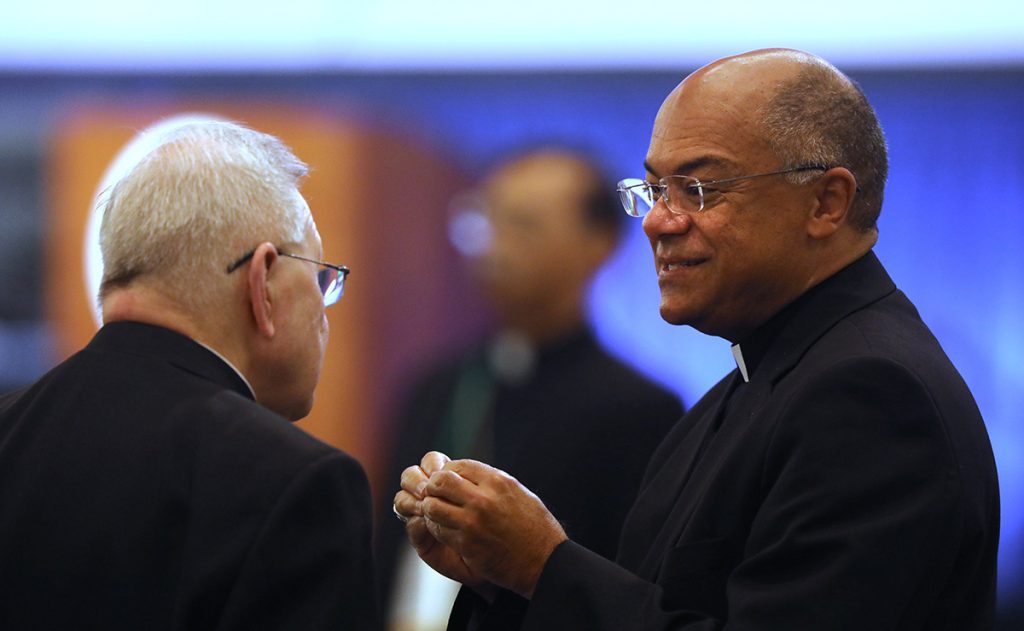
New Orleans Archbishop Gregory M. Aymond, and Archbishop Shelton J. Fabre of Louisville, Ky., speaks during a break at a Nov. 15, 2023, session of the fall general assembly of the U.S. Conference of Catholic Bishops in Baltimore. “Let us foster an economy that values the God given dignity of each person,” said Archbishop Fabre, chairman of the U.S. Conference of Catholic Bishops’ Committee on Domestic Justice and Human Development, in a statement released ahead of Labor Day, Sept. 7, 2026. (OSV News photo/Bob Roller)
(OSV News) – This year’s Sept. 7 observance of Labor Day underscores Pope Leo XIV’s call to be “builders of communion” while safeguarding human dignity, as artificial intelligence “reshapes our economy and our work,” said Archbishop Shelton J. Fabre of Louisville, Kentucky.
The archbishop reflected on the nature of work and labor in a Sept. 1 statement, speaking in his role as chairman of the U.S. Conference of Catholic Bishops’ Committee on Domestic Justice and Human Development.
First established in New York City in 1882, the annual holiday — which developed from labor activist movements of the late 19th century — “is an opportunity to celebrate workers and honor the dignity of work,” said Archbishop Fabre.
He stressed that “work is more than a way to make a living,” but rather — as Catholic teaching affirms — “a form of participation in God’s creation.”
In his message, the archbishop drew particular attention to “young people and vulnerable communities who face uncertainty in today’s economy.”
While “traditional economic indicators tell us the economy is growing,” hiring itself “has slowed, especially for unemployed workers,” and “unemployment remains high for Black workers,” said Archbishop Fabre, citing a June analysis from the Washington-based Joint Center for Political and Economic Studies.
Pointing to research from Washington University, the archbishop said that “roughly one-quarter of the labor force are low-wage workers,” with 72% percent lacking stable jobs.
In addition, the Urban Institute’s WorkRise initiative has found that people of color make up more than half of the low-wage workforce, the archbishop said.
The economic landscape directly impacts decisions on childbearing. Archbishop Fabre observed that a 2025 Brigham Young University survey found “more than 70% of Americans believe having children is unaffordable, an increase of 13 points in just the last year.”
Archbishop Fabre highlighted “widespread concern” that artificial intelligence “will lead to higher unemployment and to fewer jobs that can support a family.”
Young people, he said, “have been the most impacted so far and also experience the most anxiety about AI’s impact on their work.”
“We must listen to the experiences of workers, families, young people, and communities of color as they struggle to find stability,” said Archbishop Fabre.
The archbishop emphasized the timeliness and importance of “Magnifica Humanitas,” Pope Leo’s May 2026 encyclical, which stressed the primacy of Catholic social teaching and human dignity in the development and application of AI.
The encyclical, which affirmed longstanding papal teachings on labor and the common good, warns that “although AI presents new opportunities, it also risks normalizing a vision that is anti-human,” said Archbishop Fabre.
“Pope Leo expressly acknowledges the great risks of AI for workers: de-skilling, surveillance, rigid and repetitive tasks, reduced agency and creativity, unemployment, job insecurity, concentrated power, and increased inequalities,” said the archbishop. “Furthermore, AI relies on low-wage workers, who are often hidden and who endure harsh conditions, caught in an exploitative supply chain.”
Archbishop Fabre admitted that humanity faces a difficult and “daunting” task in grappling with AI’s sweeping impacts on labor.
Among the challenges are the need “to ensure just development of AI systems, with worker participation, transparency and accountability; to protect good jobs, offer retraining where needed, and correct the power imbalances that are exacerbated by technology,” he said.
“And yet, we have been here before,” he said, noting that Pope Leo XIII’s 1891 encyclical “Rerum Novarum,” written in response to the Industrial Revolution, has helped the Church to bring “the sacredness of the human person to the questions of work and labor for these last 135 years.”
Archbishop Fabre also referenced the USCCB’s 1986 pastoral letter, “Economic Justice for All,” which is now marking its 40th anniversary.
“Much of the teaching of this document remains relevant for our shared project in the United States,” said Archbishop Fabre. “As we confront this latest challenge, we invite all to be partners in this work.”
That partnership — spanning “the Church, government, labor unions, civil society groups, corporations, and others” — will help ensure that “innovation and development is for the benefit of all, not just a few, and that each person can contribute to the Kingdom of God through their work,” said Archbishop Fabre.
Social
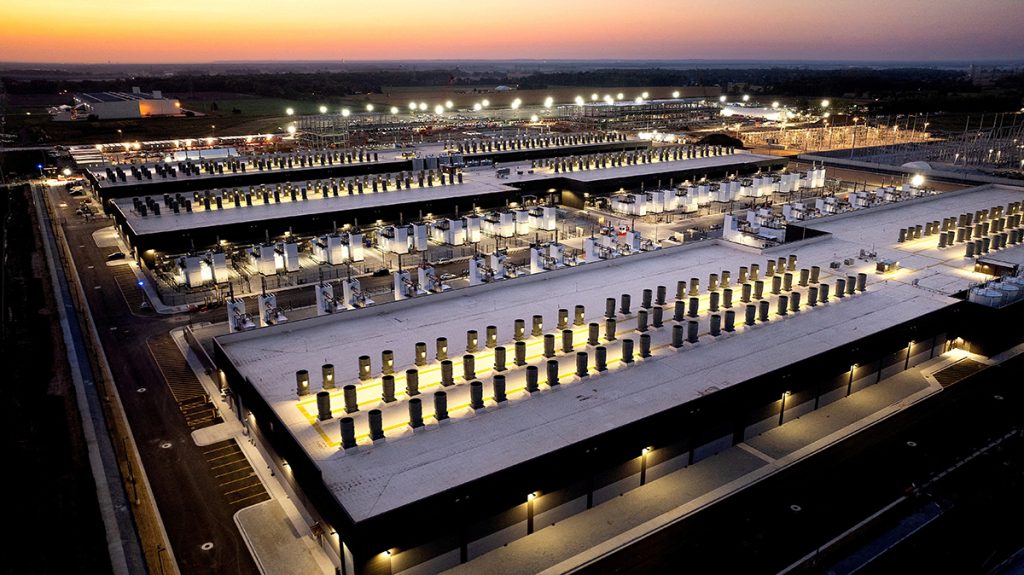
This is an elevated view of the Amazon Web Services AI data center in New Carlisle, Ind., Oct. 2, 2025. A March poll by the Pew Research Center reflected Americans’ growing suspicions of data centers, with respondents finding them “mostly bad” for the environment (39%); home energy costs (38%); and people’s quality of life nearby (30%). (OSV News photo/Noah Berger for AWS via Reuters)
(OSV News) – They’re the new neighbor a growing number of communities across America don’t seem to want – data centers.
But what are they, and why are some people opposed to them?
The multinational technology company IBM provides this definition: “A data center is a physical room, building or facility that houses IT (Information Technology) infrastructure for building, running and delivering (digital) applications and services. It also stores and manages the data associated with those applications and services.”
Which may sound harmless enough — but opponents offer several criticisms: To build, run, deliver, store, and manage the applications and data housed in a data center, its infrastructure consumes massive amounts of electricity and water, potentially driving up local utility bills. The centers can also create industrial noise and may offer very few permanent local jobs.
A March poll by the Pew Research Center reflected Americans’ growing suspicions of data centers, with respondents finding them “mostly bad” for the environment (39%); home energy costs (38%); and people’s quality of life nearby (30%).
A May Gallup poll revealed 7 in 10 Americans oppose the construction of data centers in their area.
“The speed at which these things are going up — and the drain they put on the electrical grid, and the rising cost of electricity — because of that, people ask, ‘Why do we need these in my backyard?'” said Dan Misleh, founder of Catholic Climate Covenant, a coalition of 20 national partners formed in 2006 with help from the U.S. Conference of Catholic Bishops.
Misleh outlined some of the issues through the lens of the Catholic Climate Covenant.
“One is the rising cost of electricity,” he said. “There’s a lot of communities seeing double-digit — even triple-digit — increases in the cost of electricity, rising over the next several years. That’s primarily because some of these centers are huge, and they draw enough electricity to power up to a million homes.”
Misleh continued, “There’s (electrical) grid reliability, and what happens when everyday citizens who live in these communities need more electricity in the summer or winter — and it’s not available to them, because the local AI data center is gobbling up what could be used.”
Community input may also be lacking, because a community was never asked for its opinion.
“A lot of these are sited in places where low-income people live,” Misleh said. “They don’t seem to have a say in whether or not these get sited. There’s a big one Meta is putting in, in Louisiana. And that was done pretty much under cover of darkness; it began to be built without any community input whatsoever.”
While noting gains of efficiency, Pope Leo XIV issued his own warnings concerning AI and data centers in the encyclical letter “Magnifica Humanitas” (“Magnificent Humanity”), released May 15.
“Current AI systems require enormous amounts of energy and water, significantly influencing carbon dioxide emissions, and place heavy demands on natural resources,” the pontiff observed. “It is essential to develop more sustainable technological solutions that reduce environmental impact and help protect our common home.”
The data center boom — fueled by surging interest in AI and appealing state tax breaks — has propelled the construction of almost 4,000 centers, with another 3,000 projected. According to the pro-data center American Edge Project, Virginia leads among the states, with 663 operational data centers and 595 under construction or planned.
American Edge Project is primarily backed by technology companies including Meta, the parent company of Facebook, Instagram, WhatsApp and other social media apps. It recently acknowledged mounting opposition, noting in a July 16 statement, “This weekend, organizers say more than 120 protests will take place across 37 states against data centers.”
However, while AEP agreed communities should “ask hard questions about big projects in their backyards” it also urged consideration of several points it asserted as true — including the AI race should not be lost to China; data centers contribute to local economies; voters back data centers if consumers are protected; and the federal government should set regulations, not individual states.
Can a middle ground be found?
“Data centers have become a kind of unifying issue across a lot of political lines,” Maria Fernanda Chavez, senior analyst at the Union of Concerned Scientists, told OSV News.
Founded in 1969, the UCS is a national nonprofit of nearly 250 scientists, analysts, and policy experts.
“There’s definitely momentum on both sides of the aisle — even at the federal level — to find the best way to protect regular folks from being deprioritized in favor of these larger, big tech interests,” she shared.
Such protections could come with the implementation of a tariff structure separating residential from data center use on shared power grids, requiring data centers to generate their own power, and using clean energy instead of fossil fuels.
“There’s a true cost that comes from the health impacts of having data centers powered by polluting sources of energy,” said Chavez, “and climate implications that translate into real dollar amounts for people that have to deal with them.”
A United Nations University report released in June noted that last year, global data centers used 448 trillion watt-hours of electricity, more than all but 10 countries of the world. That electricity use produced about 208 million tons of carbon dioxide — a naturally occurring greenhouse gas essential for regulating Earth’s temperature, an excess of which contributes to global warming. Producing that energy consumed about 1.2 trillion gallons of water.
President Donald Trump, speaking July 23 in support of the White House’s “Ratepayer Protection Pledge,” invoked automatic utility rate protections, while saying of data centers “you can’t fight it” and that communities will “make a tremendous amount of money.”
The pledge — which was released in March and is voluntary for tech companies to abide by — states that as demand grows, “the American people should not be footing the bill for the benefit of private companies. Instead, the data center boom should be leveraged to address affordability and benefit all American households and businesses.”
So far signed by Google, Meta, Microsoft, Oracle, OpenAI, xAI, Amazon and 23 Republican governors, the pledge has been criticized by the environmental advocacy organization Sierra Club as “a paper-thin commitment.”
“Policy typically does not move at the same pace as the big tech industry,” said Chavez — which is why “we need to make sure to build safeguards into our policy development as soon as possible, to mitigate for the potential impact data centers are bringing not just to the grid, but to communities.”
Opposition will likely come from AEP, which issued a solemn warning in a 2025 report: “Misguided state-level bills risk adding costly red tape, creating new legal risks, slowing innovation, all while undermining U.S. competitiveness.”
In a January 2026 report, the UCS suggested “The United States can meet electricity demand from data centers primarily with clean energy and simultaneously phase down fossil fuel use” and noted that “Data centers must be required to pay a fair share of the nearly $1 trillion in electricity costs attributable to them over the next 25 years.”
While the issue of data centers may seem a fresh topic in the media, “Data centers are not new,” observed Ian Moise, director of the Catholic Energies Service Platform, which supports Church institutions nationwide in advancing renewable energy, storage and efficiency projects.
“It’s not like there was no AI, and then all of a sudden there was AI; these kinds of capabilities have been developing for a long time,” he said. “Reading documents electronically, voice detect — all these things we take for granted in our technologies … all emerge or result in increased computing and energy requirements.”
In other words, this a new chapter in a longstanding environmental and economic struggle.
“This is old environmental justice, NIMBY stuff — not in my backyard,” Moise observed. “If you’re wealthy, you don’t put a data center in your backyard because it affects your property value. If you’re poor, you’re willing to, because it boosts your income a little — but then you’re living with this massive data center.”