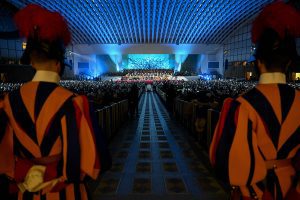
VATICAN CITY (CNS) – Christmas carols in every language and culture are expressions of how music can convey “feelings and emotions, even the deepest movements of the soul,” Pope Leo XIV said after listening, clapping and singing along at the Vatican Christmas concert with the poor.
“As the melodies touched our hearts, we felt the inestimable value of music: not a luxury for the few, but a divine gift accessible to everyone, rich and poor, learned and simple,” the pope said Dec. 6 as he thanked Canadian singer Michael Bublé, Italian singer Serena Autieri and the choir of the Diocese of Rome.
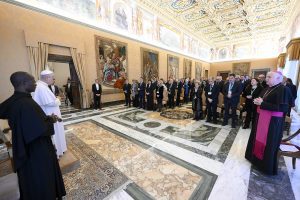
Pope Leo was seated in the center aisle behind the main guests — about 3,000 people assisted by the papal almoner and Catholic charities in Rome.
Swiss Guards stand watch as Pope Leo XIV and thousands of guests assisted by the papal almoner and Catholic charities attend a Christmas concert in the Vatican’s Paul VI Audience Hall Dec. 6, 2025. (CNS photo/Vatican Media)
“Music is like a bridge that leads us to God,” the pope said. It is like “an imaginary stairway connecting earth and heaven.”
“It is not a coincidence that the feast of Christmas is very rich in traditional songs, in every language and every culture,” he said. “It is as though this mystery could not be celebrated without music, without hymns of praise.”
And it was that way from the very beginning, the pope said, noting how the Gospel of Luke “tells us that while Jesus was being born in the stable in Bethlehem, there was a great concert of angels in heaven.”
“And who listened to that concert? To whom did the angels appear? To the shepherds, who were keeping watch at night to guard their flock,” he said.
“Music can lift our hearts,” the pope told his audience, which included migrants and refugees, people who sleep outside around the Vatican and people in need because of job loss.
Music is uplifting “not because it distracts us from our sufferings, because it numbs us or makes us forget the problems and difficult situations of life,” he said, “but because it reminds us that we are not just this: we are far more than our problems and our troubles, we are God’s beloved children!”
Pope Leo asked everyone in the audience to use Advent and the preparation for Christmas as a time to be attentive to people in need and open to listening “to the song of God’s love, which is Jesus Christ.”
“Yes, Jesus is God’s song of love for humanity,” he said. “Let us listen to this song! Let us learn it well, so that we too can sing it with our lives.”
Social
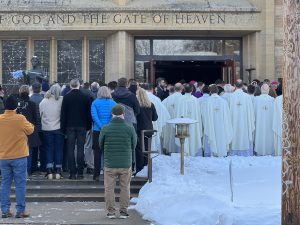
MINNEAPOLIS (OSV News) – On a cold, wintery day, with the congregation gathered around Archbishop Bernard A. Hebda of St. Paul and Minneapolis and Auxiliary Bishops Kevin T. Kenney and Michael Izen outside the main doors of Annunciation Catholic Church in Minneapolis, the rite of reparation began Dec. 6 that restored the space for worship.
The special Mass was held more than three months after an Aug. 27 shooting during an all-school Mass killed two students — 8-year-old Fletcher Merkel and 10-year-old Harper Moyski — and injured 18 students and three adults. The suspected shooter died of a self-inflicted gunshot wound at the scene, police said.
“My brothers and sisters, the resurrection of Jesus Christ from the dead proclaims that evil and death do not have the final word; God does,” the archbishop prayed outside the church, with temperatures in the low 20s.
The faithful gather with Archbishop Bernard A. Hebda of St. Paul and Minneapolis and Auxiliary Bishops Kevin T. Kenney and Michael Izen, Father Dennis Zehren, pastor of Annunciation, Father Tom Margevicius, master of ceremonies, and Deacons Kevin Conneely and Eric Cooley in front of the main doors to Annunciation Catholic Church in Minneapolis Dec. 6, 2025, for the “Rite of Reparation After the Desecration of a Church.” (OSV News photo/Joe Ruff, The Catholic Spirit)
“An Easter preface of the Eucharistic prayer proclaims, ‘By dying, he destroyed our death, and by rising, restored our life,'” the archbishop prayed. “As our archdiocesan patron St. Paul asserted, ‘Where, O death, is your victory: Where, O death, is your sting?’
“Our Blessed Mother lived this faith and cooperated with God’s plan for her life, despite the difficulties it would occasion. We profess that our souls now will rejoin hers in proclaiming the greatness of the Lord in this church, dedicated in her honor, and now reclaimed for the glory of God.”
Accompanied by chanting of the Litany of the Saints, servers entered the church carrying incense, the cross and candles, followed by the bishops, vested in purple, deacons, and priests of the archdiocese in white vestments, other liturgical ministers and all the assembly.
The parish asked that the media not be allowed inside for the Mass. Materials prepared for the rite suggested that part of the litany would include prayers related to the rite of reparation, including the faithful praying “bring healing to those who were injured,” “bring healing and comfort to those suffering the harm done to their children,” and “restore the sanctity of this church, dedicated to your glory and the Annunciation of the Blessed Virgin Mary.”
Inside the church, the altar was bare, unadorned with candles, altar cloths, flowers or other displays of joy, the materials stated. Archbishop Hebda, Bishop Kenney and Bishop Izen processed to their chairs.
A deacon filled two vessels with water and the congregation joined the archbishop in prayer as he blessed the water “which will be sprinkled on us as a memorial of our baptism; it was used when this sacred space was first consecrated, and will now be used in reparation for the evils which have occurred.”
Escorted by deacons, Archbishop Hebda and Father Dennis Zehren, pastor of Annunciation, sprinkled the altar and sanctuary, the church walls and the congregation with the holy water.
Readings from the first Saturday of Advent included verses from Isaiah proclaiming, “O people of Zion, who dwell in Jerusalem, no more will you weep; He will be gracious to you when you cry out, as soon as he hears he will answer you.”
The Gospel from Matthew recounted Jesus visiting towns and villages, teaching in synagogues, proclaiming “the Gospel of the Kingdom, and curing every disease and illness.” After the readings and Archbishop Hebda’s homily, the altar was prepared for the celebration of the Eucharist, and the Mass proceeded.
In notes prepared for his homily, the archbishop began by recounting the “blustery day in March of 1963, as the church universal was engaged in the renewal brought about by the Second Vatican Council, this church was formally dedicated by Archbishop (Leo) Binz.”
The parish had been in existence for more than 40 years, and the building had been in use for a few months, the archbishop wrote.
“As part of that ritual, Archbishop Binz would have anointed the altar and walls of the church with sacred chrism,” he continued, “the same chrism that is used to claim an infant as a child of God in baptism, the same chrism that is used at confirmation to seal us with the gifts of the Holy Spirit, the same chrism with which the hands of a priest are anointed, the same chrism that is poured on the head of a bishop on the day of his ordination.
“The anointing with sacred chrism is a sign of being set aside for God, of being claimed by God,” the archbishop wrote. “If there was any question about that in the case of Annunciation Church, one would only have to look at the inscription on the facade: ‘This is the house of God and the gate of heaven.'”
The readings at a Mass of dedication don’t focus on the building, the archbishop noted. “But rather on the people who make up the community that will worship there, the living stones, who, being nourished by the Eucharist and strengthened by the other sacraments, are called to go out of the church, out of the sacred space, and renew the world.”
Still, the building is important in part as “an architectural recognition of the truth that we’re all created to give God praise.”
“We know all too well what happened here, however, on the morning of Aug. 27. This safe haven, this place of refuge, this foretaste of the order of the heavenly kingdom, was disturbed by a chaos that no one could have imagined,” the archbishop wrote. “It’s for that chaos that we’ve come together to engage in this act of penance and reparation this day.
“This community will never forget what happened that day and will forever remember with great love Harper and Fletcher, whose beautiful and inspiring lives were cut short as they and fellow students gathered for the Eucharist,” he added.
The archbishop expressed gratitude for Father Zehren and Matt DeBoer, principal of Annunciation Catholic School, and for the children and parishioners of Annunciation, for reminding the faithful that Aug. 27 wasn’t the end of the story.
“I’ve never seen such an outpouring of love and mutual support as I have witnessed here these last three months,” the archbishop wrote. “The sorrow understandably lingers, but there’s a Christ-centered resilience here that is remarkable — and praise God — it’s been contagious.
“Today we gather penitentially for this rite of reparation in the hope of restoring the order that Christ desires for his Church, his family. We cannot undo the tragic loss of Fletcher and Harper, but we can communicate to the world that we recognize that the power of God is far in excess of any evil; that where sin abounds, grace abounds all the more,” he wrote.
“We cannot let Satan win, and we, by God’s grace, reclaim this space today for Christ and his Church.”
The light that illuminates and reminds the faithful of Christ’s presence in the tabernacle and in the community must be shared with others, the archbishop said.
Advent is an appropriate time for the rite of reparation as the church prepares for Christmas and the reality that Jesus came into the world, took on weak human flesh to be with sadness and grief, to be with the Moyskis and the Merkels, and with all those impacted by the tragedy of Aug. 27, the archbishop wrote.
“I thank you for being with me this morning,” the archbishop wrote, “for praying with me for God’s blessing on this space and this community. May it be a moment of true renewal for our Church, here at Annunciation and throughout our archdiocese. Praised be Jesus Christ, now and forever.”
Social
VATICAN CITY (CNS) – Human beings are meant to be actively involved in the world of creation, not just passive consumers of content generated by technology, Pope Leo XIV said.
“How can we ensure that the development of artificial intelligence truly serves the common good and is not just used to accumulate wealth and power in the hands of a few?” he asked Dec. 5.
The pope was speaking to people taking part in a conference held in Rome Dec. 5 organized by the Centesimus Annus Pro Pontifice Foundation and the Strategic Alliance of Catholic Research Universities.
The conference, titled “Artificial Intelligence and Care of Our Common Home,” included the presentation of a book of the same name that compiles research by experts analyzing and assessing the impact of AI, especially in the fields of business, finance, education and communication, and proposes solutions to some of the most urgent challenges.
Pope Leo XIV meets with people taking part in a conference on AI in Rome during an audience at the Vatican Dec. 5, 2025. The conference was organized by the Centesimus Annus Pro Pontifice Foundation and the Strategic Alliance of Catholic Research Universities. To the far right of the pope is Bishop Claudio Giuliodori, general ecclesiastical assistant of the University of the Sacred Heart in Milan, Italy. (CNS photo/Vatican Media)
Pope Leo said, “The research carried out by Centesimus-SACRU represents a truly valuable contribution,” since “coordinated and concerted action involving politics, institutions, businesses, finance, education, communication, citizens and religious communities” is needed.
It is “essential to teach young people to use these tools with their own intelligence, ensuring that they open themselves to the search for truth, a spiritual and fraternal life, broadening their dreams and the horizons of their decision making,” the pope said. “We support their desire to be different and better, because never before has it been so clear that a profound reversal of direction is needed in our idea of maturing.”
“We must pause and reflect with particular care upon the freedom and inner life of our children and young people, and the possible impact of technology on their intellectual and neurological development,” he said.
“The new generations must be helped, not hindered, on their path to maturity and responsibility,” he said. “The well-being of society depends on their ability to develop their talents and respond to the demands of the times and the needs of others, with generosity and freedom of mind.”
“The ability to access vast amounts of data and information should not be confused with the ability to derive meaning and value from it,” Pope Leo said. “The latter requires a willingness to confront the mystery and core questions of our existence, even when these realities are often marginalized or ridiculed by the prevailing cultural and economic models.”
Addressing this challenge, he said, “requires asking an even more fundamental question: What does it mean to be human in this moment of history?”
“Human beings are called to be co-workers in the work of creation, not merely passive consumers of content generated by artificial technology,” he said. “Our dignity lies in our ability to reflect, choose freely, love unconditionally and enter into authentic relationships with others.”
While artificial intelligence has opened “new horizons for creativity,” he said, “it also raises serious concerns about its possible repercussions on humanity’s openness to truth and beauty, and capacity for wonder and contemplation.”
“Recognizing and safeguarding what characterizes the human person and guarantees his or her balanced growth is essential for establishing an adequate framework for managing the consequences of artificial intelligence,” the pope said.
“This commitment comes before any partisan interest or profit, which is increasingly concentrated in the hands of a few,” he said. “Only through widespread participation that gives everyone the opportunity to be heard with respect, even the humblest, will it be possible to achieve these ambitious goals.”
Social
WASHINGTON (OSV News) – Despite an uptick in executions in the U.S. in 2025, opponents of the death penalty lauded decreases in new death sentences and waning public support for the practice during comments at a Dec. 3 press event announcing a new coalition called the U.S. Campaign to End the Death Penalty.
Laura Porter, the campaign’s director, said in a statement that the new coalition comes at “a critical juncture in our country’s history with the death penalty, with executions on the rise and new experimental execution methods being promoted in a handful of states despite growing opposition to the death penalty.”
“It is more important than ever that we shine a light on capital punishment’s failures and come together to show growing bipartisan support for ending executions,” Porter said.
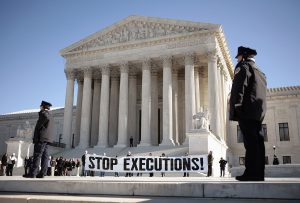
A file photo shows protesters calling for an end to the death penalty outside the U.S. Supreme Court in Washington. On Dec. 3, 2025, a coalition of more than 50 organizations from across the country announced the formation of the U.S. Campaign to End the Death Penalty to unite behind a national strategy to end capital punishment in the United States. (OSV News photo/Jason Reed, Reuters)
According to data from the Death Penalty Information Center, as of Dec. 3, 44 prisoners have been executed in 11 states in the U.S. in 2025, with three more scheduled before the end of the year.
Sister Helen Prejean, a Sister of St. Joseph, who is author of “Dead Man Walking” and a member of the coalition’s advisory council, told reporters, “Simply by being a human person, we have an inalienable right to life, and you cannot entrust over to government ever to have the wisdom or the know how, or the purity of heart, to be able to carry (the death penalty) out.”
The number of executions in the U.S. nearly doubled in 2025 from the previous year, when 25 executions were carried out.
Among the first actions of his second term earlier this year, President Donald Trump signed an executive order directing the U.S. attorney general to “pursue the death penalty for all crimes of a severity demanding its use,” and to “seek the death penalty regardless of other factors for every federal capital crime” that involves the “murder of a law-enforcement officer” or a “capital crime committed by an alien illegally present in this country.”
Some states, such as Florida, have sought to follow suit, dramatically increasing their scheduled executions.
However, an October 2025 Gallup poll found that although a slim majority of Americans favor the death penalty for people convicted of murder, that number continued a steady decline over 30 years, dropping from a peak of 80% in 1994 to 52% in 2025. While statistically similar to its findings in the previous two years, the 2025 result marks the lowest in Gallup’s death penalty trend since 1972, when 50% were in favor.
“I am full of hope on this issue, despite the harshness and terribleness of what’s going on, because I know I’ve been with the people too much, and I see they get the message,” Sister Helen said.
The coalition of more than 50 organizations aims to further increase the number of Americans opposed to the death penalty, advocate for more states to end the practice, and decrease the number of new sentences.
Demetrius Minor, executive director of Conservatives Concerned, a group that opposes the death penalty on pro-life and limited government grounds, told reporters “more and more conservatives across the country are questioning the death penalty and advocating for change.”
Minor argued there is “significant growing interest in the pro-life community to explore how the death penalty fits into their advocacy for life issues, and many are taking on the death penalty.”
“Every successful repeal of the death penalty in the last 20 years has included support from pro-life Republican legislators,” he said. “We expect much more of that in the years to come, and by working in collaboration with the U.S. campaign to end the death penalty and its partners, we can ensure that these efforts continue to be inclusive and bipartisan in the future.”
The Catholic Church’s official magisterium opposes the use of capital punishment as inconsistent with the inherent sanctity of human life, and advocates for the practice’s abolition worldwide.
The late Pope Francis revised the Catechism of the Catholic Church in 2018 to clarify the church’s teaching that capital punishment is morally “inadmissible” in the modern world and that the church works with determination for its abolishment worldwide.
In his 2020 encyclical “Fratelli Tutti,” Pope Francis addressed the moral problem of capital punishment by citing St. John Paul II, writing that his predecessor “stated clearly and firmly that the death penalty is inadequate from a moral standpoint and no longer necessary from that of penal justice.”
About a decade prior to becoming Pope Leo XIV earlier this year, then-Bishop Robert Prevost also raised his voice in support of abolishing capital punishment, writing in a March 5, 2015, post on X, then known as Twitter, “It’s time to end the death penalty.”
Social
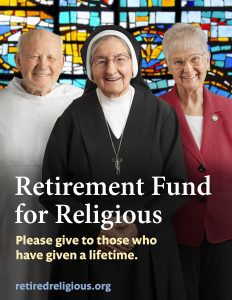
SCRANTON – The National Religious Retirement Office (NRRO) is announcing that the annual Retirement Fund for Religious collection will be held in parishes throughout the Diocese of Scranton on the weekend of Dec. 13-14.
In 2024, Catholics across the Diocese of Scranton contributed $70,104.60 to the collection, mostly through their home parishes.
“The generosity of U.S. Catholics continues to make a profound difference in the lives of aging religious,” John Knutsen, NRRO director, said. “This year, we invite all Catholics to help provide the care and dignity these women and men of faith so richly deserve.”
Rising health-care costs and the absence of traditional retirement plans have placed significant financial strain on many religious communities.
The Retirement Fund for Religious helps address this need, supporting more than 21,000 religious over the age of 70.
In 2024, the average annual cost of care was about $56,600 per person, with skilled nursing care averaging $96,000.
Since its establishment in 1988, the collection has raised over $1 billion, with nearly $900 million distributed for direct care and over $103.7 million allocated to retirement planning projects.
Since 2009, the annual total cost to support senior women and men religious has exceeded $1.1 billion.
In 2024, the appeal raised over $28.1 million, providing financial assistance for the retirement needs of 266 U.S. religious communities.
Beyond financial aid, the collection supports educational programs, empowering religious communities to plan for their long-term needs.
For more information on the collection, visit retiredreligious.org.
Social
By D.D. Emmons, OSV News
(OSV News) – During an adult religious education session, the instructor was discussing the Immaculate Conception and said that the Blessed Mother was conceived without original sin, born without sin and lived without sin. One of those listening immediately responded: “Oh no, you got that wrong! The only person to live a sinless life was Jesus.”
Even after nearly 2,000 years, we still have trouble fully appreciating the beautiful church teaching about the conception of Mary.
Not only are some of the faithful confused about the Mother of God being conceived, born and living without sin, but some think the Immaculate Conception refers to Jesus. Even certain Church Fathers and theologians had questions regarding Mary’s conception.
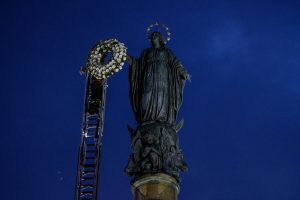
A firefighter places a wreath on the outstretched arm of a Marian statue near the Spanish Steps in Rome Dec. 8, 2024, the feast of the Immaculate Conception. Pope Francis was to pray at the statue later in the day, continuing the papal tradition of visiting the Spanish Steps on the feast day. (CNS photo/Pablo Esparza)
Today, many – especially outside the church – seek to find flaws with this doctrine that evolved to become a belief by all Catholics. It took centuries of discussion, debate and devotion to the Blessed Mother and a groundswell from the laity and the clergy before the church magisterium confirmed a dogma — an article of faith — to be believed by all the faithful, that Mary was immaculately conceived.
Church dogma is a truth revealed by God, declared as such by the infallible authority of the magisterium and considered necessary for salvation; the terms “official church teaching” and “articles of faith” are sometimes used in a synonymous way.
The basic Christian beliefs regarding the divinity of Jesus and holiness of Mary were not widespread issues among the early followers of Christ, at least not until Constantine eliminated religious persecutions in the fourth century; suddenly, Christians began to publicly debate different aspects of Christian teaching.
Early on, the Arians contended that Jesus and God were not the same; a priest named Arius promoted this heretical belief, claiming Jesus was a great prophet and teacher but he was not God. It took the first ever church-wide (ecumenical) council in 325 at Nicaea, Turkey, to sort this issue. The church’s bishops assembled and proclaimed that Jesus and God were equals, and then put a sharp point on the matter by issuing a creed that echoed their sentiment that Jesus is “consubstantial with the Father.” Arius was excommunicated, but the issue did not fully go away.
During the next century, Nestorius, the bishop of Constantinople, took another approach to reject the divinity of Jesus. He preached that Mary was the mother of Jesus but not the mother of God, meaning that Jesus and God were not the same. He had many supporters, and again, the church bishops congregated (the Third Ecumenical Council), this time in the town of Ephesus, Turkey, in the summer of 431.
St. Cyril, bishop of Alexandria, opposed Nestorius’ false teaching and had written the misguided bishop several letters telling Nestorius he was preaching heresy. At the council, the bishops affirmed the decisions of Nicaea, that Jesus was consubstantial with the Father, and defined Mary as the Mother of God. While the doctrine of Mary’s Immaculate Conception was not addressed at either of these councils, the bishops had announced to the world that Jesus was divine and Mary was his mother.
That she was somehow tainted with sin was not questioned until 300 years later when a celebration of the Conception of Mary began in the church. As early as 388, St. Ambrose wrote, “Mary, a virgin not only undefiled but a virgin whom grace has made inviolate, free from every stain of sin.”
By the eighth century, the Eastern Church was celebrating what it called the feast of the Conception of Mary by St. Anne, and over the next 100 years, it spread to the West, first to Southern Italy, then Ireland, and by the 11th century to France and other European countries. As the feast broadened in Europe, the emphasis of the devotion changed from St. Anne to an emphasis on Mary and that she was conceived without sin.
It was in France that St. Bernard of Clairvaux (1090-1153) raised objection to the belief about a sinless conception. He said: “I say that the virgin Mary could not be sanctified before her conception, inasmuch as she did not exist. If, all the more, she could not be sanctified in the moment of her conception by reason of the sin which is inseparable from conception, then it remains to believe that she was sanctified after she was conceived in the womb of her mother. This sanctification, if it annihilates sin, makes holy her birth, but not her conception. No one is given the right to be conceived in sanctity: only the Lord Christ was conceived of the Holy Spirit and he alone is holy from his very conception.”
Any of the theologians of that era who opposed Mary being conceived immaculately without original sin argued along these same lines, including St. Albert the Great (1206-80) and St. Thomas Aquinas (1225-74). They pointed to the fact that original sin is inherent, universal to every man, save Jesus, and they referred to Romans 5:12: “Therefore, just as through one person (Adam) sin entered the world, and through sin, death, and thus death came to all, inasmuch as all sinned.”
Accordingly, they said, all men needed the redemption given by Jesus Christ — all needed a savior.
How, then, could Mary have been free from original sin, if Jesus had not yet been born, had not yet died on the cross and resurrected? They could accept that she was cleansed from original sin sometime between conception and birth, which was the case with John the Baptist, but they couldn’t accept her being conceived with no sin.
The complex issue was explained by Blessed Duns Scotus, a Franciscan who lived from 1266 until 1308. He reasoned that because Mary was going to be the vessel that carried Jesus for nine months and was the source of the miraculous birth, that she could never be soiled with original sin or any sin. She was preserved from all sin at the moment of conception in her mother’s womb, redeemed in advance — a preserved redemption.
At her conception, Mary was infused with supernatural grace in the manner of Eve; she was conceived without sin, born without sin, and, unlike Eve, lived without sin. While original sin is removed from us at baptism, she, because she was destined to become the Mother of God, was, in a unique and singular way, never allowed to acquire sin.
Duns Scotus used this example: “It is a more excellent gift to preserve someone from evil than to permit them to fall into evil and afterwards to deliver him from evil. Thus it is for Mary a more excellent gift to be preserved from original sin than to permit in her the contraction of original sin, and to purify her from it.” While this rationale was accepted by many, the church did not define the Immaculate Conception as dogma or as an article of faith for another 500 years.
In the 14th century, the feast was called the feast of the Blessed Virgin’s Conception and added to the universal church calendar, but Catholics were not required to accept it as official church teaching. Then, as now, the thinking was not that Mary was conceived or born miraculously like Jesus; indeed, she was conceived by relations between her parents, born like every other human being. But unlike others, the sin of Adam was never transferred to her. At the moment, in her mother’s womb, when her soul was united with flesh, she was infused with supernatural grace and protected from original sin.
It appeared that a major advancement in the church — wide proclamation of this belief — was fermented at the Council of Basel (1431-49). The bishops made it clear that Mary, “through the workings of a singular preventive grace was never subject to original sin and always immune from original and actual sin.” The bishops went on to say that this belief had been long held in the church: “We define that it is to be approved by all Catholics and that from now on no one should be allowed to preach or teach the contrary.”
This seemed to move the belief forward toward an official proclamation, but unfortunately, at that time in history, the bishops were not in communion with the pope, and the decrees of the council were not binding.
Nearly 50 years later, Pope Sixtus IV (r. 1471-84) approved the feast of the Conception of the Immaculate Virgin Mary in the Diocese of Rome, and he encouraged all Christians to celebrate the feast and believe in the Immaculate Conception. Sixtus also directed that those celebrating the feast or believing in the Immaculate Conception would not be rebuffed by anyone in the church.
At the Council of Trent, (1545-63) the bishops avoided discussion of original sin as it applied to Mary but referred to the guidance of Pope Sixtus IV. In 1661, Pope Alexander VII (r. 1655-67) declared in a papal bull, “Sollicitudo omnium Ecclesiarum,” that Mary was conceived without original sin and that the feast of the conception celebrates that fact. This bull would have an impact on the eventual decision to declare the Immaculate Conception a church dogma. Pope Clement XI (r. 1700-21) extended the feast of the Conception to the universal church.
Devotion to the Immaculate Conception continued to increase among the laity and clergy as the 19th century began. In 1830, the Blessed Mother appeared in several visions to a nun named Catherine Labouré — later named a saint — at the Daughters of Charity monastery in Chatillion-sur-Seine, France. On Nov. 27, Catherine saw Mary appearing as a picture inside an oval frame standing on a globe with light streaming from her hands. The vision included an inscription: “O Mary conceived without sin, pray for us who have recourse to thee.”
Our Lady asked Catherine to pursue the making of a medal based on the vision that Catherine was witnessing. This medal was initially called the “Immaculate Conception Medal,” but so many miracles came to those who wore it that it became known as the “Miraculous Medal.”
Between 1834 and 1847, the Holy See reportedly received 300 petitions seeking permission to insert the word “immaculate” into the Preface of the Mass on the feast day of Our Lady of the Conception. The people of the United States were devoted to the Immaculate Conception, and in 1846 the bishops of this country chose the Blessed Virgin Conceived without Original Sin as the patroness of the United States.
They requested and received permission from the Vatican to add “immaculate” before the word conception in the Office of the Conception of the Blessed Mother and in the preface of the feast day Mass. All this widespread devotion, as well as that of Christians for centuries, took place before the church defined the Immaculate Conception as dogma to be believed by every Catholic.
Pope Pius IX (r. 1846-78), witnessing the continuous church-wide love and affection for the Blessed Mother as the Immaculate Conception, issued a letter to the worldwide bishops requesting their feedback, that of their clergy and the laity, as to whether or not this long held belief should be adopted as a church dogma.
Pius also convened a group of theologians to study the history and church documents to determine if the belief could be dogmatically defined. The responses were overwhelmingly positive. People throughout the world prayed that the pope would approve and adopt this belief as universal throughout the church.
On Dec. 8, 1854, in the presence of 40,000 people including hundreds of bishops and cardinals, Pope Pius, with great emotion, read his decree “Ineffabilis Deus” (“Ineffable God”), in which he eloquently pronounced the Blessed Mother “preserved from all stain of original sin” was immaculately conceived.
Catholics rejoiced at this infallible act by the Holy Father, an act that affirmed what had been believed by Christians from antiquity, promoted and avowed by popes, church councils, and especially the faithful whose love for the Blessed Mother has continued and grown through the centuries. This papal letter elevated Mary’s perfection to new heights throughout the world, defining that the Mother of God was perfect — is perfect in every way, even from her conception.
Just four years after Pope Pius IX’s papal bull, God affirmed this dogma at Lourdes, France, where a young woman, Bernadette Soubirous, experienced a series of visions of Our Lady. On March 25, 1858, Bernadette asked the Lady her name, and the Blessed Virgin responded, “I am the Immaculate Conception.”
The 14-year-old Bernadette, as well as her parents, had allegedly never heard that name before. The church has authenticated this Marian apparition; Bernadette was declared a saint in 1933, and Catholics annually celebrate the memorial of Our Lady of Lourdes on Feb. 11.
Every Advent, as we await the birth of Our Savior, the holy season is punctuated by the solemnity of the Immaculate Conception. On Dec. 8, we are called to this beautiful holy day of obligation, to celebrate once again the Immaculate Conception of the Blessed Mother and how God almighty prepared her for her role in salvation history, her role as the Mother of the Messiah.
Social
CLARKS SUMMIT – The Diocese of Scranton is mourning the loss of a long-time employee. We remember Mary Jane Sheridan, who devoted more than three decades to the Diocese of Scranton – serving most recently as the Executive Assistant to the Most Rev. Joseph C. Bambera, Bishop of Scranton.
Please join us for praying for the repose of the soul of Mary Jane Sheridan, as well as for the love and support of her husband, Patrick, daughters Jennifer and Kristen, and her entire extended family.
Memorial contributions in honor of Mary Jane can be made directly online by clicking this link.
OBITUARY:
Mary Jane Sheridan, Clarks Summit, passed away peacefully on Friday afternoon at her home surrounded by her family. Her husband of 52 years is Patrick J. Sheridan.
Her greatest joy came from caring for her family, to whom she gave unwavering love, support, and guidance. She was a devoted mother, wife, sister, friend, and “Mimi” to her grandchildren.
Born March 12, 1951 in Scranton, Mary Jane was the daughter of the late James J. and Eleanor Huber Thomas. She was a graduate of Scranton Technical High School and went on to work for the Scranton School District for 10 years.
After spending years at home with her children, she joined the Diocese of Scranton for over 30 years, serving in the Office of Parish Ministries, Diocesan Schools Office, and culminating her career as the executive assistant to the Bishop of the Diocese of Scranton. She was a member of the Church of Saint Gregory, Clarks Summit, and formerly a member of St. Patrick’s Parish, West Scranton.
Also surviving are her daughters Jennifer Sheridan, Ed.D. and Kristen Sheridan Wozniak, FNP and her husband Ethan; her beloved grandchildren Ellia, Ryan, and Andrew Wozniak; her brothers James J. Thomas and his wife Carol, George T. Thomas and his wife Kathy, Patrick J. Thomas and his wife Gina, and sister Lori Thomas Wagner, as well as, several cherished nieces and nephews.
She was also preceded in death by her sister Eleanor M. Powell; her in-laws Charles J. and Mary T. Sheridan; brothers-in-law Thomas “TJ” Wagner and Joseph C. Sheridan.
Mary Jane’s family would like to express their heartfelt gratitude to the many talented, dedicated, and compassionate doctors, nurses, and health care professionals, who cared for her during her illness in Scranton and at Thomas Jefferson University Hospital, Philadelphia.
Mass of Christian Burial will be celebrated Thursday morning at 10 a.m. in the Church of Saint Gregory, 330 North Abington Rd. Clarks Summit with The Most Reverend Joseph C. Bambera, D.D., J.C.L., Bishop of the Diocese of Scranton serving as the principal celebrant.
Friends may call Wednesday from 4:00 to 7:00 p.m. in the Vanston and James Funeral Home, 1401 Ash St., Scranton.
All those attending the funeral are asked to go directly to The Church of St. Gregory on Thursday morning.
Interment, Cathedral Cemetery.
To share a memory, to express your condolences to the family or to view Mary Jane’s memorial slideshow please visit jamesfamilyfunerals.com
In lieu of flowers, the family asks that memorial offerings be directed to the Diocese of Scranton in thanksgiving for Mary Jane’s life. Memorial offerings should be forwarded to: Diocese of Scranton, Development Office, 300 Wyoming Avenue, Scranton, PA 18503.
Social
(OSV News) – Pope Leo XIV’s childhood home just outside of Chicago has been declared a historic landmark.
The board of trustees of the village of Dolton, Illinois, approved a motion for the designation during a regular meeting Dec. 1 that began with a recitation of the Lord’s Prayer.
Mayor Jason House described the property as one of the “most culturally and spiritually significant locations in the United States,” according to ABC-7 Chicago.
The modest, one-story brick residence, located at 212 E. 141st Pl., was purchased by the village’s board in July for $375,000, an amount that included all applicable realtor and auction fees.
Pope Leo XIV’s childhood home in Dolton, Ill., a suburb of Chicago, is pictured May 9, 2025. Dolton’s board of trustees on Dec. 1 approved a motion to officially declare the house a historic landmark. Shortly after the former Cardinal Robert Prevost was elected pope, the board purchased the residence in July for $375,000. (OSV News photo/Carlos Osorio, Reuters)
Weeks after the election of the first U.S.-born pope, the board had moved to acquire the 75-year-old home where the former Robert Prevost and his family lived until 1969. The site immediately became a tourist attraction and even a place of pilgrimage after Pope Leo’s papal election.
In July, Dolton spokesperson Nakita Cloud told OSV News that making the place a historic site would “open the door for federal and state funding opportunities tied to historic preservation, tourism development, and community revitalization,” while also attracting “philanthropic and nonprofit partnerships that support cultural and educational initiatives.”
Speaking during the board meeting ahead of the vote, House said the move represented “a very big moment for residents” of the village.
He commended Dolton’s volunteer historical commission for its work on the project.
Commission member and village clerk Alison Key said she and her fellow commission members were “very excited about this, because this is something very new to the village.”
She stressed that the commission sought to ensure the process was followed correctly, adding, “We just want to make sure that everybody is excited, and that you are proud to live in Dolton, the home of Pope Leo XIV.”
House said that additional documentation and review is planned “to make sure that our community is very proud of what’s to come.”
He added that there is a “target timeline” of spring 2027 for implementation and completion of the project, adding, “I’ll say ‘target,’ because hopefully it’s faster.”
In July, Cloud had indicated a possible future collaboration with the Archdiocese of Chicago on the development of the historical site. OSV News is awaiting a response to its request for comment from the archdiocese.
Social
VATICAN CITY (CNS) – Visiting two countries over six days on his first foreign papal trip, Pope Leo XIV preached unity, dialogue and respect for differences as the only paths to peace.
Spending time with Catholics, other Christian leaders and top Muslim clerics in Turkey Nov. 27-Nov. 30 and Lebanon Nov. 30-Dec. 2, the pope made formal speeches about how believing in God as the father of all means recognizing one another as brothers and sisters.
But he also set aside time in a packed schedule for private talks, lunches and late evening meetings with the leaders.
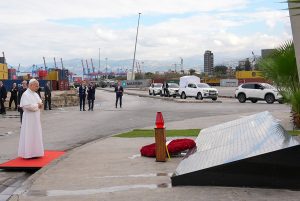
Pope Leo XIV prays at a memorial marking the site of a deadly explosion in 2020 at the port in Beirut, Lebanon, Dec. 2, 2025. (CNS photo/Lola Gomez)
“The more we can promote authentic unity and understanding, respect and human relationships of friendship and dialogue in the world, the greater possibility there is that we will put aside the arms of war, that we will leave aside the distrust, the hatred, the animosity that has so often been built up and that we will find ways to come together and be able to promote authentic peace and justice throughout the world,” he told reporters flying back to Rome with him Dec. 2.
The three iconic moments of the trip were his prayer with top Christian leaders Nov. 28 at the site of the Council of Nicaea, his visit to the Blue Mosque in Istanbul Nov. 29 and his prayer Dec. 2 amid the rubble of the Beirut port explosion in 2020.
The whole trip was planned to commemorate the 1,700th anniversary of the Council of Nicaea and its drafting of the Creed that mainline Christian communities still recite today.
Orthodox Ecumenical Patriarch Bartholomew of Constantinople hosted the ecumenical prayer service and the common recitation of the Creed on a platform overlooking the ruins of a Christian basilica in Iznik, site of the ancient Nicaea, about 80 miles southeast of Istanbul.
With the Greek Orthodox patriarchs of Antioch, Alexandria and Jerusalem or their representatives and with representatives of other Orthodox, Anglican and Protestant churches, Pope Leo said that at a time when humanity is “afflicted by violence and conflict,” the world “is crying out for reconciliation.”
“The desire for full communion among all believers in Jesus Christ is always accompanied by the search for fraternity among all human beings,” he said. “In the Nicene Creed, we profess our faith ‘in one God, the Father.’ Yet, it would not be possible to invoke God as Father if we refused to recognize as brothers and sisters all other men and women, who are created in the image of God.”
The desire to reach out and form relationships with others also was on display when Pope Leo, like his two immediate predecessors, removed his shoes and entered the so-called Blue Mosque in Turkey’s capital; he spent about 20 minutes inside but did not appear to pause for prayer as Pope Benedict XVI and Pope Francis had done.
Instead, he listened to Askin Musa Tunca, the mosque’s muezzin who calls people to prayer five times a day, explain the building, its construction and how Muslims pray. And the pope asked questions.
The Vatican press office said afterward that Pope Leo visited the mosque “in a spirit of reflection and attentive listening, with deep respect for the place and for the faith of those who gather there in prayer.”
On his last morning in Beirut, he laid a wreath, lighted a candle and prayed silently at a memorial to the more than 200 people killed when improperly stored chemicals exploded at the port; the blast also injured some 7,000 people and left an estimated 300,000 people without homes.
Standing amid mountains of rubble, piles of burnt-out cars and heaps of tattered clothing and cloth, the pope was joined by family members of those killed and by people still bearing the scars of injuries they suffered that day.
They carried photos of the loved ones they lost and signs appealing for the government to seriously investigate who was at fault for allowing the chemicals to be stored there.
A young woman, crying, asked Pope Leo for a hug, which the pope gave her before putting his hand on her head and blessing her.
At Mass afterward, he said, “I prayed for all the victims, and I carry with me the pain, and the thirst for truth and justice, of so many families, of an entire country.”
And after Mass, before heading to the airport, he told the people, “During these days of my first apostolic journey, undertaken during this Jubilee Year, I wanted to come as a pilgrim of hope to the Middle East, imploring God for the gift of peace for this beloved land, marked by instability, wars and suffering.”
Even when it seems peace is far off, Pope Leo said, “I invite you to lift your gaze to the Lord who is coming! Let us look to him with hope and courage, inviting everyone to set out on the path of coexistence, fraternity and peace. Be artisans of peace, heralds of peace, witnesses of peace!”
Social
WASHINGTON (OSV News) – The Supreme Court on Dec. 2 heard oral arguments in an appeal from a group of faith-based pregnancy centers in New Jersey challenging an investigation by that state’s attorney general alleging they misled people about their services and seeking information about their donors.
First Choice Women’s Resource Centers operates five centers in the Garden State that provide some medical services, including ultrasounds, to women with unplanned pregnancies.
In 2023, New Jersey Attorney General Matthew Platkin moved to launch a consumer protection probe investigating First Choice, alleging they misrepresented themselves to clients as if their services included referrals for abortion. As part of his probe, he issued a subpoena seeking information including about its donors — but before the expiration date, First Choice asked a federal court to intervene on its behalf, arguing the probe violated its First Amendment rights.
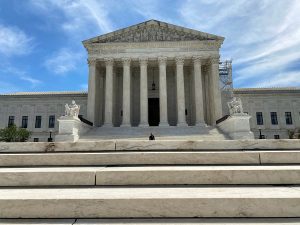
The U.S. Supreme Court building is pictured in Washington June 1, 2024. The nation’s highest court heard oral arguments Dec.. 2, 2025, in a case brought by First Choice Women’s Resource Centers in New Jersey; the state attorney general’s office alleges the group of faith-based pregnancy centers may have misled women about whether it provides certain reproductive-health services. (OSV News photo/Will Dunham, Reuters)
A key question in the case is whether First Choice must first pursue its claims in state court or meet the legal threshold for the federal court.
Erin Hawley, senior counsel at Alliance Defending Freedom — a legal organization representing First Choice — and vice president of ADF’s Center for Life and Regulatory Practice, argued to the justices that “this Court has long safeguarded the right of association by protecting the membership and donor lists of nonprofit organizations like First Choice.”
“Yet the Attorney General of New Jersey issued a sweeping subpoena commanding on pain of contempt that first choice produced donor names, addresses and phone numbers so his office could contact and question them,” Hawley, who also is the wife of Sen. Josh Hawley, R-Mo., added.
Hawley argued that the probe chilled her clients’ First Amendment rights and that “First Choice is simply asking for its day in federal court.”
Sundeep Iyer, who represented New Jersey, denied Hawley’s argument, instead arguing that any disclosure of such information from the subpoena is “wholly contingent on a future state court order requiring production.”
“My friends on the other side, don’t let the actual factual allegations get in the way of telling a story about hostility here, but I think that story is just not borne out by the record evidence that’s been offered here” he said.
But in a notable moment, Justice Elena Kagan asked Iyer whether “an ordinary person, one of the funders for this organization, or for any similar organization, presented with this subpoena and then told, ‘but don’t worry, it has to be stamped by a court,'” is “going to take that as very reassuring?”
In remarks on a press call with reporters the previous day, Aimee Huber, executive director of First Choice, said, “On November 15, 2023, a representative from New Jersey’s Attorney General’s office came to my office, asked for me, and handed me a subpoena. It commanded us to release up to 10 years of documentation on our donor communications, advertising statements about abortion pill reversal, and even our donors’ identities. There were no allegations of wrongdoing. It was simply a fishing expedition.”
Proponents of a process sometimes called abortion pill reversal say administering a dose of progesterone in an attempt to stop the effects of a chemical or medication abortion can halt the effects of mifepristone, the first of two drugs used in the process. But opponents argue that it is an unproven method. A 2019 study of the abortion reversal process was ended early due to safety concerns. New Jersey and New York are among the states that have probed organizations that advertise abortion pill reversal.
A spokesperson for Platkin’s office did not immediately respond to a request from OSV News for comment.
The First Amendment issues at play in the case drew support for First Choice from a broad range of organizations. The American Civil Liberties Union and the ACLU of New Jersey joined an amicus brief written by the Foundation for Individual Rights & Expression, or FIRE, in support of what they argued was First Choice’s right to seek federal relief.
“Even before they’re enforced, law enforcement subpoenas seeking sensitive donor information threaten to scare away supporters essential to any nonprofit’s work,” Brian Hauss, deputy project director of the ACLU’s Speech, Privacy, and Technology Project, said in a Dec. 2 statement. “At a time when government officials throughout the country abuse regulatory powers to punish their ideological opponents, federal courts must remain a venue in which people can vindicate their First Amendment rights.”
Ashley McGuire, senior fellow at The Catholic Association, argued in a Dec. 2 statement that pregnancy resource centers “are an essential part of a pro-life safety net that enables women to thrive as the mothers they want to be.”
“They provide essential medical and material support to mothers and babies valued at more than $450 million annually, going beyond meeting the immediate needs of women in crisis pregnancies,” she said. “PRCs help transform expectant mothers’ lives with housing, parenting classes, and job training, to name a few invaluable resources. Given that the overwhelming majority of women who have abortions say they were pressured or coerced and that 60 percent of post-abortive women say they would have preferred to have their baby if they had support, PRCs offer what women want: a true choice. And yet, they face never-ending legal harassment.”
First Choice states on its website that it works to “equip women and men to make informed pregnancy decisions” about a range of options.
“First Choice Women’s Resource Centers is an abortion clinic alternative that does not perform or refer for termination services,” it states.
The Catholic Church teaches that all human life is sacred from conception to natural death, and as such, opposes direct abortion.