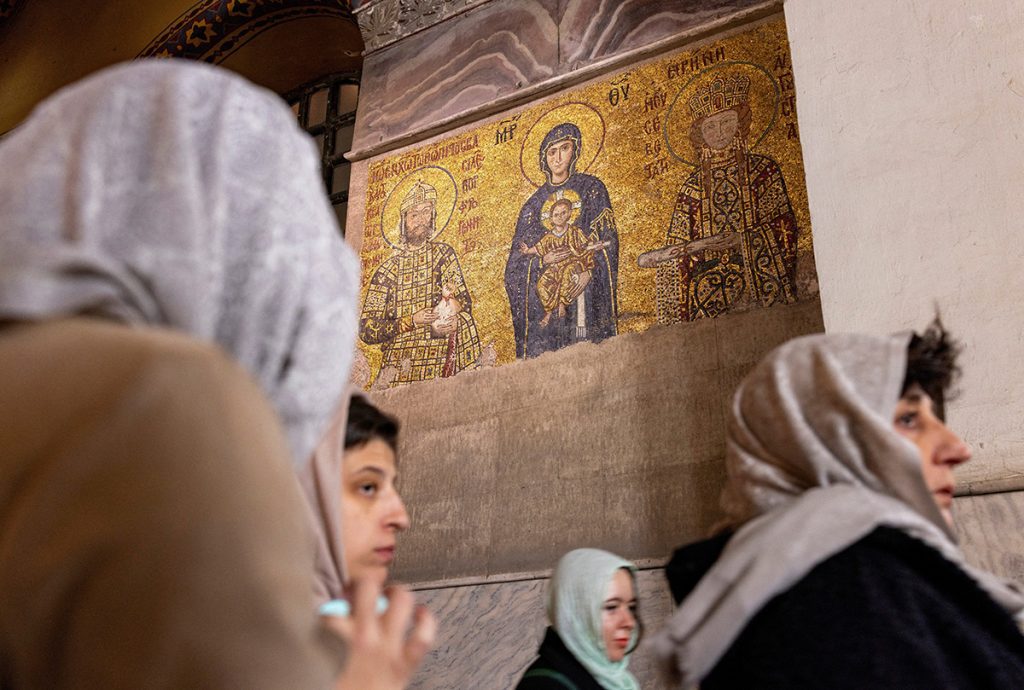
Tourists and worshippers visit Ayasofya-i Kebir Cami-i Serifi, or the Hagia Sophia Grand Mosque, in Istanbul, Turkey, April 14, 2025. Data released Nov. 18, 2026, by the Pew Research Center shows Muslims are projected to outnumber Christians by 2035 and will account for 36% of the global population by 2070. (OSV News photo/Umit Bektas, Reuters)

(OSV News) – Data from the Pew Research Center shows Muslims are projected to outnumber Christians by 2035 and will account for 36% of the global population by 2070, with Christians projected to remain at 29% and religiously unaffiliated persons dropping off from 24% in 2020 to 17% by then.

In addition, more than half of the world’s Christians will reside in sub-Saharan Africa by 2070, with the U.S. no longer having a Christian majority population, although Christians will still comprise the nation’s largest religious group.

The anticipated shifts are due to a combination of demographic factors, such as fertility, longevity and mortality rates, along with religious “switching” (changing from one’s childhood faith tradition in adulthood) and, in some places, migration.

Pew presented its findings in “The Future of World Religions: Population Growth Projections, 2020-2070,” released Nov. 18.

Researchers used an advanced demographic projection model — developed in partnership with the Center for Advanced Studies of Population and Religion at the Krakow University of Economics — that drew on data from a number of global and national sources. Populations were grouped into national cohorts of age and sex, with 2020 set as the study’s baseline year.

— Fertility rates, rather than conversions, are key —

According to Pew, “the largest source of new members of major religions is not adults who convert to the faith, but babies who are born into the group.”

Among adherents of Islam, Christianity and Judaism, total fertility rates are above the typical replacement level of 2.1 children per woman, said Pew.

For the period 2020-2025, that rate was highest among Muslims, measuring 3.1. Christianity and Judaism showed respective rates of 2.5 and 2.3.

Citing United Nations data, Pew noted that global fertility rates are set to level out somewhat in the coming years, gradually declining in countries with very high rates and stabilizing or even modestly increasing in countries with low rates at present.

Still, said Pew, “Muslims are the only major religious group expected to have growing numbers of births in the decades ahead.”

Pew stressed that while “all of the world’s major geographic regions are projected to see their religious composition change,” some areas “will change more than others.”

That anticipated shift is largely due to “fertility differences between religious groups” which “often reflect the overall fertility of the countries in which they are concentrated.”

Pakistan, with a fertility rate of 3.6, is projected to become home to the world’s largest Muslim population by 2070, supplanting Indonesia.

Also by 2070, the Democratic Republic of the Congo, with a fertility rate of 6.1 for the period 2020-2025, will replace the U.S. as the nation with the largest Christian population, said Pew.

Pew noted that during the 21st century, “most of the world’s population growth is expected to occur in Africa,” and by 2070, “more than a quarter of all people worldwide will live in sub-Saharan Africa.”

With most people there identifying as either Christian or Muslim, said Pew, “the region’s high fertility and rising life expectancy will boost the global numbers of both faiths.”

In contrast, Europe’s population is set to contract between 2020 and 2070, with its share of the world population likely falling from 10% to 6%, said Pew.

Europe’s low fertility rates will contribute to an overall decline in Christianity there, from 67% in 2020 to an estimated 52% by 2070, said Pew.

— The rise, and fall, of the ‘nones’ —

Pew noted that the numbers of religiously unaffiliated, or “nones” — those who identify as atheist, agnostic or “nothing in particular” — will rise in most nations by 2070, up from almost 2 billion in 2020.

In Latin America and the Caribbean, “Christians will gradually decline as a share of the overall population,” trending down from 85% in 2020 to 77% in 2070, with the number of “nones” set to gain the most numbers, said Pew.

However, Pew underscored, the global increases in the number of religiously unaffiliated “will be entirely offset by declining numbers in one country: China.”

The Asian nation, home to most of the world’s “nones,” is “projected to experience a drop of more than 421 million people in its overall population between 2020 and 2070,” mostly from deaths outpacing births, said Pew.

By 2070, the number of “nones” will likely rise in 141 countries and territories, giving France, South Korea and the United Kingdom religiously unaffiliated majorities, said Pew.

In the U.S., that increase will narrow the gap between Christians and “nones,” respectively predicted as 48% and 41%, said Pew.

But, said Pew in its report, given the population decrease in China, “‘nones’ will make up 17% of the world population by 2070, down from 24% in 2020.”

— Religious switching, migration are also factors —

Pew found that religious switching — in which a person moves from a childhood faith to another during adulthood — will likely have a “modest” net effect for most religious groups.

At the same time, said Pew, rates of religious switching typically vary by religion, and such switching is “projected to be especially consequential for two groups: unaffiliated people and Christians.”

Of the groups it studied, Pew found Christians “have the highest ratio of people leaving to (those) joining the religion,” with 2.3 estimated to exit the faith for every one person entering it during the period 2020-2025.

Muslims and Hindus each have retention rates of 99%, with 92% of the religiously unaffiliated remaining as such, said Pew.

On balance, said Pew, “migration has little impact on the global religious landscape as people move from one location to another.”

Yet migration can have significant impact on “the religious makeup of a region or country,” with its effects “especially evident in places where migration flows are large and the religious profile of migrants differs from that of the broader population.”

Assuming migration levels remain constant, Muslims could comprise 13% of Europe’s population by 2070, said Pew.

By 2070, “Muslims will more than triple in number in North America – from about 6 million to 20 million – with migration into the region playing a large role,” said Pew.

In the U.S., the Muslim population is anticipated to grow by 7 million, “but will still account for a relatively small percentage of the country’s total population (4%),” said Pew.
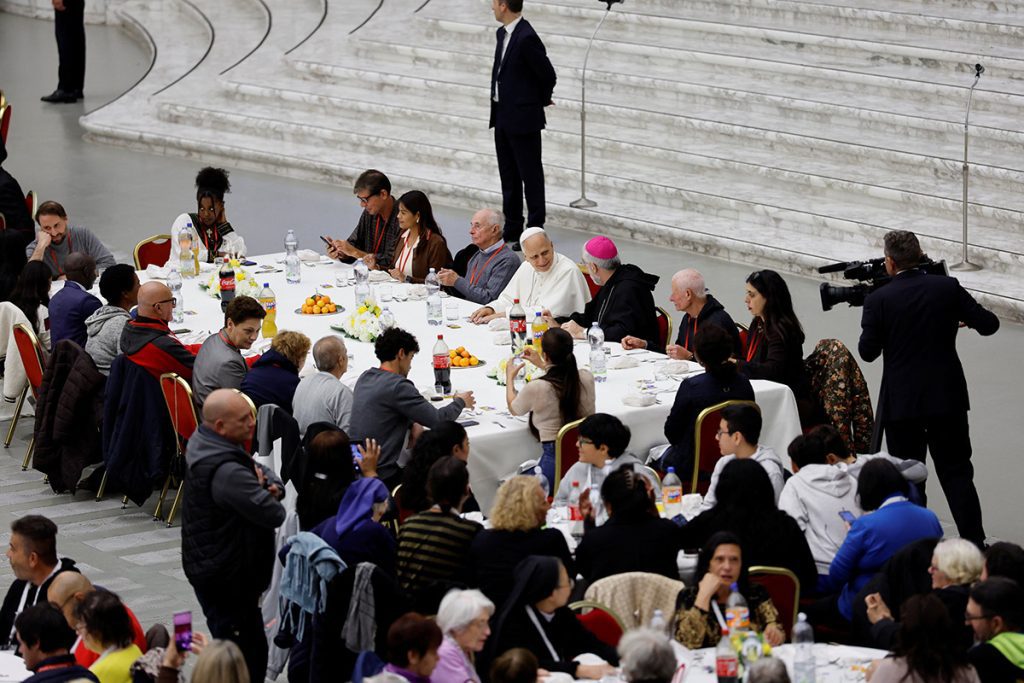
Pope Leo XIV participates in a lunch offered by the Vatican for people experiencing poverty at the Paul VI Audience Hall Nov. 22, 2026. (OSV News photo/Vincenzo Livieri, Reuters)

(OSV News) – Pope Leo XIV welcomed 1,300 people experiencing poverty to share lunch at the Vatican Nov. 22.

“Lord, help us to be witnesses to your love. Grant every family the joy of being united in peace. Grant that no one may lack the necessities of life. We give you thanks, Lord, for this fraternal meal and for all those who helped prepare this celebration,” Pope Leo prayed at the start of the meal.

The lunch was served by the Italian Red Cross, thanks to the efforts of more than 400 volunteers. Guests were treated to a three-course meal: cannelloni, beef stew with peas, and ice cream.

The pope arrived at the Paul VI Audience Hall after praying the Sunday Angelus in St. Peter’s Square, joining guests who had been invited by charitable organizations in Rome that provide daily material and spiritual support to vulnerable persons whose lives have been marked by hardship, war and unrelenting suffering.

Children greeted the pope enthusiastically, while everyone stood to listen to him when he welcomed them, with their applause expressing their gratitude for a tradition that began in 2017 with Pope Francis on the first World Day of the Poor.

Different stories, faces and languages filled the Vatican hall, transformed for the day into a large dining room and a place of prayer with the pope.

Pope Leo thanked Archbishop Luis MarĆ­n de San MartĆ­n, who heads the Vatican Dicastery for the Service of Charity, for organizing the lunch, as well as the volunteers from the Italian Red Cross.

“We are all family today,” the pope said.

“Above all, we want to thank the Lord, who gives us life and the opportunity to celebrate this gathering together, and to thank all those who always accompany us on our journey,” he added.

Pope Leo concluded with a prayer and the blessing. “May our food help us to better fulfill your will and to build your Kingdom of love,” he prayed. “Grant that one day we may be guests at the table of your Kingdom, singing your praise forever. Through Jesus Christ, King of the universe, who lives and reigns forever and ever.”

“Buon appetito — enjoy your meal — everyone!” Pope Leo said, before taking his seat at a table with 18 people. The Italian Red Cross provided musical entertainment with its national band performing during the meal.

Before the pope welcomed everyone, Archbishop MarĆ­n addressed those present, describing the lunch as “a true experience of fraternity,” where everyone can feel at home.

“Holy Father, we thank you for your constant invitation to truly be God’s family,” to be a Church close to the people, capable of reaching out to them, he said. “Thank you for being here and sharing this day with us.”

Speaking with Vatican Media after the meal, the archbishop described it as “a wonderful day, full of joy, during which we shared our hearts with all the friends who were present.”

He said it was “a sign of what the Church is: welcoming and caring for her children.” The papal almoner expressed hope that, from this day forward, this would become the path they walk together, with open and generous hearts toward others.

At the conclusion of the lunch, Pope Leo expressed his gratitude for “the gifts we have received during this wonderful gathering.”

“A gathering like this helps us remember that we are never alone,” the pope said. “We can always find someone with whom to share the journey of life. So, you too should try to help others experience solidarity and friendship, always united in Jesus Christ.”

As the guests left, each received a bag containing a wool hat, razors, toothbrushes, shampoo and other necessities.

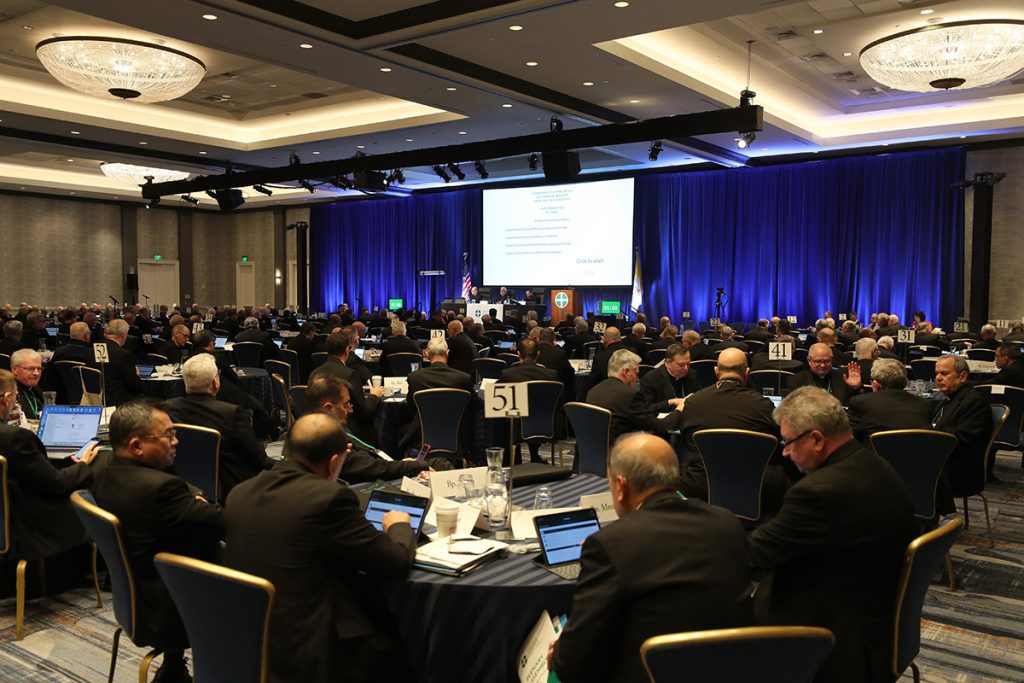
Bishops vote during a Nov. 17, 2026, session of the fall general assembly of the U.S. Conference of Catholic Bishops in Baltimore. (OSV News photo/Bob Roller)

BALTIMORE (OSV News) – The nation’s Roman Catholic bishops have approved updated versions of the Roman rite Mass lectionary and Book of the Gospels, with translations now matching those in the forthcoming Catholic American Bible.

The favorable Nov. 18 vote – with 196 in favor, five against and three abstaining – took place amid the U.S. Conference of Catholic Bishops’ annual fall plenary assembly, held Nov. 16-19 in Baltimore.

The Catholic American Bible will replace the New American Bible Revised Edition, or NABRE, which was released in March 2011 and has been the English translation of Scripture used in the readings at Masses. The new biblical translation will be available in 2027 through approved publishers, including Our Sunday Visitor, the parent company of OSV News.

The bishops’ decision on the lectionary and Book of the Gospels will now be submitted to the Vatican Dicastery for Divine Worship and the Discipline of the Sacraments for official confirmation and recognition.

“It is about consistency,” Auxiliary Bishop Michael G. Woost of Cleveland, chair of the U.S. Conference of Catholic Bishops’ Committee on Divine Worship, told OSV News.

With the upcoming 2027 release of the newly translated Catholic American Bible, said Bishop Woost, “we needed to bring those translations into the lectionary,” which contains the passages of Scripture to be read at the day’s liturgy.

Eastern Catholic churches have their own specific lectionaries, as do a number of Protestant Christian denominations.

The Book of the Gospels, a dedicated liturgical book containing the Gospel texts, is used in both the Roman and Eastern Catholic churches, and reverenced during the liturgy as a sign of Christ’s presence.

“The Gospel, in a unique way, represents for us the presence of Christ in the midst of the assembly,” as the Second Vatican Council stressed in “Sacrosanctum Concilium,” its constitution on the sacred liturgy, said Bishop Woost.

“So when the word is proclaimed, we are encountering Christ,” he said.

Bishop Woost told OSV News that the newly approved Book of the Gospels has been expanded “so that it can be used more often,” including during “many of the major feasts and solemnities.”

For example, he said, the updated version includes the passage for All Souls’ Day (Nov. 2), the Masses for which “tend to attract a large crowd” of those “coming to pray for their deceased relatives and friends.”

The use of the Book of the Gospels during those liturgies helps “elevate the solemnity of those particular occasions” and reinforce the awareness of Christ’s presence in his word, said the bishop.

Bishop Woost told OSV News that he and his fellow prelates are “really hoping” that with their aligned translations, the Catholic American Bible, the lectionary and the Book of the Gospels will encourage “people to actually read the Scriptures before coming to Mass.”

Doing so provides an opportunity to “pray with” and “meditate upon” the Scripture passages, “and then hear the same readings when they go to Mass, especially on Sundays,” he said.

“It’s a good idea to at least start looking at the readings long before you go to Mass,” Bishop Woost advised.

He pointed out that many parishes print the list of the week’s daily Scripture readings in their bulletins, making it easier for the faithful to access them.

The USCCB also makes the readings available in both English and Spanish on its website at usccb.org.

“Really enter into praying” with the Scriptures before Mass, Bishop Woost said, noting that “you don’t have to read all of them at once.”

“Make one reading (from Mass) part of your daily prayer throughout the course of the week,” he suggested.

That practice will enable the faithful to realize more deeply the significance of Scripture in the celebration of the Mass, he said.

“Christ is present in our midst through the proclamation of his word,” said Bishop Woost.

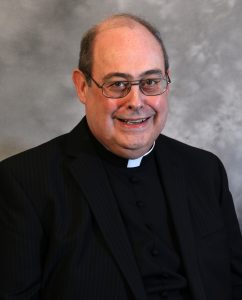
HAZLETON – The Most Rev. Joseph C. Bambera, Bishop of Scranton, will serve as principal celebrant of a Pontifical Concelebrated Mass of Christian Burial for Father Michael J. Piccola on Friday, Nov. 20, at 11 a.m. in the Church of Saint Joseph at Saints Cyril & Methodius Parish, 604 North Laurel St., Hazleton.

Father Piccola died Sunday, Nov. 15, at the age of 74, after faithfully serving as a priest of the Diocese of Scranton for 48 years.

Born June 26, 1952, in Hazleton, son of the late Michael and Rose Giallanardo Piccola, Father Piccola was a graduate of Hazleton High School and attended The University of Scranton, where he earned his Bachelor of Science degree in 1974.

He began his priestly formation and education at Saint Pius X Seminary, Dalton, and completed his theological training and preparatory studies at Mount Saint Mary’s Seminary in Emmitsburg, Md.

Father Piccola was ordained to the priesthood for the Scranton Diocese on May 6, 1978, in the Cathedral of Saint Peter by the late Most Rev. J. Carroll McCormick, sixth Bishop of Scranton.

Following ordination, he was assigned as assistant pastor of Saint Matthew Parish in East Stroudsburg. He subsequently served in the same role at the parishes of Saints Peter & Paul, Towanda, and Saint Rose of Lima, Carbondale, and as director of religious formation at Sacred Heart High School in Carbondale.

In 1985, Father Piccola was appointed principal of Bishop O’Reilly High School in Kingston, while residing at Saint Ignatius Parish, Kingston.

After serving briefly as administrator of Saint Francis of Assisi Parish, West Hazleton, in 1991, he received his first pastoral assignment in June 1991 at Good Shepherd Parish in Drums.

Father Piccola received his appointment as pastor of Immaculate Conception Parish in West Pittston in January 1999. While serving in the pastorate, he was named administrator of Holy Redeemer Parish in nearby Harding in July 2004.

Six years later, in 2010, he was assigned as pastor of Saints Cyril & Methodius Parish and Saint Stanislaus Parish in Hazleton. In May 2012, Father Piccola assumed the added assignment as administrator pro tem of Holy Rosary Parish, Hazleton. He was also appointed priest moderator of Saint Patrick Church in White Haven in 2019.

In February 2023, while remaining as pastor of the Hazleton parishes, Father Piccola was appointed administrator pro tem of Holy Rosary Parish, Hazleton, and Holy Name of Jesus Parish, West Hazleton. He was eventually named priest moderator of the parishes when the faith communities were linked under the leadership of a Parish Life Coordinator in 2024.

In addition to his parochial duties, Father Piccola served his Diocese as deanery coordinator for Pope John Paul II’s papal visit to the United States in 1979. He also served as chaplain of the General Sullivan Council of Boy Scouts of America and as dean of the Freeland, West Pittston and Hazleton deaneries.

Father Piccola is survived by his sister, Theresa Piccola of Hazleton; and several cousins.

Interment will be conducted at Saint Gabriel Cemetery in Hazleton.

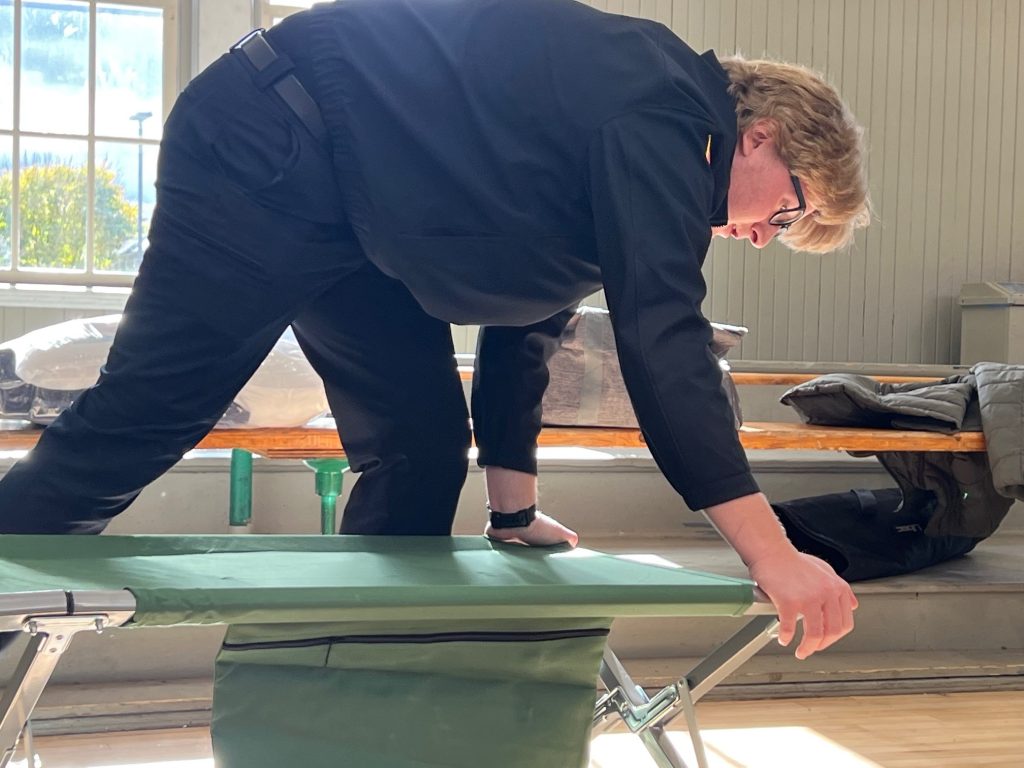
Ryan Monroe, Emergency Management Specialist for the Scranton Fire Department, sets up a cot for the Code Blue Shelter inside Weston Field House last winter. (Photo/Eric Deabill)

SCRANTON – As overnight temperatures dropped to a dangerous level with the wind chill last Friday night in the Scranton area, Catholic Social Services of the Diocese of Scranton once again opened the doors of Weston Field House, offering warmth, food and a safe place to sleep to 23 people (9 women and 14 men) experiencing homelessness.

For the second consecutive winter, Catholic Social Services has partnered with the City of Scranton and Lackawanna County to staff and operate the Code Blue Emergency Shelter, which can accommodate up to 50 people on nights when extreme cold creates potentially life-threatening conditions.

The need was unmistakable last winter.

Between December 2025 and April 2026, the Weston Field House shelter operated on 77 Code Blue nights, providing a total of 2,443 individual nights of shelter. What began with just 10 people seeking refuge on the first night quickly became a much larger operation.

By January, the shelter was regularly welcoming more than 30 people each evening. On two occasions in February, Feb. 5 and Feb. 7, the facility reached its full capacity of 50 people.

ā€œIt was a very harsh winter,ā€ Joe Mahoney, Chief Executive Officer of Catholic Social Services, explained. ā€œDuring the month of February, we had a Code Blue almost every day. There was also one weekend where the shelter stayed open the entire weekend.ā€

That weekend was a late January snowstorm that dumped more than a foot of snow in parts of Lackawanna County.

ā€œWe said, we’re going to stay, it’s not safe to have people even leave to go to the Community Intervention Center, and thankfully the city allowed us to stay there the whole weekend and everyone came together as a community,ā€ Sarah Pavlovicz, the new supervisor overseeing Code Blue operations for CSS, recalled.

Located at 982 Providence Road, the gym of Weston Field House is transformed into an emergency shelter whenever the city and county declare a Code Blue alert, generally when temperatures or wind chills are expected to fall below 20 degrees.

The Code Blue shelter officially opens at 7:30 p.m. each evening, but volunteers say guests are often let in early and even help set up all the cots. Guests can stay until 7:00 a.m. the following morning.

The additional space provided by the Code Blue Shelter is critical because Catholic Social Service’s year-round shelter, Saint Anthony’s Haven, located at 409 Olive Street, provides 20 beds for men and six for women.

ā€œOn these Code Blue nights, that is not enough,ā€ Mahoney said.

At Weston Field House, guests not only receive a warm place to sleep, but hot soup provided through Saint Francis of Assisi Kitchen and access to basic necessities.

ā€œWhile we have certain rules that must be followed, we let everyone in,ā€ Mahoney emphasized. ā€œWe are well aware that anyone we turn away we’re putting their life at risk.ā€

For Pavlovicz, who has prior experience working with individuals experiencing homelessness through CSS programs, the work is about much more than simply providing a cot for the night.

ā€œIt is a calling and I just really enjoy interacting with everybody because there is a lot of stigma behind homelessness and a lot of that is not the reality of what goes on,ā€ she said.

Pavlovicz said she has met older adults who had worked their entire lives but could no longer afford housing, as well as individuals whose financial stability disappeared following an unexpected illness or medical emergency.

ā€œI think everybody deserves to be treated with dignity and respect. I think a lot of us are a lot closer to homelessness than we actually think,ā€ she said.

This year, Catholic Social Services is better prepared to operate the Code Blue shelter, with additional staff members, including personnel with backgrounds in mental and behavioral health, as well as stronger working relationships with the city, county, Community Intervention Center, and other community partners.

ā€œIt’s a team effort. It’s a community effort. Everybody has to come together,ā€ Pavlovicz said.

Mahoney sees that commitment as an essential expression of the Catholic faith.

ā€œFor me, it comes back to Matthew 25 – at the end of our days, we’re asked one question: ā€œDid you help one another,ā€ he said. ā€œThis is imperative to us as Christians.ā€

HOW YOU CAN HELP THE CODE BLUE SHELTER

Community members can help provide items frequently needed at the shelter, including coffee, powdered creamer, coffee filters, paper plates, disposable utensils.

Personal hygiene products, including toothbrushes, toothpaste and razors are also especially helpful. Feminine hygiene products are also in high demand.

Anyone wishing to make a donation can contact Sarah Pavlovicz at (570) 342-1296, ext. 2715 or email SPavlovicz@cssdioceseofscranton.org.

CATHOLIC SOCIAL SERVICES ALSO OPERATES THREE YEAR-ROUND SHELTERS

Saint Anthony’s Haven • 409 Olive Street, Scranton (20 men & 6 women)

Mother Teresa’s Haven • 39 E. Jackson Street, Wilkes-Barre (20 men)

Divine Providence • 214 W. Walnut Street, Hazleton (12 men & 8 women)

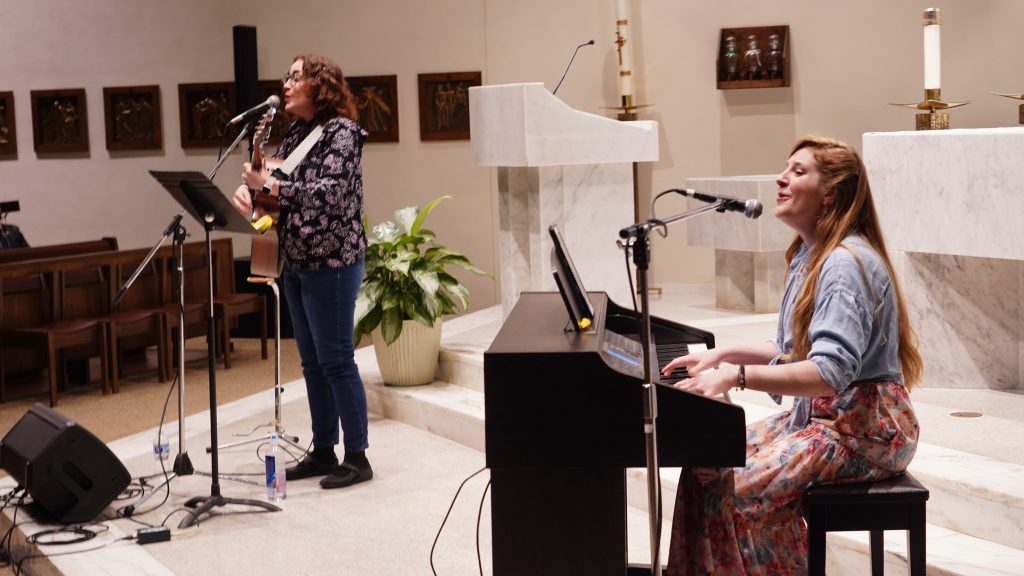
Catholic singer-songwriters Sarah Hart, left, and Francesca LaRosa perform during a ā€˜Night of Peace’ concert at Saint Maria Goretti Parish in Laflin on Nov. 14, 2026. (Photo/Mike Melisky)

LAFLIN – As the Church prepares to enter the Advent season in the coming days, more than 300 people gathered at Saint Maria Goretti Parish in Laflin on Nov. 14, 2026, for an evening of music, prayer and reflection, taking time away from the busyness of everyday life to renew their faith and focus on the coming of Jesus Christ.

The ā€˜Night of Peace’ concert featured award-winning Catholic singer-songwriters Sarah Hart and Francesca LaRosa, who shared songs and personal stories designed to inspire hope, encourage prayer and help those in attendance grow closer to the Lord and Our Lady.

Through music, storytelling and opportunities for the faithful to sing along, the evening offered participants a chance to pause, reflect and find peace as they approach the Advent season.

ā€œThere is something that happens when we play music and when we listen to music and when we sing,ā€ Hart said following the performance.

ā€œWe breathe differently. We express our words differently. We think differently. Music itself is a pathway to peace if we let it be.ā€

LaRosa hoped the evening would help people step away from the anxieties of the world, focus on the Lord and Scripture, and recognize that they are never alone.

ā€œIt was such an honor to be here in the Diocese of Scranton to share our stories, but also just to pray with this incredible community,ā€ she said. ā€œI love hearing the congregation sing. That is probably my favorite part.ā€

The evening also provided an opportunity for members of parish Order of Christian Initiation of Adults (OCIA) teams from throughout the Diocese to come together for fellowship before the concert.

The gathering was intended to help strengthen connections among those who accompany individuals exploring the Catholic faith and preparing to enter the Church.

Kay Price, an OCIA team member at Queen of the Apostles Parish in Avoca, said the opportunity to meet with others involved in the ministry was especially valuable.

ā€œWe very rarely see other people who are in the OCIA because they’re all busy in their parishes,ā€ Price said. ā€œIt’s nice to see them. We had all different cities at our table, and we were able to find out that we’re friends. It’s a big world.ā€

Eloise Chrobak, a fellow OCIA team member of Price, echoed that sentiment, describing the evening overall as a ā€œgreat night of bringing us all together.ā€

Louis Guarnieri, an OCIA coordinator at Saint Maria Goretti Parish, said the concert was an unexpected blessing as he prepares for Advent and Christmas.

ā€œThey had me laughing. They had me crying. I was just moved by the Holy Spirit with their songs. It was just a wonderful experience,ā€ he said. ā€œIt was a gift from God. It was something I didn’t expect, and it’s something that I’m grateful for.ā€

The ā€˜Night of Peace’ concert was organized by the Diocesan Office for Parish Life. Funding for the program was made possible by generous donations to the annual Catholic Ministries Appeal.

SCRANTON – With Christmas quickly approaching, Catholic Social Services of the Diocese of Scranton is once again counting on the generosity of the community to help make the holidays brighter for thousands of local children.

The agency is currently seeking new toy donations and financial contributions for its annual Gifts for Kids program, which provides presents for children in need throughout the Scranton, Carbondale and Hazleton areas.

Community members can make an immediate difference by scanning the Amazon Wish List QR codes accompanying this story. Purchased items are shipped directly to Catholic Social Services and will help ensure there are enough gifts for children of all ages.

In early November, approximately 3,000 to 3,500 children were registered for this year’s Scranton program alone.

ā€œChristmas is a magical time, not only for children, but for those of us fortunate enough to participate in events like our annual toy program,ā€ Jolette Crane, Director of Lackawanna County Offices for Catholic Social Services, explained. ā€œFor families that may be struggling financially, socially or emotionally, toy distribution events like ours help relieve some of the hardship of being able to provide gifts for their children.ā€

Behind the scenes, preparations for Gifts for Kids begin months before Christmas. Workers typically begin reviewing the previous year’s event in February, identifying what worked well and what could be improved. By April, planning is underway with community partners, including discussions about donation needs, registration, volunteers and logistics.

In Scranton, the program is a collaborative effort between Catholic Social Services and Friends of the Poor and Catherine McAuley Center.
In Carbondale and Hazleton, Catholic Social Services organizes and operates its own Gifts for Kids distributions.

One important part of the preparation is making sure the right variety of gifts is available. The Amazon Wish Lists are updated annually based on the popularity of items from previous years. All toys are selected with a $25 price limit to encourage a wide variety of affordable gifts.

ā€œThe Wish Lists help us obtain a variety of toys for all children, regardless of age, gender or interest,ā€ Crane said. ā€œOlder children always come up short, so there is always a need for that.ā€

Those who prefer to make a monetary contribution can also do so. Financial donations allow CSS staff to purchase toys and fill in gaps when certain age groups or types of gifts are in short supply.

Crane said the program represents something larger than the gifts themselves: an opportunity for local businesses, parishes, donors and volunteers to come together for a common purpose.

ā€œThat warms your heart and helps you remember what community and the holidays are all about,ā€ she said.

Registration for this year’s Gifts for Kids programs are now closed. Families who registered in the Scranton area will receive confirmation emails with their assigned shopping dates, times and locations. Those who missed registration are encouraged to call 211 or visit pa211.org to find other holiday assistance programs in their area.

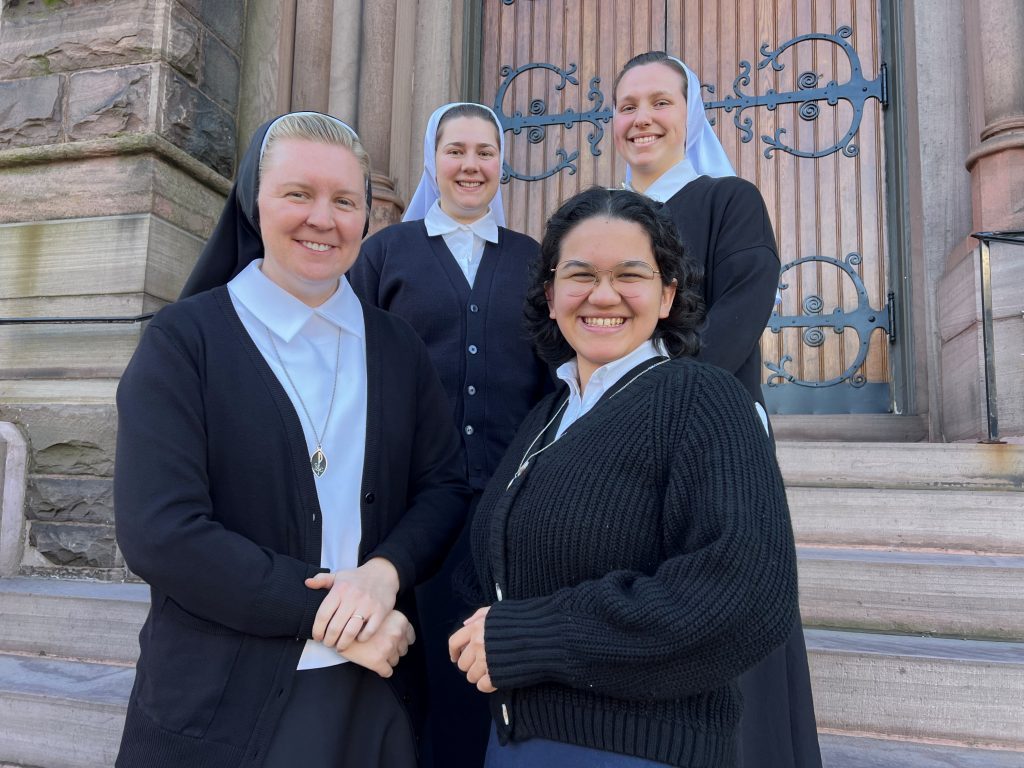
Three young women are currently discerning their vocation to religious life with the Sisters of Christian Charity in Wilkes-Barre. Pictured front row, from left: Sister Maria Angeline Weiss, S.C.C., Formation Director, and Miss Therese Gasser. Second row: Sister Jane Frances Poccia, S.C.C., and Sister Philomena Fasolka, S.C.C. (Photo/Eric Deabill)

WILKES-BARRE – Sister Jane Frances Poccia had already gone to college and was working as a data analyst.

Sister Philomena Fasolka imagined herself getting married, having a large family and settling down on a farm.

And Miss Therese Gasser, at 19, had already mapped out her college plans, future career and the family she hoped to have.

For each young woman, the initial thinking about the future looks very different from the life she is now exploring. For all three, learning to listen to God has meant being willing to reconsider what they once thought their lives would be.

The three young women are now living at the Saint Nicholas Convent in Wilkes-Barre as they discern their vocations with the Sisters of Christian Charity.

Sister Jane Frances, 27, and Sister Philomena, 19, are novices, having advanced into a stage of formation in which they deepen their understanding of religious life. Miss Therese is a postulant – an earlier stage in which she and the congregation continue to discern whether she is called to become a Sister.

Their presence marks an important development for the Sisters of Christian Charity: the return of its formation program to Wilkes-Barre, where the Sisters first established their American motherhouse in the 19th century.

After prayer, discernment and consultation among congregational leadership, including Superior General Sister Mary Joseph Schultz, as well as Sister Maria Angeline Weiss, Formation Director, the Sisters decided to relocate the formation program from their motherhouse in Mendham, N.J., to a smaller, local convent.

The goal is to help young members prepare for the realities of religious life in the communities where they might eventually serve.

ā€œOur motherhouse has about 80 sisters in it. It is a beautiful place to live and a beautiful place for formation,ā€ Sister Maria Angeline explained. ā€œIn looking to the future – of how to best prepare young women to live connected to a parish, to live in a place where you’re doing the cooking and the grocery shopping and taking care of shared spaces – we thought, what if we mentored them through that by having the novitiate in a local community.ā€

The move, which took place Sept. 12, also brings the program back to a place deeply connected to congregation history.

Founded in Germany in 1849 by Mother Pauline von Mallinckrodt, the Sisters of Christian Charity came to Wilkes-Barre in the 1870s at the invitation of Father Peter Nagel, Pastor of Saint Nicholas Parish, at the time. Their first American motherhouse took root in the city before the congregation expanded and eventually divided its province in 1920.

For the three young women beginning their formation journey in Wilkes-Barre, each said there was an initial struggle to understand what God might be asking of them.

Miss Therese first encountered the Sisters of Christian Charity as a student at Allentown Central Catholic High School. Initially hesitant around religious Sisters, she began to see them differently after attending a Fiat Days retreat as a teenager.

One Sister repeatedly sat with her at meals, patiently reaching out even when Therese was reluctant to talk.

ā€œShe was the face of Christ,ā€ Miss Therese said. ā€œShe just kept trying to reach out to me and I eventually warmed up to her because she was relentless in her love.ā€

That experience planted a seed. It would take several more years of prayer and discernment – and even a school pilgrimage to Italy – before Miss Therese felt ready to take a step toward religious life.

Sister Philomena also remembers being struck by the joy of the Sisters she encountered as a teenager.

She recalled an incredible moment during a Steubenville Youth Conference when a Eucharistic Procession stopped right in front of her.

ā€œOut of 1,000 people, I kept asking the same question, why me? What is so special about me,ā€ she recollected. ā€œGod calls us and we’re chosen. At the time, I was having a hard time believing it. But at that moment, it was very reassuring that this is what I want for you.ā€

Sister Jane Frances, meanwhile, initially set aside the possibility of a vocation, going to college and working for several years before returning to the Rosary and reconsidering the call she had first experienced in high school.

ā€œI credit Mary with leading me back,ā€ she said.

Their formation now provides time to deepen their relationship with Christ even more while learning the congregation’s history, spirituality and traditions. Their days include Mass, meditation, Scripture reading, Eucharistic Adoration, formation lessons and the practical responsibilities of maintaining a household. They take turns cooking, share chores and participate in the life of Saint Nicholas-Saint Mary Parish by being part of the choir.

The experience is already reaching beyond the convent walls.

Whether grocery shopping or walking along the Susquehanna River levee, the Sisters are regularly stopped by people who recognize their habits and ask whether they are religious Sisters.

The encounters are a reminder to all the young women that consecrated life can provide witness to God without any planning.

ā€œTo be a young Sister, it is an eye opener for people, especially young people who are still figuring out their own life and still figuring out their own relationship with Christ,ā€ Sister Philomena said.

The emphasis on prayer and discernment also has a parallel in the Diocese of Scranton. In August, four seminarians began their formation journey at the reopened Saint Pius X Seminary in Scranton, entering a propaedeutic year dedicated to establishing a strong foundation in prayer, spiritual growth and discernment for men who are considering priestly formation.

Both experiences recognize the importance of learning to hear God’s voice amid the distractions and demands of daily life.

ā€œIn the novitiate, there is so much focus on prayer and silence,ā€ Sister Maria Angeline said. Young Sisters must learn how to listen for God now so they can return to that relationship even amid the long days of future ministries in education, health care or service to those in need.

For Sister Jane Frances, the hope is not necessarily that everyone who encounters the Sisters will choose religious life. Instead, she hopes their presence encourages people to make room for prayer and discover God’s individual call.

ā€œHe has a plan for each one of us,ā€ she said. ā€œI want to help people listen to the Lord and grow in their own relationship (with Him).ā€

Bishop Joseph C. Bambera served as principal celebrant for an 80th anniversary Mass of Saint Patrick Parish in Milford. (Photos/Dan Piazza)

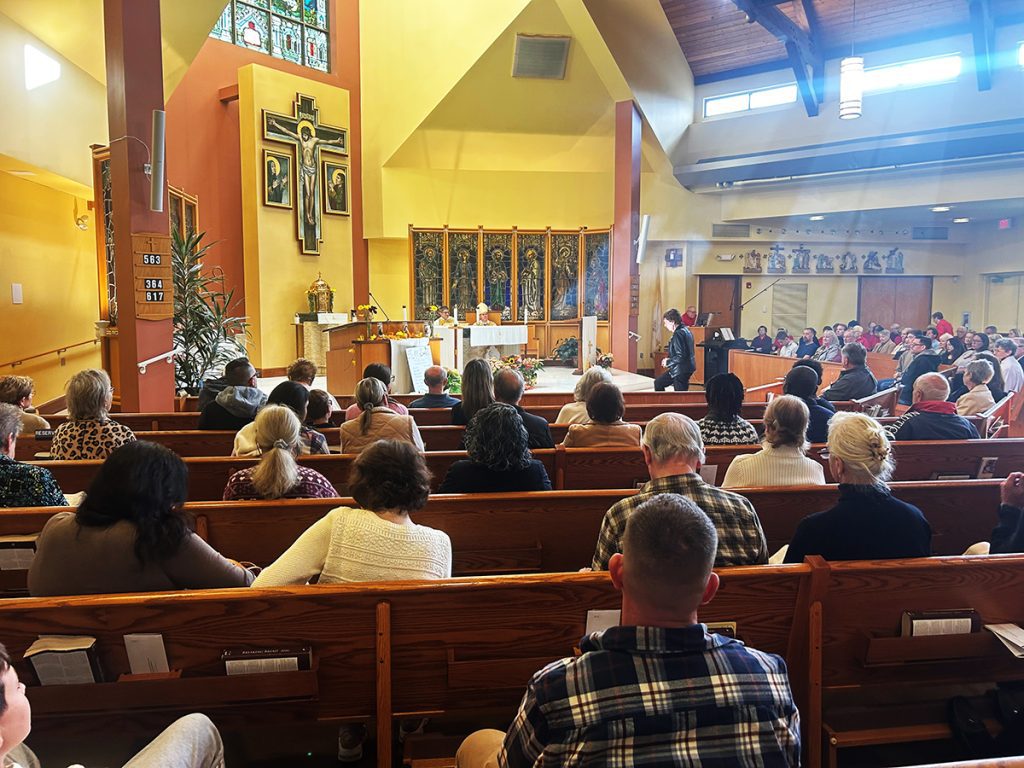
MILFORD – Eighty years of faith and service to the community, along with 20 years in its beautiful church building, gave parishioners of Saint Patrick Parish in Milford plenty of reasons to celebrate on Nov. 8, 2026.

The parish marked both milestones with a special anniversary Mass celebrated by the Most Rev. Joseph C. Bambera, Bishop of Scranton, followed by a luncheon that brought together generations of parishioners to reflect on the parish’s history and look toward its future.

While the 20th anniversary celebrated the dedication of the physical church building, parishioners and parish leaders emphasized that the true strength of Saint Patrick Parish has always been found in its people.

ā€œThe people who established Saint Patrick Parish 80 years ago would be very happy to see all the young families that we have today,ā€ Deacon Tom Spataro said.

Describing the parish’s growth over the decades, Deacon Spataro compared its beginnings to the planting of a small mustard seed in Pike County.

ā€œThis little mustard seed that they planted in the small-town USA of Milford has grown into this large bush where the whole community takes refuge and they find peace and love in this church and in following Jesus,ā€ he said.

Pike County Commissioner Matthew M. Osterberg has been a parishioner of Saint Patrick Parish since 1984, when he and his wife were married.

Having raised his children in the parish, he said both anniversaries are an opportunity to recognize the generations of people who have helped build the community.

ā€œToday is a day of celebration. It is a day where all the people of the parish can come together,ā€ Osterberg said. ā€œWe can all remember what this day is to us moving into the future and celebrating the lives who were here before us to make this day so special.ā€

For Munya Rwakonda, who joined the parish after moving from Florida in 1997, Saint Patrick Parish has become a family away from family.

Originally from Zimbabwe, Rwakonda recalled how warmly the community welcomed her and her family.

ā€œWe were so welcomed. Everyone was family,ā€ she said, adding that the parish has helped her feel connected and supported throughout the years.

That sense of belonging has continued across generations. Parishioner Guilianna DeMaio, who was baptized at Saint Patrick Parish and grew up in the community, said the anniversary reinforces an important lesson about the meaning of Church.

ā€œA church is not just a building, it’s more about the people that you celebrate Jesus with,ā€ she said.

Laurie Barcia, a lifelong parishioner who now helps lead the parish youth group and children’s liturgy, expressed a simple hope for the future: that today’s young people will remain connected to Saint Patrick Parish well into the future and return with families of their own.

ā€œI’m just very happy to be a lifetime member of Saint Patrick’s,ā€ Barcia said.

Winners of the Diocese of Scranton’s inaugural ā€˜Our Lady, Queen of Peace’ Rosary Poster Contest recently enjoyed a special celebration with Bishop Joseph C. Bambera. The students and their families toured the Cathedral of Saint Peter before gathering at the Diocesan Pastoral Center in Scranton for pizza and an opportunity to meet with the Bishop. (Photo/Dan Gallagher)

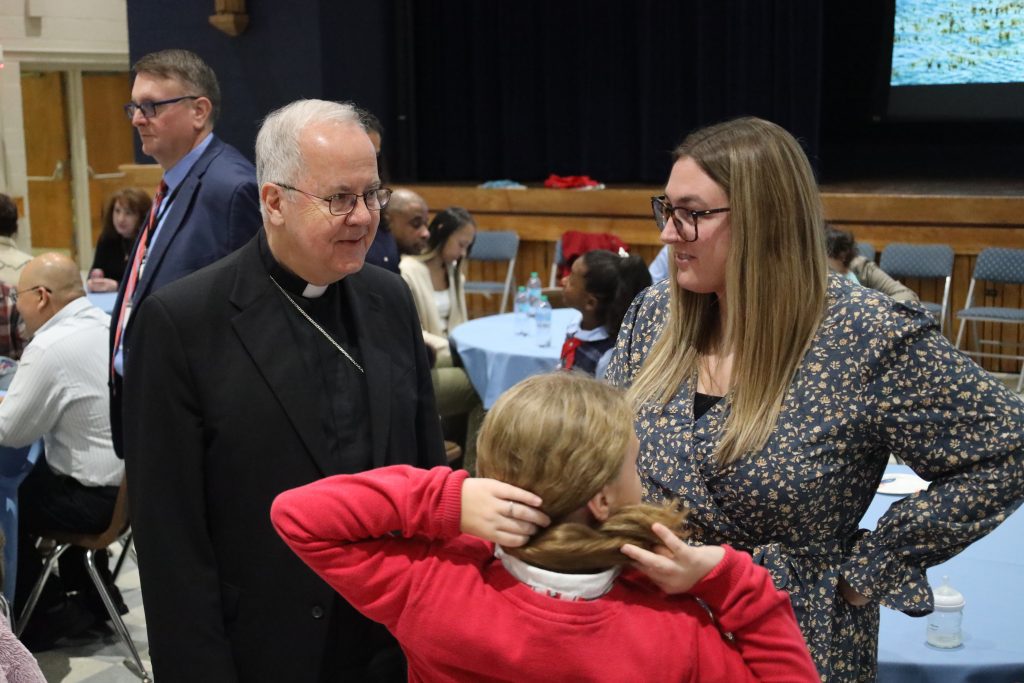
SCRANTON – The creativity and faith of many young artists in the Diocese of Scranton Catholic School System were celebrated Nov. 12, 2026, as winners of the Diocese of Scranton’s inaugural ā€˜Our Lady, Queen of Peace’ poster contest gathered for a special pizza party with the Most Rev. Joseph C. Bambera, Bishop of Scranton.

The students, representing Catholic elementary schools throughout the Diocese, and their families first enjoyed a tour of the Cathedral of Saint Peter before gathering at the Diocesan Pastoral Center for an afternoon celebration and special recognition.

Kristen Donohue, Diocesan Secretary for Catholic Education/Superintendent of Catholic Schools, congratulated the students and praised their creativity, attention to detail and thoughtful artwork, noting how difficult it was for judges to select winners from the 1,400 entries.

ā€œWe’re here to celebrate you,ā€ Donohue said. ā€œAll of the judges said it was incredibly difficult to pick winners.ā€

Bishop Bambera also shared his excitement, telling the young artists how proud he was of their accomplishments.

Recalling his own childhood interest in drawing and painting, he encouraged the students to continue using the gifts and talents God has given them.

ā€œEverybody did the most incredible job with this contest,ā€ Bishop Bambera said. ā€œThank you for using the gifts and talents and the creativity that God gave you to create something beautiful and keep that up in whatever way, in whatever discipline you think God gives you the skills to use!ā€