
What is a Marriage Annulment?
More properly called a “declaration of invalidity,” a Church annulment is a decision by competent Church authority that at the time of a couple’s wedding, something essential to marriage was lacking either through exclusion, omission, or personal incapacity. It is a statement that the bond of marriage was not formed at the time of consent, or at the time the vows were stated at the wedding. Such cases most often are initiated by one of the parties who must prove that, despite all appearances to the contrary, his or her marriage lacked something essential. In the tradition of the Church, there are several causes, or grounds, that render a marriage invalid. Through jurisprudence and other factors, it has been determined what evidence is needed to prove that one of those factors, or grounds, were present. It is important to note, however, that a marriage is presumed valid until proven otherwise.
There is a high burden of proof in marriage nullity cases. The process of determining whether or not this bond was formed is an investigation which requires witnesses, evidence, and other testimony. Because the time of consent is the determining factor of the validity of the marriage, the evidence must focus on that time and the time surrounding the moment of consent.
The judge(s) must have moral certainty that the marriage bond was never formed. That means that in their conscience, the judges have no doubt that the marriage between two parties is invalid. A positive declaration of nullity is a public indicator that the individuals are no longer bound to the prior union, thus opening a pathway for the individuals to attempt marriage again.
The effects of the annulment process are thus:
Affirmative:
If through the investigation of a marriage the judges find in the affirmative, this means that the evidence has proven that the marriage is invalid, or that the bond of marriage was never formed between the parties. Therefore, the parties are now free to marry. However, it is important to note that the children of this marriage are not illegitimate. The annulment process has no effect on the status of children.
Negative:
If through the investigation of a marriage the judges find in the negative, this means that the evidence has not proven that the marriage is invalid. Therefore, the parties are still married and are not free to marry another.
Do I need to apply for an annulment?
Below are some examples of individuals who should apply for an annulment. Please note that this is not an exhaustive list.
* A divorced Catholic who is now remarried outside the Catholic Church.
* A divorced Catholic who would like to remarry.
* A divorced non-Catholic who is now married outside the Catholic Church to a Catholic.
* A divorced non-Catholic who would like to marry a Catholic.
* A non-Catholic who is divorced and remarried and would like to become Catholic.
How long does the annulment process take?
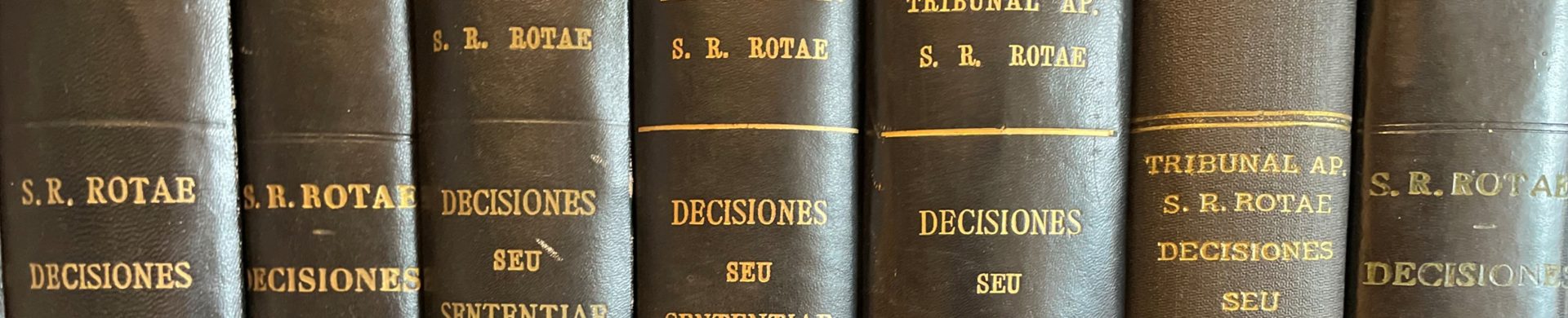
The duration of the marriage annulment process is not guaranteed and varies significantly from case to case. A formal case may take up to one year or potentially more. Delays primarily stem from lack of cooperation by one or both parties and the potential for judicial appeals. The untimely response of the parties and witnesses and slow document returns will slow the process down. Even after the Tribunal renders a decision, the resolution of the case may be extended if either party or the defender of the bond chooses to appeal the ruling to a higher court, such as the Metropolitan Tribunal of the Archdiocese of Philadelphia or the Roman Rota Tribunal in Rome.
In light of this, do not fix a wedding date in advance if you are required to submit an annulment petition or your petition is still pending at the Tribunal. There are no guarantees that a case will be processed and completed within a certain date or that the marriage will be declared null.
Is an annulment guaranteed?
An annulment is not guaranteed. The Church begins with the logical presumption that at the time of their wedding, both parties understood what marriage is, intended that for themselves, and had the wherewithal both to exchange consent and to make good on their vows. The contrary must be proven by the petitioner. Divorce is not evidence that a marriage is invalid. All marriages are presumed valid until the contrary is proven by the petitioner before the tribunal court.
What if my former spouse refuses to participate in the annulment process?
The non-participation of the respondent may delay the process but will not cause it to stop. The annulment process will continue if the respondent has been properly cited and given sufficient time to respond but chooses not to do so. Respondents are usually given up to four weeks to reply.
If the respondent does not respond, the Tribunal will verify that the citation was received. Once verified, and if there is still no response, the case will move forward to the next step in the process, which is usually the establishment of the canonical grounds for the annulment and the gathering of testimony.
How do I obtain an address for my former spouse?
All nullity cases concern a marriage of two people, the Petitioner (the person applying for the annulment) and the Respondent (the former spouse). The law requires that the Respondent be contacted regarding the petition that is presented to the Tribunal because he/she has a right to know that an investigation is being conducted into the validity of his/her marriage to the Petitioner. Thus, it is necessary to provide a current address for both parties. This is sometimes a challenge when the divorce occurred many years ago and there are no children. Providing an address for the Respondent is not optional.
- Check with former in-laws for a current address
- Check with mutual friends to see if they have maintained contact
- Check with adult children to see if they have contact
- Check to see if they are on Facebook, Instagram, Twitter, etc.
Does an annulment affect the status of children?
If an annulment is granted, it has no bearing on the status of the children of the marriage.
How do I begin this process?
The best place to begin is at your local Catholic parish. Either a priest or deacon should be able to assist you. Otherwise you are free to call the Scranton Tribunal for assistance.
How much does an annulment cost?
At this time, Bishop Joseph Bambera has decided that there will be no fees associated with any process with the nullity of marriage in the Diocese of Scranton. That being said, the policy of Bishop Bamber and the Diocese of Scranton does not prevent fees being incurred in other tribunals.
When can I prepare for another marriage?
In evaluating the testimony in a marriage case, the Scranton Tribunal often learns a great deal about the parties and their marriage. In most cases, some of this information can be used to help the parties prepare more thoroughly or realistically for a future marriage. Moreover, there may be some questions about what led to the problems in the former marriage.
The Church is very concerned that a future marriage be as happy and healthy as possible. In many cases, special marriage preparation will be required for you and an intended spouse before another marriage will be permitted in the Church. Such special preparation can include one of the following requirements:
- Informing the priest or deacon preparing a future marriage about specific pastoral questions or concerns to be discussed with you and an intended spouse;
- Referral to a qualified professional (i.e., an alcohol or drug counselor, psychologist, other mental health professional) to assess and/or discuss certain specific areas of concern.
Any of these types of referrals following a declaration of nullity are meant not as a penalty but as a help to you and your future spouse. Often many couples see such an experience as a benefit to their marriage. In the event that the second or third possibility is required, it is understood that you will be responsible for the professional fees involved.
Because a declaration of nullity involved a legal process which resolved the question of your marital status in the Catholic Church, it must be completed definitively (one way or the other) before you can begin to prepare for another marriage in the Church. To avoid confusion, anger, embarrassment and hurt, no date can be set for another marriage (or for the validation of an existing marriage) before a final and favorable decision is rendered in your case. If you are a catechumen or a candidate for reception into full communion with the Church, your baptism or reception into the Church may also be delayed until your marital status is clarified. If you have questions about this, please speak to your parish priest.
Since the Church mourns the loss and pain which accompany any divorce, and hopes to avoid questions and any possible scandal, your future marriage should be celebrated simply and with little or no publicity.