(OSV News) – As the Israel-Hamas war nears the two-year mark, Catholic leaders have headed to Jerusalem, the Palestinian West Bank and Israel on a pastoral visit.
The delegation is headed by Archbishop William E. Lori of Baltimore, who serves as vice president of the U.S. Conference of Catholic Bishops; Msgr. Peter I. Vaccari, president of the Catholic Near East Welfare Association-Pontifical Mission; and members of the Knights of Columbus, including Supreme Knight Patrick E. Kelly and Supreme Secretary John A. Marrella.
In a Sept. 2 press release issued by CNEWA-Pontifical Missions, Msgr. Vaccari said the visit was meant to provide accompaniment and solidarity with those suffering from the war, sparked by Hamas’ Oct. 7, 2023, invasion of Israel.
Joseph Hazboun, regional director of Catholic Near East Welfare Association-Pontifical Mission in Jerusalem, Supreme Knight Patrick E. Kelly of the Knights of Columbus, Michael La Civita, director of communications for CNEWA, back, Archbishop William E. Lori of Baltimore, vice president of the U.S. Conference of Catholic Bishops, and Msgr. Peter I. Vaccari, president of CNEWA, are pictured during the archbishop’s pastoral visit to the Holy Land. (OSV News photo/Joseph Saadeh, courtesy CNEWA)
To date, more than 63,000 Palestinians have been killed in the conflict, according to the Hamas-run Gaza health ministry. Some 1,200 Israelis have been slain and more than 5,400 injured. Of the 251 Israeli hostages taken by Hamas that Oct. 7, 50 remain in captivity, with only 20 of them believed to still be alive, with 83 of the hostages confirmed killed to date. More than 100 were released later in 2023; eight were rescued by Israeli forces.
On Aug. 22, the International Food Security Phase Classification, or IPC — a global food security metric used by a consortium of hunger relief agencies — formally declared a famine in Gaza, stating the situation — fomented by aid blockades as well as controversial, often deadly food distribution efforts — was “entirely man-made” and could be “halted and reversed.”
The IPC called for “an immediate, at-scale response,” noting that “any further delay — even by days — will result in a totally unacceptable escalation of famine-related mortality.”
On Aug. 20, Israel’s military disclosed plans to call up 60,000 reservists ahead of a new offensive in Gaza City.
“The Gospel compels us to witness, to stand in solidarity with all those who suffer at the hands of terror, war and famine, to answer the question put to Jesus in the Gospel of St. Luke, ‘And who is my neighbor,'” said Msgr. Vaccari. “By visiting the church of Jerusalem, from which our faith has spread throughout the world, we hope to communicate to our suffering sisters and brothers of our unity in resolve and purpose in assisting them in their time of Golgotha, as we work together to seek justice and advance the cause of lasting peace.”
According to a Sept. 2 press release from CNEWA-Pontifical Missions, the pastoral visit “will include liturgies in Jerusalem’s Church of the Holy Sepulcher, Bethlehem’s Basilica of the Nativity and Nazareth’s Church of the Annunciation, and meetings with leaders of the region’s beleaguered Christian community, which despite its near destruction in Gaza remains a force of good, rushing food, water and medicines to starving families and providing medical attention through its network of maternity clinics and hospital.”
In mid-August, the USCCB’s president, Archbishop Timothy P. Broglio of the U.S. Archdiocese for the Military Services, had called upon U.S. dioceses to take up a special collection for humanitarian relief for suffering residents of Gaza and surrounding Middle Eastern areas, with funds directed to CNEWA and to Catholic Relief Services, the official humanitarian and development agency of the USCCB.
Since the start of the Israel-Hamas war, CNEWA-Pontifical Mission has provided more than $1.6 million in aid, thanks to multiple partners throughout North America and Europe spanning a range of faith communities. Of those funds, more than $1.5 million supplied food, medical care and psychosocial counseling for upwards of 36,400 individuals, the agency — founded in 1928 by Pope Pius XI — said in its press release.
Social
VATICAN CITY (CNS) – The human longing for love is not a sign of weakness but demonstrates that no one is completely self-sufficient and that salvation comes from letting oneself be loved and assisted by God, Pope Leo XIV said.
“No one can save themselves. Life is ‘fulfilled’ not when we are strong, but when we learn how to receive,” the pope told tens of thousands of people gathered in St. Peter’s Square Sept. 3 for his weekly general audience.
During the audience, the pope offered special prayers for all the students and teachers who recently returned to school or were about to start a new school year.
“Pray for them, through the intercession of the Blesseds – and soon saints – Pier Giorgio Frassati and Carlo Acutis, for the gift of a deep faith in their journey of maturation,” the pope said just days before he was scheduled to preside over the canonizations of the two young Italians.
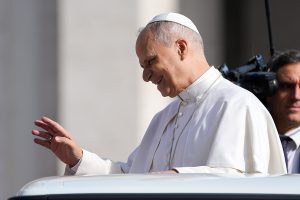
Pope Leo XIV greets visitors and pilgrims as he arrives in St. Peter’s Square at the Vatican for his weekly general audience Sept. 3, 2025. (CNS photo/Lola Gomez)
In his main talk, Pope Leo continued his series of reflections on lessons of hope from the Gospel stories of Jesus’ last days and focused specifically on the 19th chapter of the Gospel of John where Jesus on the cross says, “I thirst.”
“If even the son of God chose not to be self-sufficient, then our thirst too — for love, for meaning, for justice — is a sign not of failure, but of truth,” the pope said.
Jesus’ thirst is not just physical, the pope said; it is “above all the expression of a profound desire: that of love, of relationship, of communion. It is the silent cry of a God who, having wished to share everything of our human condition, also lets himself be overcome by this thirst.”
By not being afraid to ask for something to drink, Jesus “tells us that love, in order to be true, must also learn to ask and not only to give.”
At a time when most societies seem to reward self-sufficiency, efficiency and performance, the pope said, “the Gospel shows us that the measure of our humanity is not given by what we can achieve, but by our ability to let ourselves be loved and, when necessary, even helped.”
Jesus’ cry of thirst, he said, “is ours too. It is the cry of a wounded humanity that seeks living water. And this thirst does not lead us away from God but rather unites us with him.”
Admitting the need for help, “our fragility is a bridge toward heaven,” he said.
“There is nothing more human, nothing more divine, than being able to say: I need,” Pope Leo told the crowd. “Let us not be afraid to ask, especially when it seems to us that we do not deserve. Let us not be ashamed to reach out our hand. It is right there, in that humble gesture, that salvation hides.”
After the audience, members of the Jesus Bikers, a motorcycle club from Germany, and representatives of Missio Austria, the pontifical mission societies in Austria, presented Pope Leo XIV with a modified BMW R18 motorcycle, which he autographed and then sat on.
The bike will be auctioned by Sotheby’s, and Missio Austria will use the money to help build a school for children who work in the mica mines in Madagascar.
Social
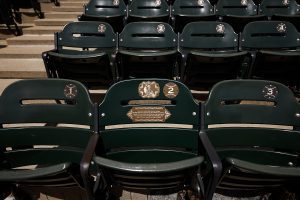
CHICAGO (OSV News) – Since Aug. 22, Chicago White Sox fans have been able to easily spot the stadium seat where Pope Leo XIV sat when he watched the first game of the 2005 World Series.
The team put a plaque and markers including the pope’s image on the back of the forest green seat in row 19 of section 140 inside Rate Field on Chicago’s Southside.
“Not only the historical significance of the first pope from the United States, but just the historic significance of any time a new pope is elected and announced, it’s such a momentous occasion,” explained Christine O’Reilly, the White Sox vice president for community relations.
An Aug. 23, 2025, photo shows a plaque dedicated to Pope Leo XIV on a seat inside Rate Field, home of the Chicago White Sox baseball team. Since Aug. 22, 2025, baseball fans have been able to easily spot the stadium seat where Pope Leo, then-Augustinian Father Robert Francis Prevost, sat when he watched the first game of the 2005 World Series. (OSV News photo/courtesy of the Chicago White Sox)
“And the fact that Pope Leo — Father Bob, Bob from (suburban) Dolton — who happened to be a White Sox fan, who happened to be at game one of the World Series, it all just really was something that we couldn’t help not only embrace, but to memorialize,” she said. “So that all of our fans could see it and really share in the overall excitement.”
According to her, tracing back the now famous image of the pope sitting in the stadium, of then-Augustinian Father Robert Francis Prevost (or Father Bob as many called him) dressed in his team’s colors of black and white, was a low-tech endeavor. There was no digital image shot with a smartphone with embedded data, and no need for exact coordinates.
Instead, O’Reilly described, the in-house video camera captured on the big stadium screen Father Bob sitting next to a father and son of a family that to this day still has those same season seats to the White Sox games. After the game, friends inundated the father, Ed Schmidt, with messages on his home phone that they saw him watching the game.
Then, she said, years later when all of Chicago was chattering about their homegrown pope once he was elected May 8, someone mentioned seeing him and Schmidt on those few seconds of video.
“So it was a matter of just going and reviewing the game broadcast footage because they knew from other people telling them that they had seen them on TV,” O’Reilly told OSV News. “And of course, they knew where their season tickets were. So that’s how we were able to determine the actual seat location that then Father Bob, now Pope Leo XIV, was sitting in at the time.”
Having a hometown pope, said O’Reilly, a Catholic, makes the Chicago metro area with a population of 9.4 million feel like a “small, intimate, large city” where people have connections to one another.
She said Pope Leo is “very, very close, dear friends” with the Schmidts through St. Rita High, an Augustinian-run school on the Southside where he substitute taught and would visit often as superior of the order’s Midwest province (1999-2001), and where Schmidt was an active board member.
Also, many of O’Reilly’s family members graduated from St. Rita’s. In one of her first positions with the Sox, O’Reilly said, she was in season ticket sales and sold Schmidt his first season passes.
Jim Keating, a diehard White Sox fan and lifelong Chicago Southside resident who lives a block and a half from the ball park can name a few of those close common connections to the pope too, especially during game one of the 2005 World Series.
He doesn’t personally know Pope Leo but “they had him on the big screen, apparently, right? You know, at some point, me and my wife were on the big screen, too, during the same game. It’s like, wild … you can’t make this stuff up.”
Keating pointed out his age, 70, which Pope Leo will be on Sept. 14. His daughter called him moments after the pope was elected and said her childhood friends started contacting her to tell her then-Bishop Prevost presided over their confirmations.
And Keating, a daily Massgoer who went to Catholic school from elementary through college added, “I’m retired, right? From law enforcement, but in the security job that I’ve had in the last couple years, we have done security details around his old house. It’s that crazy … because we’ve been working in Dolton, trying to protect some utility workers.”
The pope’s childhood home in the southeast suburb of Dolton is now in a city whose mainstay manufacturing industry died off, where crime has been common and Keating said robberies of utility workers happened regularly. Since his election, droves of visitors from the city and way beyond have been stopping at the house’s front yard to pray and take photos. And the city of Dolton bought the home in July with plans to turn it into a historical site.
In the years that included the White Sox last World Series win (2005), Pope Leo was prior general of the Augustinian order (2001-2013). Then in 2014, Pope Francis appointed him administrator then bishop of Chiclayo, Peru, where he had been a missionary in the ’80s and ’90s in the country’s mostly impoverished north and northeast. He then became cardinal in 2023.
On his regular visits home to Chicago, he would celebrate Masses (as recently as last summer) and as bishop preside over confirmations, ordinations and other prelates’ duties, catching the occasional game of his favorite baseball team.
For Richard King, another loyal White Sox fan from the Southside, the pope being a fan has been “fun.”
He said, “There are several people that have dressed like the pope at the White Sox game. So there’s all kinds of humor in this.” But he said personally, it has also had great significance for his family.
King told OSV News when the Archdiocese of Chicago first announced it would host a Mass in honor of Pope Leo’s election at Rate Field, his son urged him to go.
“And my son hadn’t been to church for a long time,” said King. “He asked me, ‘Are you going to that Mass for the pope?’ And I said, ‘Oh, I don’t know,’ because nobody else was that I knew was going. He said, ‘Well, you should go.’ … I said, ‘You know what? If you go, I’ll go.'”
After a few days, King said his 41-year old son decided to go and he himself was elated that it happened to be Father’s Day weekend. Some friends gave him tickets “in a good spot because we were in the shade, so I didn’t have to sit out in the sun. Oh, it was perfect.”
Social
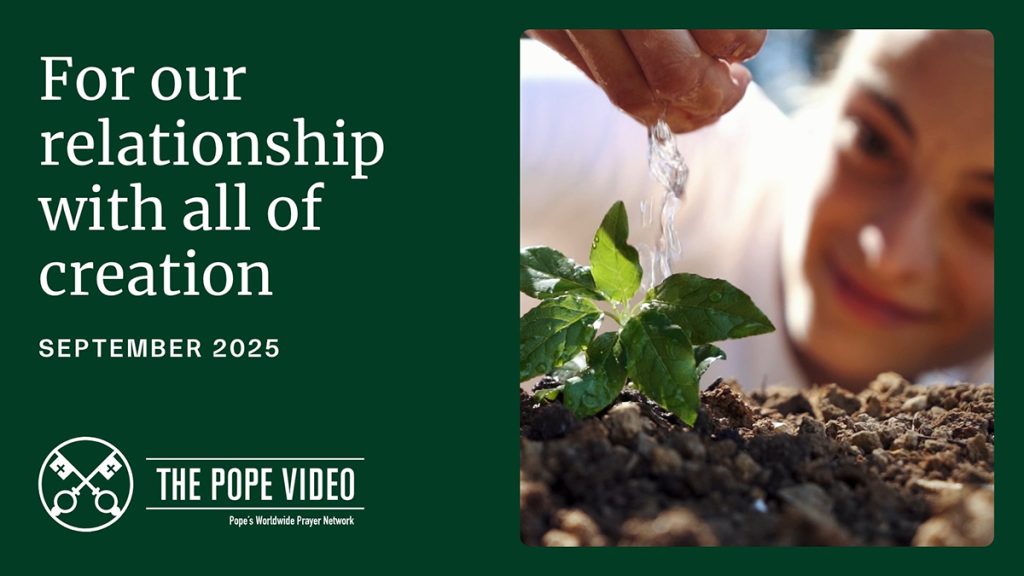
Pope Leo XIV’s prayer intention for the month of September is: “For our relationship with all of creation.” The pope’s prayer and a video to accompany it was released by the Pope’s Worldwide Prayer Network Sept. 2, 2025. (CNS photo/Pope’s Worldwide Prayer Network)
VATICAN CITY (CNS) – Participating in the ecumenical Season of Creation, Pope Leo XIV’s prayer intention for the month of September is “for our relationship with all of creation.”
In his monthly video, distributed Sept. 2 by the Pope’s Worldwide Prayer Network, Pope Leo prays to God: “Help us to discover your presence in all creation, so that, in fully recognizing it, we may feel and know ourselves to be responsible for this common home where you invite us to care for, respect and protect life in all its forms and possibilities.”
The Season of Creation, a time of Christian prayer and commitment to safeguarding the earth, runs from Sept. 1 through the Oct. 4 feast of St. Francis of Assisi, patron saint of ecology.
After reciting the Angelus prayer Aug. 31, Pope Leo called on Catholics to join him in marking the Sept. 1 World Day of Prayer for the Care of Creation.
He told people gathered for the Angelus prayer that Pope Francis had established the day of prayer for Catholics, accepting an invitation Orthodox Ecumenical Patriarch Bartholomew of Constantinople had made to all Christians. The Orthodox Church began the observance in 1989, including ecological responsibility in their Sept. 1 liturgical feast of creation, which ponders the mystery of God creating all things.
Marking the day of prayer “is more important and urgent than ever,” Pope Leo said, adding that the theme, “Seeds of Peace and Hope” will be contemplated throughout the Season of Creation.
In the spirit of the Canticle of Creation, which St. Francis of Assisi “composed 800 years ago, we praise God and renew our commitment not to ruin his gift but to care for our common home,” the pope had said after the Angelus.
In the video released by the Pope’s Worldwide Prayer Network, Pope Leo recites his own prayer linking the 800th of the Canticle of Creation and the 10th anniversary of Pope Francis’ encyclical “Laudato Si’, on Care for Our Common Home,” the network said.
Pope Leo prays in the video:
“Lord, you love everything you have created, and nothing exists outside the mystery of your tenderness. Every creature, no matter how small, is the fruit of your love and has a place in this world.
“Even the simplest or shortest life is surrounded by your care. Like St. Francis of Assisi, today we too want to say: ‘Praised be you, my Lord!'”
Social
VATICAN CITY (CNS) – True Christian charity respects the person being assisted and sets no conditions for receiving help, Pope Leo XIV said.
Charity involves both selfless giving and respect for human dignity of the other person, the pope said Sept. 1 as he met people involved in the Capuchin-sponsored Opera San Francesco for the Poor.
“We care for those we meet simply for their own good, so that they may grow to their full potential and follow their own path, without expecting anything in return and without imposing conditions,” the pope told the group from Milan.
That way of acting is precisely what “God does with each of us,” he said, “showing us the way, offering us all the help we need to follow it, but then leaving us free.”
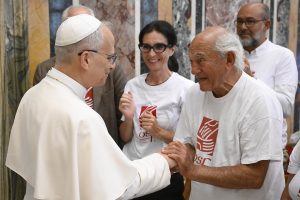
Pope Leo XIV greets a man involved in the Milan-based charity, Opera San Francesco for the Poor, during an audience at the Vatican Sept. 1, 2025. (CNS photo/Vatican Media)
The Opera San Francesco traces its foundation to Capuchin Brother Cecilio Maria Cortinovis, the doorkeeper at one of the order’s convents, who was looking for a better way to help all the people who knocked seeking material help.
He was soon joined by a local doctor, and today the group serves 30,000 people a year with its soup kitchens, clothing banks, shower facilities, clinics, psychological support and job counseling.
The group is “made up not of benefactors and beneficiaries, but of brothers and sisters who recognize each other as gifts from God, his presence, mutual help on a journey of holiness,” Pope Leo said.
In helping one another, he said, “we honor the body of Christ, wounded and at the same time in continual healing.”
Welcoming people as Brother Cortinovis did means “making space for the other in one’s own heart, in one’s own life, giving time, listening, support and prayer,” Pope Leo said.
It is the same attitude Pope Francis often encouraged: “looking in someone’s eyes, holding their hand, stooping to them.”
That attitude, he said, not only affirms the dignity of the other person, but it creates a “family atmosphere” that “helps us to overcome the loneliness of ‘I’ through the luminous communion of ‘we.’ How great a need there is to spread this sensibility in our society, where at times isolation is dramatic!”
Social
(OSV News) – Recalling the fear and the cries from students, parents and school staff to “get low, stay down, stay down, don’t get up” as bullets tore through Annunciation church at an all-school Mass in Minneapolis, Father Dennis Zehren, the pastor, said it marked a new beginning.
Four days after the now-desecrated church remained closed, the auditorium in the parish school next door was filled with more than 400 people on Aug. 30, hugging, talking, crying and even smiling.
They were celebrating the first weekend Mass since the attack Aug. 27 that killed two students at the elementary school, wounded 18 others and three adults, as Father Zehren was presiding. The suspected shooter was found dead at the scene of a self-inflicted gunshot wound, police said.
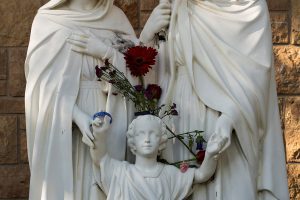
Bullet holes are visible on a statue of the Holy Family outside Annunciation Church in Minneapolis Aug. 30, 2025, which was the scene of a shooting. The shooter opened fire with a rifle through the windows of the church Aug. 27 and struck children from the parish school who were attending Mass during the first week of school, killing two and wounding 21others. (OSV News photo/Tim Evans, Reuters)
Archbishop Bernard Hebda concelebrated the Mass, and Deacon Kevin Conneely, who ministers at the parish and also was at the all-school Mass, assisted and read the Gospel. It drew people not only from the parish, but from other parts of the archdiocese, including Paul and Maggie Wratkowski and their three children of St. Cecilia in St. Paul.
“We’re here to support the Catholic community, the people that are here,” Paul Wratkowski said. “God wants us to thrive in community and support and love one another.”
But at this Mass, members of the congregation were not in the pews to which they had grown accustomed, Father Zehren said. They were in folding chairs, with the sanctuary on the auditorium’s stage. And they were still wrestling with the tragedy that had unfolded.
“It’s clear to us all here at Annunciation that we will be sitting in a different pew for a long time to come because of what happened,” Father Zehren said in his homily, as the church remained closed and must be reconsecrated before it can be used again for worship. The Scriptures for the day point to humility, Father Zehren said. Jesus encourages his listeners in the Gospel passage from Luke to avoid taking the seat of honor at a banquet feast. Rather, take the lowest place.
“My good people of Annunciation, my good people of Minneapolis and beyond, we are in a very low place,” the pastor said. “We are in a lower place than we could have ever imagined. We can look around and see that this is not our normal seat. This is not where we usually gather, not in our usual worship space.”
At the same time, they were seated in the high school auditorium where Masses had been held for decades before the new church was built in 1961, Father Zehren said.
“Jesus speaks about humility, so we come back to our humble beginnings,” Father Zehren said. “That’s what this day represents. It’s a humble beginning. … It’s a call to begin again. The tricky part about the virtue of humility is that we don’t always get to choose the seating, the chart.”
At times, people get the seat of honor, or a seat where they are comfortable, with “all sorts of nice cushions,” the priest said.
“But sometimes we have to sit in the dust,” he said. “It’s a very humbling seat. I know the best thing we can do is just sit there for a while. … Jesus says, ‘Can you just sit with me here, in the dust? Because that’s where he is. It’s the same dust that Jesus fell in when he was carrying the cross. It’s the same dust that he bled in. Jesus said, ‘Can you just come sit with me and sit in this humble place?”
“That was the very first message we heard on Wednesday morning, when the first bullet came through the window, and the voices crying out, ‘Down, down. Get low, stay down, stay down, don’t get up,'” Father Zehren said, his voice breaking with emotion.
“But when we were down there, in that low place, Jesus showed us something,” he said. “He showed us, ‘I am the Lord even here. I am the one who descended into hell. I am the one who had taken on all the darkness and evil in this world, all the forces of darkness and death and evil.’ Jesus pointed and he said, ‘Can’t you see how weak it is? Can’t you see how desperate it is? Can’t you see that this can never last? Can’t you see that this is not why God created us?'”
“Then he showed us. He began to show us a light. It’s a new light. The light of a new day is breaking,” Father Zehren said. “We watch for that light of a new day…That light of the world is Jesus Christ.”
“It reminds us, when death and darkness have done their worst, that’s when God says, ‘Now see what I will do,'” Father Zehren said.
Annunciation parishioners Sean O’Brien, his wife, Mallory, and their four children were at the Aug. 30 Mass. Sean O’Brien was at the all-school Mass as well, with their 2-year-old daughter, when the shooting occurred. Their fourth grader and first grader were in the pews. Their preschooler was in the church basement. None of them were injured. “I think capturing how we all felt in such a strong way from the pulpit, it’s really meaningful to have a leader (Father Zehren) who can speak to that emotion,” said O’Brien, a lifelong member of the parish, where his grandfather was a deacon.
“I came in here optimistic that this community would rebuild, and I now have never been more certain of anything in my life,” he said. “I can’t wait to see what the Lord will do now.”
Social
To add your prayers to the pope’s spiritual birthday bouquet, please note your prayer offeringby clicking here!
(OSV News) – Pope Leo XIV turns 70 on Sept. 14, and OSV News is celebrating by gathering a host of prayers into a very special “spiritual birthday bouquet” for the Holy Father.
The best part? Everyone can participate.
In partnership with Pray More Novenas, Relevant Radio, the Daughters of St. Paul, the U.S. Conference of Catholic Bishops, the Pontifical Mission Societies, Sing the Hours and more, OSV News is encouraging an outpouring of prayer for Pope Leo and his intentions leading up to his milestone birthday – and his first birthday as pope.
Called “Pizza and Prayer,” the spiritual bouquet will be made up of a variety of prayer options from a full novena to a Holy Hour to a rosary. Each prayer effort will be noted, collated and sent to the pope. OSV News is also encouraging participants, when possible, to pray together and then grab a slice of pizza in honor of one of the Chicago native’s favorite treats. The name of every person and organization who participates in this spiritual bouquet will be included on the card OSV News will send to the Vatican.
Pope Leo XIV greets visitors and pilgrims from the popemobile as he rides around St. Peter’s Square at the Vatican before his weekly general audience Sept. 3, 2025. (CNS photo/Lola Gomez)
“One of the most important things that we can do as Catholics is pray for the pope and for his intentions,” said Gretchen R. Crowe, editor-in-chief of OSV News. “The modern Petrine ministry is one of the most challenging roles in the world. As Pope Leo XIV prepares to celebrate this special birthday, we want him to be surrounded by prayer, and we hope everyone will participate in this special effort.”
Partners around the United States and the world are participating.
“We are so happy to join the OSV News Spiritual Bouquet for Pope Leo’s birthday!” said Father Francis (Rocky) Hoffman of Relevant Radio. “From Thursday, September 4 to Sunday, September 14, we will offer our Family Rosary Across America on Relevant Radio at 7 pm CT for the Holy Father, and we expect we will be sending him around 1 million rosaries.”
The Daughters of St. Paul, also known as the Media Nuns, also are looking forward to participating.
“As Daughters of St. Paul, our mission is to bring Christ to the world through every means of communication,” said Sister Tracey Dugas. “What greater joy than to join our voices in prayer for the Holy Father on his 70th birthday! We are grateful for the opportunity to unite with so many others in offering Pope Leo XIV the gift of prayer and presence, along with a little pizza to celebrate his life and vocation.”
“The most important present we can give Pope Leo for his 70th birthday is praying for him, his health and intentions,” said Msgr. Roger Landry, national director of the Pontifical Mission Societies USA. “September 14 is a Sunday this year and so it’s a great opportunity for his spiritual family to pray together at Mass and then to celebrate him afterward in a Sunday meal. I’m sure he’d be really pleased if we invited the poor, like he recently did at Castel Gandolfo.”
Happy birthday, Pope Leo. You are in our prayers.
Social
In response to the deadly shooting at a Catholic School in Minneapolis on Aug. 27, 2025, the Most Rev. Joseph C. Bambera, Bishop of Scranton, released the following statement:
“I was heartbroken and horrified to hear about the tragic shooting that took place Wednesday morning during Mass at Annunciation Church in Minneapolis. I ask all people of faith to pray for those who are suffering and for the healing of this deeply wounded community.
“The fact that such a violent act could happen in the middle of Mass is almost unimaginable. It is so profoundly distressing to know that such violence could erupt in a place meant for prayer and peace.
“As we pray for the victims, their families, the parish community, the first responders, and everyone now carrying the weight of sorrow and fear – we ask our Blessed Mother Mary – whose Annunciation gave hope to the world – to intercede for all of those whose lives have been impacted by this horrible tragedy.”
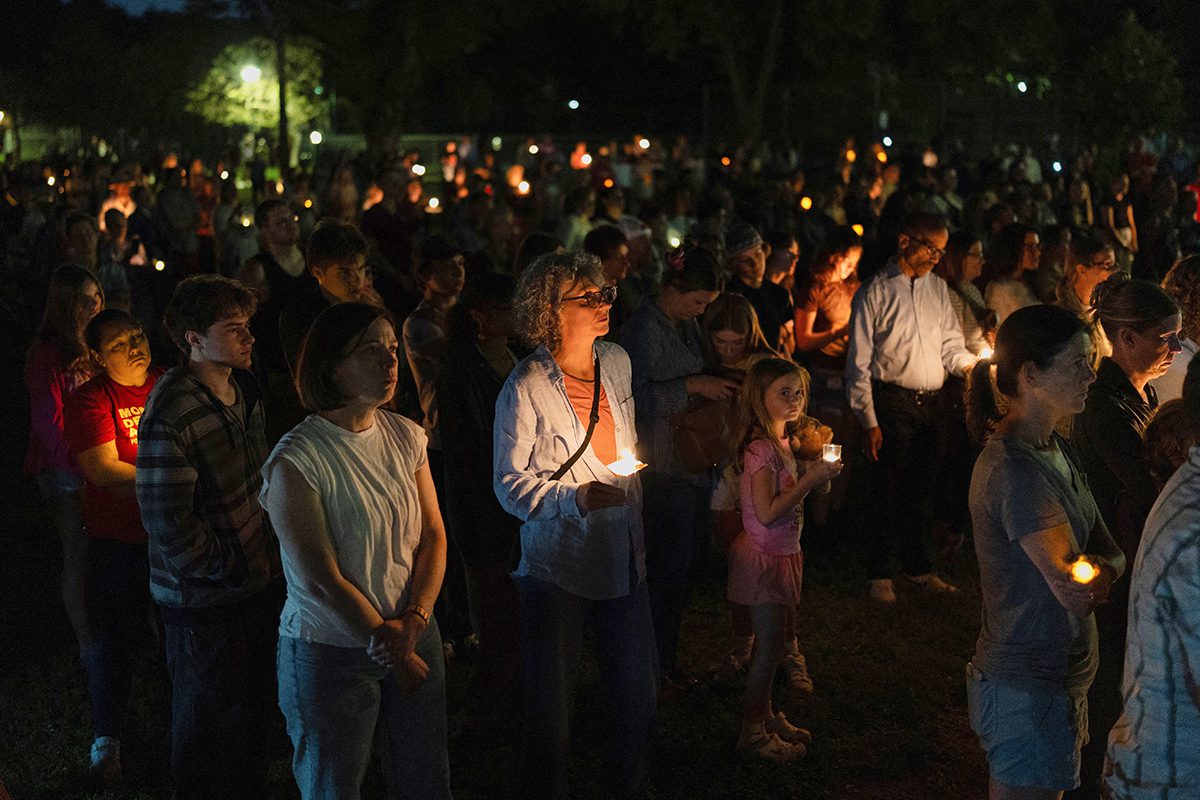
Mourners attend a vigil at Lynnhurst Park in Minneapolis Aug. 27, 2025, following a shooting earlier in the day at Annunciation Church. A shooter opened fire with a rifle through the windows of the school’s church and struck children attending Mass during the first week of school, killing two and wounding 17 people in an act of violence the police chief called “absolutely incomprehensible.” (OSV News photo/Tim Evans, Reuters)
Social
ST. PAUL, Minn. (OSV News) – A deadly mass shooting took place the morning of Aug. 27 at Annunciation Catholic School in Minneapolis shortly after the start of the school day during an all-school Mass at the adjacent Annunciation Catholic Church.
The gunman shot from the outside of the church through windows at the Mass attendees with a rifle, shotgun and pistol, killing two children, ages 8 and 10. According to Minneapolis Police Chief Brian O’Hara, 17 others are injured, including 14 children. Three adults who were shot were parishioners in their 80s.
While there were “a range of injuries” among the injured children, they are all expected to survive, O’Hara said during an afternoon press briefing.
First responders block the crime scene following a shooting at Annunciation Catholic School in Minneapolis Aug. 27, 2025. A shooter opened fire with a rifle through the windows of a the school church and struck children celebrating Mass during the first week of school, killing two and wounding 17 people in an act of violence the police chief called “absolutely incomprehensible.” (OSV News photo/Tim Evans, Reuters)
The suspected gunman is also dead and believed to have taken his own life in the parking lot.
Local media is reporting the suspected shooter was 23-year-old Robin Westman, who formerly went by Robert, and that his mother had been an employee of Annunciation.
Court documents filed in Dakota County, accessed by OSV News on Aug. 27, indicate that Westman identified as female and petitioned to formally undergo a name change to reflect that identity. The request was granted on Jan. 15, 2020.
O’Hara confirmed that Westman appeared to have barricaded at least two of the church’s exterior doors with two-by-four wooden boards to trap Mass attendees inside.
Aug. 27 was the third day of the school year for the Catholic elementary school, which serves students in preschool to grade eight. Students were attending an all-school Mass that began at 8:15 a.m. Authorities were alerted at 8:27 a.m.
The mass shooting at Annunciation appears to be the first of its kind involving a Catholic school in the modern era of school shootings that began with the 1999 Columbine High School massacre in Littleton, Colorado.
Minneapolis Mayor Jacob Frey joined O’Hara in speaking to media on the scene during a mid-morning press conference. Dr. Thomas Wyatt, chair of emergency medicine at Hennepin County Medical Center, a Level 1 trauma center in downtown Minneapolis, also provided reporters an update on victims’ status. He said 11 patients were taken to HCMC, among them two adults and nine children ages 6-14.
“Don’t just say this is about thoughts and prayers right now. These kids were literally praying,” Frey said. “They should be able to go to school or church in peace without the fear or risk of violence and their parents should have the same assurance.”
“There are no words that can capture the horror and the evil of this unspeakable act,” he said.
Father Erich Rutten, pastor of nearby St. Thomas the Apostle Parish, arrived on scene this morning to pray with and comfort distraught and grieving parents at the school.
Mourners attend a vigil at Lynnhurst Park in Minneapolis Aug. 27, 2025, following a shooting earlier in the day at Annunciation Church. A shooter opened fire with a rifle through the windows of the school’s church and struck children attending Mass during the first week of school, killing two and wounding 17 people in an act of violence the police chief called “absolutely incomprehensible.” (OSV News photo/Tim Evans, Reuters)
The priest told NBC News that parents were in “great, great anxiety and grief,” with some “wailing and crying, some stooping to the ground.”
He told the news outlet that he hugged those he recognized; several of them joined in as he prayed the rosary.
Bishop Kevin T. Kenney, auxiliary bishop of St. Paul and Minneapolis, who grew up attending Annunciation Parish, rushed from the downtown Minneapolis parish where he serves as pastor to Hennepin County Medical Center to comfort families. He told local ABC affiliate KSTP , “It’s just unbelievable that this could happen, still today.”
It’s “very sad for the community, for the families, and very sad for the families who have lost loved ones,” he said.
“I have talked to a few (families) whose children are in surgery or being cared for,” he added. “Just panicking, of course they’re in shock and worried, asking, ‘Why, why?’ So I’m just here to comfort. They also have a wonderful staff inside as well to comfort the people and to just walk with them in these hours ahead.”
He said, “It’s a horrible, horrific way for all the students to begin the school year. Safety procedures were put in place, people come excited to go back to school, very excited about an academic year, feeling safe in south Minneapolis, and now look what happened.”
Annunciation’s former interim pastor Father Robert Hart, 77, told NBC News that the school shooting was “unbelievable.”
“It’s hard to believe that this could happen at a Catholic Mass,” he said. The priest described Annunciation as a “very close-knit and very supportive” community.
President Donald Trump said on the X social media platform that he has “been fully briefed” on the shooting.
“The FBI quickly responded and they are on the scene,” he said. “The White House will continue to monitor this terrible situation. Please join me in praying for everyone involved!”
Also on X, Minnesota Gov. Tim Walz said that he has been “briefed on a shooting at Annunciation Catholic School and will continue to provide updates as we get more information. The BCA and State Patrol are on scene. I’m praying for our kids and teachers whose first week of school was marred by this horrific act of violence.”
Kristi Noem, secretary of the U.S. Department of Homeland Security, said on X that “DHS is monitoring the horrific shooting at Annunciation Catholic School in Minneapolis. We are in communication with our interagency partners, and will share more information as soon as it becomes available. I am praying for the victims of this heinous attack and their families.”
Bishops and Catholic leaders across the country have issued their condolences and offered prayers in solidarity with the church in Minnesota.
“As a Church, we are following the tragic news from Annunciation School in Minneapolis with heartbreaking sadness,” said Archbishop William E. Lori, vice president of the U.S. Conference of Catholic Bishops, in a statement. “Whenever one part of the Body of Christ is wounded, we feel the pain as if it were our very own children. Let us all beg the Lord for the protection and healing of the entire Annunciation family.”
Pope Leo XIV also offered prayers, according to a message to Archbishop Bernard A. Hebda of St. Paul and Minneapolis from Cardinal Pietro Parolin, the Vatican secretary of state.
“His Holiness Pope Leo XIV was profoundly saddened to learn of the loss of life and injuries following the shooting that took place at Annunciation Church in Minneapolis, and he sends his heartfelt condolences and the assurance of spiritual closeness to all those affected by this terrible tragedy, especially the families now grieving the loss of a child,” he wrote.
“While commending the souls of the deceased children to the love of Almighty God, his Holiness prays for the wounded as well as the first responders, medical personnel and clergy who are caring for them and their loved ones,” Cardinal Parolin continued. “At this extremely difficult time, the Holy Father imparts to the Annunciation Catholic School community, the Archdiocese of Saint Paul and Minneapolis and the people of the greater Twin Cities metropolitan area his apostolic blessing as a pledge of peace, fortitude and consolation in the Lord Jesus.”
In a statement, Archbishop Bernard said he was grateful for prayers and asked that they continue.
“I beg for the continued prayers of all of the priests and faithful of this Archdiocese, as well for the prayers of all men and women of good will, that the healing that only God can bring will be poured out on all those who were present at this morning’s Mass and particularly for the affected families who are only now beginning to comprehend the trauma they sustained,” he said.
“My heart is broken as I think about students, teachers, clergy and parishioners and the horror they witnessed in a Church, a place where we should feel safe,” he said.
He noted that the shooting at Annunciation happened only a day after another shooting in South Minneapolis near Cristo Rey Jesuit High School, where one person was killed and six were injured.
The back-to-back shootings “increases the sadness about the pain and anger that is present in our communities,” he said. “We need an end to gun violence. Our community is rightfully outraged at such horrific acts of violence perpetrated against the vulnerable and innocent.”
Archbishop Hebda said a prayer service has been scheduled for 7 p.m. Aug. 27 at Academy of the Holy Angels in Richfield, about 2 miles south of Annunciation.
Archdiocesan staff members, he added, “are working with the parish and school teams to make sure they have the support and resources they need at this time and beyond.”
Bishop Robert E. Barron of Winona-Rochester, Minnesota, asked for prayers on X.
“Friends, this morning there was a shooting at Annunciation Catholic Parish in Minneapolis. Please join me in praying for all those who were injured or lost their lives — along with their families,” he wrote. “Let us also pray for the students, faculty, and entire parish community,” he wrote.”
Bishop Patrick M. Neary of St. Cloud, Minnesota, also expressed his grief over the shooting.
“Today, our hearts are shattered by the horrific act of violence that occurred at Annunciation Catholic Church and School in Minneapolis. Children were gathered for Mass. Teachers were beginning a new school year. Families were entrusting their loved ones to the care of the Church,” he said in a statement.
“I grieve deeply with the families, students, staff and parishioners of Annunciation. I grieve with our neighbors in the Archdiocese of Saint Paul and Minneapolis. And I grieve with every person who now carries the trauma of this senseless violence.
“As Catholics, we believe in the dignity of every human life. That dignity is destroyed when violence becomes routine,” he continued. “May Christ, the Prince of Peace, bring healing to all who are wounded, and may Our Lady of Sorrows intercede for us in this time of grief.”
Social
ST. PAUL, Minn. (OSV News) – Archbishop Bernard A. Hebda told media Aug. 27 that prayers offered from around the United States and world, including from Pope Leo XIV, have been “a source of hope” following that morning’s mass shooting during Mass at Annunciation Catholic School in Minneapolis that left two children dead and 17 other victims injured.
“Brothers and sisters, we have to be men and women of hope,” he said. “It’s through prayer and that ‘prayer of the feet’ — through action — that we can indeed make a difference.”
Archbishop Hebda joined Annunciation Catholic School Principal Matt DeBoer and other city and state leaders in a media briefing outside Annunciation Catholic School and the adjacent Annunciation Catholic Church. Minnesota Gov. Tim Walz, Minneapolis Mayor Jacob Frey and Minneapolis Police Chief Brian O’Hara were present and also spoke at the afternoon press conference.
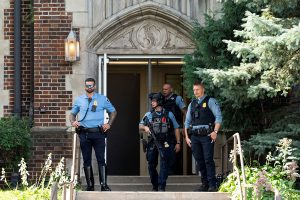
Following a shooting, first responders stand at the entrance to Annunciation Catholic School in Minneapolis Aug. 27, 2025. A shooter opened fire with a rifle through the windows of the school’s church and struck children celebrating Mass during the first week of school, killing two and wounding 17 people in an act of violence the police chief called “absolutely incomprehensible.” (OSV News photo/Tim Evans, Reuters)
Speaking as the church bells tolled, Archbishop Hebda noted that “the bell in a Catholic church is always a call to prayer. … It’s a reminder to be praying.”
He commended DeBoer, Annunciation’s pastor Father Dennis Zehren, and Deacon Kevin Conneely for “how valiant” they and their staff were in responding to the tragedy.
“How sad it is … not only for the families who are directly involved, but indeed for families everywhere who feel the threat that comes from an event, a tragedy like today’s,” he said.
Archbishop Hebda read in full that day’s message from Cardinal Pietro Parolin, Vatican secretary of state, that expressed Pope Leo’s prayers and “spiritual closeness” to the victims.
“We know that the Holy Father, Pope Leo, did his hospital training right here in Minneapolis, so he knows our community, and he’s been reminding anybody visiting from Minnesota that he spent some time here,” he said. “We’re very grateful for his blessing, but I … ask that you would continue to look for those ways of supporting those who have been impacted today, not only with your prayers, but also with your action.”
A 23-year-old gunman shot from the outside of the church through windows at the Mass attendees with a rifle, shotgun and pistol, killing two children, ages 8 and 10, before committing suicide. Among the 17 injured were 14 children, all expected to survive. Three adults who were shot were parishioners in their 80s.
Speaking immediately before Archbishop Hebda, DeBoer commended his staff and told his school community, “I love you.”
“You’re so brave, and I’m so sorry this happened to us today. Within seconds of this situation beginning, our teachers were heroes,” he said. “Children were ducked down. Adults were protecting children. Older children were protecting younger children, and … it could have been significantly worse without their heroic action.
“This is a nightmare,” he continued, “but we call our staff the dream team and we will recover from this. We will rebuild from this. … We as a community have a responsibility to make sure that no child, no parent, no teacher ever has to experience what we’ve experienced today.”
DeBoer said, “We lost two angels today. Please continue to pray for those still receiving care.”