WASHINGTON (OSV News) – A national garden in the nation’s capital proposed by survivors of clergy sexual abuse promises to foster healing not only for survivors but also for the Catholic Church as a whole.

“We can’t heal alone,” said Mike Hoffman, chair of the National Healing Garden Working Group. “We want to heal with you, with our Church, with the bishops, with the priests. We want to heal together,” added the executive director of the National Catholic Restorative Justice Initiative, a group dedicated to restorative justice for survivors of Catholic clergy abuse.

Pinwheels are seen planted in the Chicago Healing Garden in this 2014 photo. Plans for a similar garden are underway at The Catholic University of America in Washington, with organizers hoping to raise $200,000 by spring 2027 to fund an area to include the flowers, shrubbery, seating, plaques and a prayer labyrinth. Such gardens can be found all around the country and aim to bring healing to victim/survivors of abuse. (OSV News photo/courtesy of St. Ignatius College Prep)

Hoffman, a survivor of childhood sexual abuse by clergy, and Deacon Bernie Nojadera, executive director of the U.S. bishops’ Secretariat of Child and Youth Protection, spoke with OSV News about the efforts behind the National Healing Garden, which will be on the grounds of The Catholic University of America in Washington. The garden is planned for the east side of Caldwell Hall by the St. Francis Peace Garden.

In a statement, Peter Kilpatrick, president of Catholic University, said that the garden “will serve as a tangible sign of God’s mercy and an extension of our commitment to lift up human dignity.”

The university is managing fundraising efforts as well as collaborating on the design. Organizers are seeking to raise $200,000 by spring 2027 to fund the garden that will include flowers, shrubbery, seating, plaques and a prayer labyrinth representing the nonlinear pathway of healing. The garden, which is currently being designed, will serve as a healing space for survivors of clergy abuse and for anyone who has been abused or impacted by abuse.

“Our outreach is to all survivors across the country of any kind of abuse … no matter their faith background, no matter where they came from and no matter who the perpetrator was,” Hoffman said.

The vision statement by the National Healing Garden Working Group — a group of seven clergy abuse survivors and other members including Auxiliary Bishop Evelio Menjivar-Ayala of Washington driving the garden — reflects this desire.

Members of The Catholic Project, a Catholic University initiative dedicated to collaboration between clergy and laity in the wake of the Church’s sexual abuse crisis, were also part of the working group from the beginning, including Stephen White, former executive director, and Sara Perla, acting director.

“As clergy sexual abuse survivors from across the United States, in relationship with the Church, we offer empathy and acknowledgement to all survivors of any kind of abuse,” the statement reads. “In this sacred healing space, we invite the entire Body of Christ into the journey of accompaniment and reconciliation, imploring God’s mercy to bring healing to the lives of everyone harmed by abuse in the Church.”

It concludes: “Pledge with us to continue working to respect, protect, defend, and restore the dignity that all deserve as children of God.”

The garden is put forth in relationship with the Church, particularly the U.S. Conference of Catholic Bishops’ Committee on the Protection of Children and Young People. As liaison between the working group and the bishops’ committee, Deacon Nojadera said the working group of survivors did the heavy lifting for this new project.

“In the end, I’m hoping the Church transforms, converts and ends up even a healthier and holier Church — and that’s going to be with the assistance of our survivors, of our survivor-victims, who, in a way, are showing us what it is they need for this healing, for their healing,” he said.

The garden also has the prayerful support of nine bishops and archbishops, eight Catholic organizations, five Catholic academic institutions and three parishes.

The garden draws inspiration from other, more local healing gardens across the country, including one in Chicago, which Hoffman was also behind, and five in the Archdiocese of Los Angeles.

Hoffman, who also serves as chair of the Hope and Healing Committee of the Archdiocese of Chicago, said the Chicago garden helped him in his healing journey. He first came forward to tell his story of clergy abuse in 2006. He called a meeting with the late Cardinal Francis E. George of Chicago, a Catholic University alumnus, his “major healing milestone.” As a Church leader, the cardinal apologized to him.

“One reason why I’m here today is because I could unburden myself to Cardinal George, and he could hear that,” Hoffman said of their 2008 meeting.

Hoffman stressed the importance of placing gardens in public, visible spaces. He said how these gardens are used is also important. The Chicago garden, which has been in place for over a decade, holds an annual child abuse prevention prayer service attended by hundreds.

“That’s healing to me,” Hoffman said. “The issue has driven so many of us apart, and here is a healthy and healing space that has brought us together.”

He said organizers plan to hold similar events in the national garden.

The creation of a national garden, or “a permanent site of healing, prayer, and accompaniment for victim-survivors of clergy sex abuse and The Dallas Charter | USCCBfor the broader Church,” is one of four proposals identified by Hoffman’s NCRJI.

Hoffman suggested the garden’s opening might coincide with the 25th anniversary of the Dallas Charter in 2027. The charter, formally called the “Charter for the Protection of Children and Young People,” is a set of procedures from the USCCB for addressing allegations of sexual abuse of minors by clergy and prevention of further acts of abuse.

At the USCCB, Deacon Nojadera hoped the garden will remind God’s people that “they are wonderfully created in the image and likeness of God” and of “the reality that every one of us is unconditionally loved.”

(OSV News) – Pope Leo XIV concluded his first trip to Africa April 23, capping a four-country visit marked by urgent calls for peace, direct engagement with conflict zones and a backdrop of international political tension.

Pope Leo XIV holds a baby at the Sanctuary of Our Lady of Muxima in Muxima, Angola, April 19, 2026. (OSV News photo/Simone Risoluti, Vatican Media)

Traveling April 13–23 through Algeria, Cameroon, Angola and Equatorial Guinea, the pope met civil and religious leaders, celebrated public Masses and encouraged Catholics to remain steadfast witnesses to the Gospel.

His visit brought him into regions scarred by violence, including Cameroon’s separatist conflict, while also addressing inequality and corruption in Angola, promoting interreligious dialogue in Algeria and a just society in Equatorial Guinea.

— Algeria —

Pope Leo’s 11-day trip began with an unexpected controversy after U.S. President Donald Trump criticized him in a late-night April 12 post on Truth Social.

Trump called the pope “weak on crime” and “terrible for foreign policy,” accusing him of believing “it’s OK for Iran to have a nuclear weapon.” The remarks followed the pope’s criticism of the Iran war and his repeated calls for peace.

Journalists aboard the papal flight quickly pressed for a response.

“I have no fear, neither of the Trump administration nor of speaking out loudly of the message of the Gospel, which is what I believe I am here to do,” Pope Leo said.

“We are not politicians,” he added. “We are not looking to make foreign policy … but I do believe in the message of the Gospel: ‘Blessed are the peacemakers’ is the message that the world needs to hear today.”

The remarks sparked backlash from religious and political leaders, but the pope declined to escalate tensions.

“I don’t want to get into a debate,” he said, emphasizing that his mission is to proclaim peace.

“I don’t think that the message of the Gospel is meant to be abused in the way that some people are doing.”

Despite the dispute, Pope Leo struck a positive tone before landing, saying he was “very happy to visit the land of St. Augustine again.”

In Algiers, he visited the Great Mosque, calling the encounter a sign “that we can learn to respect one another, live in harmony and build a world of peace.”

Later, at the Basilica of Our Lady of Africa overlooking the Mediterranean, he honored Algeria’s Christian martyrs and highlighted interreligious dialogue in the Muslim-majority nation.

The basilica, he said, is a “sign of our desire for peace and unity,” symbolizing “a Church of living stones, where communion between Christians and Muslims takes shape.”

On April 14, the pope traveled to Annaba, near the ruins of ancient Hippo Regius, where St. Augustine spent his final years. The visit held personal significance; Pope Leo has often described himself as “a son of Augustine.”

Celebrating Mass at the Basilica of St. Augustine, he urged Christians to follow the saint’s example, “fervently seeking the truth and serving Christ with ardent faith.”

“Be heirs to this tradition, bearing witness through fraternal charity … as a hope of salvation for the world,” he said.

Addressing Algeria’s small Christian community, he praised their quiet witness.

“Your presence in this country is like incense,” he said. “A glowing grain that spreads fragrance because it gives glory to the Lord and joy and comfort to so many.”

— Cameroon —

During his flight to Cameroon, Pope Leo reflected on Algeria as “a special blessing,” noting that St. Augustine’s life offers a vision of unity and respect across differences.

That message carried into Cameroon, a country scarred by separatist violence. Addressing authorities in Yaoundé, the pope acknowledged the suffering caused by conflict in the English-speaking northwest and southwest regions.

Since 2017, fighting between separatist militias and government forces has killed more than 6,500 people and displaced over 500,000.

“Lives have been lost, families displaced, children deprived of schooling and young people no longer see a future,” he said. “Behind the numbers are the faces, stories and shattered hopes of real people.”

Days before his arrival, separatist groups declared a three-day ceasefire to allow safe travel during the visit.

The highlight of the April 15–18 stop was the pope’s visit to Bamenda, in the heart of the conflict zone. Addressing Catholics at St. Joseph’s Cathedral, the pope was met with enthusiasm after declaring, “I am here to proclaim peace.”

After hearing testimony from local residents — including a chief imam who described a deadly attack on a mosque — the pope strongly condemned violence carried out in God’s name.

“But woe to those who manipulate religion and the very name of God for their own military, economic and political gain,” he said, warning against dragging what is sacred “into darkness and filth.”

Celebrating Mass for 20,000 people at Bamenda’s airport, he urged hope rooted in faith.

“This is the moment to change, to transform the story of this country,” he said. “The time has come, today and not tomorrow.”

He called on Cameroonians to “restore the mosaic of unity” by embracing the country’s diversity.

On April 17, he celebrated Mass in Douala for an estimated 120,000 faithful, urging Africans to share God’s love by feeding the hungry and offering spiritual nourishment.

Though the visit brought hope, media coverage continued to frame the trip through the lens of tensions with Trump — something the pope later addressed directly.

— Angola —

While the pope’s warning to those who use God to justify violence resonated with suffering Cameroonians in Bamenda, several media outlets ran headlines insinuating that Pope Leo was making an indirect dig at Trump.

En route to Angola, Pope Leo clarified that his remarks in Cameroon had been prepared weeks earlier and were not directed at the U.S. president.

“My speeches were written well before the president ever commented,” he said. “It is not in my interest to debate,” adding “there has been a certain narrative that has not been accurate in all its aspects.”

Arriving in Luanda, he shifted focus to Angola’s challenges and the Church’s role in offering hope. Home to more than 20 million Catholics, Angola has deep Christian roots but continues to struggle with inequality, corruption and the legacy of a civil war that claimed up to 800,000 lives.

Addressing government leaders, the pope urged them to prioritize the common good.

“Place the common good before every particular interest,” he said. “Never confuse your own part with the whole.”

He warned that the people have suffered when power is abused.

“They bear the scars not only of material exploitation, but also of the presumption of imposing an idea upon others,” he said.

On April 19, Pope Leo celebrated Mass for about 100,000 faithful in Kilamba. Reflecting on the Gospel story of the road to Emmaus, he cautioned against despair in societies marked by prolonged suffering.

“When one is long immersed in a history characterized by pain, one can risk losing hope and remaining paralyzed by discouragement,” he said.

Afterward, he traveled to the Sanctuary of Mama Muxima, southern Africa’s most visited Catholic shrine, where tens of thousands had gathered — many camping for days in intense heat.

Calling the shrine a place where “the heart of the Church” is alive, he noted its enduring role in Angola’s spiritual life.

“For centuries, many have prayed here in joy and sorrow,” he said. “Mama Muxima has quietly kept the heart of the Church alive and beating.”

On April 20, the pope flew east to Saurimo, near Angola’s largest diamond mine. There, he visited a nursing home housing 74 elderly residents, many rejected by their families due to superstitious beliefs.

“The care of the weakest is a sign of the quality of a nation’s social life,” he said. “The elderly must not only be assisted, but listened to, because they preserve the wisdom of a people.”

Celebrating Mass for tens of thousands, he also addressed exploitation linked to the diamond industry.

“How often the hope of many is frustrated by violence, exploited by the overbearing and defrauded by the rich,” he said.

“We were not born to become slaves,” he added. “Every form of oppression, violence and dishonesty negates the resurrection of Christ, the supreme gift of our freedom.”

— Equatorial Guinea —

The final leg of Pope Leo’s 11-day journey took him to Equatorial Guinea. Upon landing on the island of Malabo, the pope was welcomed by President Teodoro Obiang Nguema Mbasogo, who has ruled the oil-rich Central African nation since seizing power in a 1979 coup and is widely regarded as one of the world’s most authoritarian leaders.

Nevertheless, in his address to the country’s civil authorities, the pope appealed for justice and ethical governance in a country long criticized for corruption and human rights abuses.

Drawing from St. Augustine’s classic work “The City of God,” Pope Leo noted that the “city of God” is characterized by love, especially for the poor, while the “earthly city … is centered upon the proud love of self, on the lust for power and worldly glory that leads to destruction.”

“Every human being can benefit from the ancient realization of living on earth as a pilgrim,” he said. “It is essential to discern the difference between that which lasts and that which passes, remaining free from the pursuit of unjust wealth and the illusion of dominion.”

Celebrating Mass April 22 at the Basilica of the Immaculate Conception in the eastern city of Mongomo, the second-largest Catholic Church in Africa, the pope renewed his call to the country’s leaders and citizens to prioritize the common good.

“May the Lord help you to become a society in which everyone, each according to their respective responsibilities, works ever more fully to serve the common good rather than private interests, bridging the gap between the privileged and the disadvantaged,” he said.

In his final Mass in Malabo Stadium April 23, Pope Leo offered a word of hope to the country’s Catholics, urging them to seek strength, justice and hope from the Gospel and the sacraments.

Encouraging the faithful to “joyfully proclaim” that “Christ is everything for us,” Pope Leo reminded Christians that in Jesus, “we find the fullness of life and meaning.”

“Our problems do not disappear in the Lord’s presence, but they are illuminated,” he said. “Just as every cross finds redemption in Jesus, so too the story of our lives finds its meaning in the Gospel.”

As the Mass concluded, the pope bid farewell to the African continent, saying that his visit was “an invaluable treasure of faith, hope, and charity.”

Highlighting the continent’s significance, the pope said that “today, Africa is called to contribute significantly to the holiness and missionary character of the Christian people.”

“I entrust this intention to the intercession of the Virgin Mary, to whom I commend myself wholeheartedly, as well as your families, your communities, your nation, and all the peoples of Africa,” the pope said.

SCRANTON – The Diocese of Scranton will celebrate its annual Mother’s Day Adoption Mass on Sunday, May 10, at 10:00 a.m. at the Cathedral of Saint Peter in Scranton.

This liturgy prayerfully recognizes all mothers, with a special emphasis on adoptive and foster mothers. The Most Rev. Joseph C. Bambera, Bishop of Scranton, will be the principal celebrant and homilist.

The Mother’s Day Adoption Mass is open to the public and all faithful are invited to attend.

CTV: Catholic Television of the Diocese of Scranton will broadcast the Mass live. A livestream will also be provided on the Diocese of Scranton website, YouTube channel and across all Diocesan social media platforms.

In his first year as the successor of Peter, Pope Leo XIV has offered the Catholic Church a renewed reflection on the importance of motherhood and maternity.

Through his pastoral tone and public messages, he has emphasized that motherhood is a sacred gift, and maternity is at the heart of the Church’s mission to protect, nurture and evangelize.

As the world grows increasingly more complex, Pope Leo XIV calls the Catholic faithful to rediscover the foundational role of mothers in both the Church and society.

On Mother’s Day 2025, Pope Leo issued a heartfelt message from the Vatican, offering blessings to all mothers, especially those in heaven. In doing so, he reaffirmed the Catholic Church’s deep gratitude for the maternal vocation.

In a formal message to the Dicastery for the Laity, Family and Life, Pope Leo XIV framed maternity as a vocation essential to the Catholic Church’s life, and at the Jubilee of Families last year shared that a family’s love, when grounded in Christ, becomes “a sign of peace for the world.”

While Mother’s Day is not a liturgical or Catholic observance, it is a wonderful opportunity to highlight the beautiful vocation of motherhood and the gift of human life. It calls us to cherish the gift of life that we receive from our mothers and to pray for all women to whom God has entrusted life in a very special way.

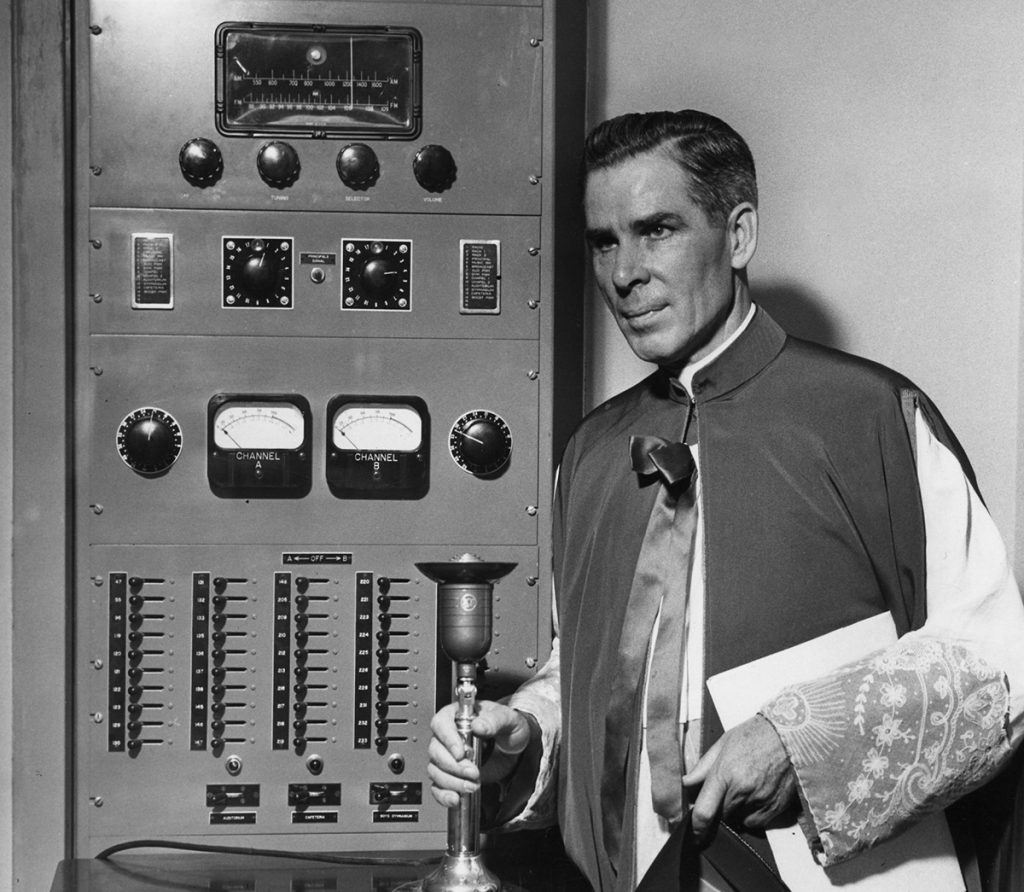
(OSV News) – Ahead of Archbishop Fulton J. Sheen’s Sept. 24 beatification, the Diocese of Peoria, Illinois, recently released a schedule of events, inviting those who plan to travel to The Dome at America’s Center in St. Louis, Missouri, for the beatification to “go deeper” and “transform your trip into a sacred journey.”

“The Sheen Pilgrimage is a spiritual experience centered around prayer, reflection, and celebration,” the diocese said. “Beginning in Peoria, IL, on September 15, this pilgrimage includes the anniversary of Sheen’s ordination, the historic Beatification Mass, and culminates in celebratory Masses and the Sheen Award Gala.”

Venerable Archbishop Fulton Sheen, pictured in an undated photo, is remembered as one of the most influential and innovative evangelists in American history. The Diocese of Peoria has released a schedule of events surrounding Sheen’s Sept. 24, 2026, beatification in St. Louis. (OSV News file photo)

The schedule begins with a nine-day novena of holy hours at 7 p.m. every evening at the Cathedral of St. Mary of the Immaculate Conception in Peoria from Sept. 15-23 and a Sunday, Sept. 20 Anniversary Mass of Sheen’s Ordination at the cathedral at 3 p.m., which requires tickets.

The festivities will continue in St. Louis with Vespers at the Cathedral Basilica of St. Louis at 5 p.m. on Sept. 23, also requiring tickets.

On the day of the beatification, there will be an expo for attendees at The Dome at America’s Center from 8 a.m. to 6 p.m., adoration and confession available at 9 a.m., and a pre-Mass show at 10 a.m.

“With anticipation of a great number of people wanting to participate, we chose (The Dome) because of availability, being indoors, and the close proximity to the Diocese of Peoria,” Bishop Tylka said March 25 when details of the beatification were announced.

Following the 2 p.m. Beatification Mass, there will be veneration of a relic of Sheen from 4 to 6 p.m.

Masses of Thanksgiving and various parish talks will take place in the Diocese of Peoria on Sept. 25, and the Sheen Award Gala, a ticketed event, will get underway in Peoria Civic Center at 6 p.m. that evening.

Masses of Thanksgiving, including a Byzantine Rite Mass of Thanksgiving, will also be celebrated at the Cathedral of St. Mary in Peoria on Sept. 26.

The diocese has more information and tickets for the events that require them at celebratesheen.com.

“Whether you come for a day or the entire week,” the diocese said, “this is an opportunity to walk in the footsteps of a remarkable spiritual leader and grow in faith alongside pilgrims from around the world.”

MONGOMO, Equatorial Guinea (OSV News) – Pope Leo XIV celebrated Mass in the second-largest Catholic Church in Africa April 22, telling Catholics in the oil-rich nation that “the future of Equatorial Guinea depends upon your choices.”

The pope offered Mass in the Basilica of the Immaculate Conception in the eastern city of Mongomo, near Equatorial Guinea’s border with Gabon. The basilica is currently the largest church in Central Africa and the second largest Catholic church throughout Africa, after the Basilica of Our Lady of Peace in the Ivory Coast.

In his homily, delivered in Spanish, Pope Leo called on the country’s leaders and citizens to prioritize the common good.

Pope Leo XIV celebrates Mass at the Basilica of the Immaculate Conception in Mongomo, Equatorial Guinea, April 22, 2026. (OSV News photo/Simone Risoluti, Vatican Media)

“The Creator has endowed you with great natural wealth: I urge you to work together so that it may be a blessing for all,” he said.

“May the Lord help you to become a society in which everyone, each according to their respective responsibilities, works ever more fully to serve the common good rather than private interests, bridging the gap between the privileged and the disadvantaged,” he said.

“May there be greater room for freedom, and may the dignity of the human person always be safeguarded.”

Thousands attended the Mass, many gathered outside in the square surrounded by the basilica’s colonnade. Before the liturgy, the pope greeted crowds from the popemobile as colorful fireworks went off and a giant rosary made of balloons was released into the air.

Mongomo is the hometown of President Teodoro Obiang Nguema Mbasogo, who has ruled the country since 1979 and who attended the Mass with his wife.

The basilica, inspired by St. Peter’s Basilica in Vatican City, was begun in 2006 and funded by the state. It was consecrated on Dec. 7, 2011, by Nigerian Cardinal Francis Arinze on behalf of Pope Benedict XVI.

“We are gathered in this magnificent Cathedral Basilica, dedicated to the Immaculate Conception, Mother of the Incarnate Word and Patroness of Equatorial Guinea, to listen to the Lord’s word and to celebrate the memorial that he has left us as the source and summit of the Church’s life and mission,” Pope Leo said.

“The Eucharist truly contains every spiritual good of the Church: It is Christ, our Passover, who gives himself to us, he is the living Bread that nourishes us,” he continued. “His presence in the Eucharist reveals God’s infinite love for the entire human family and the way he encounters every woman and every man even today.”

The pope expressed gratitude for missionaries, priests and laypeople who helped spread the faith in the country, noting the 170th anniversary of its evangelization. He also cited St. Paul VI, quoting his 1969 visit to Africa: “Africans, from now on, you are missionaries to yourselves. The Church of Christ is well and truly planted in this blessed soil.”

Sister Kebam Fien Blenderline, a missionary from Cameroon with the Daughters of the Divine Shepherd, has been serving in Equatorial Guinea for nearly two years. She told OSV News that her mission is focused on evangelization, education and promoting the dignity of women.

“For the years I have been here working with the youth, I think what they need to know is that it is a good thing to serve the Lord. It is a good thing to know the Lord, and it is a good thing to practice the Christian values and to love God,” she said.

“This basilica reminds us of the Vatican,” she added. “It is an opportunity for the people of Guinea to really value the presence of God in their lives through this basilica, through the images. There is the Blessed Sacrament in the basilica and it is a place where we recollect. We come together to be at peace with ourselves and to pray for our brothers and sisters.”

During the Mass, musicians played the marimba and a swaying choir sang hymns specifically written for the pope’s visit. Prayers during the liturgy were offered in Spanish and other local languages including Fang, Bisio and Kombe.

“Brothers and sisters, even when faced with personal, family and social situations that are not always favorable, we can trust that the Lord is at work, making the good seed of his kingdom grow in ways unknown to us, including when everything around us seems barren, and even in moments of darkness,” the pope said.

“With such confidence, rooted in the power of his love rather than in our own merits, we are called to remain faithful to the Gospel, to proclaim it, to live it fully and to bear witness to it with joy,” he said.

While at the basilica, the pope also blessed the foundation stone for a new cathedral in Ciudad de la Paz, the new capital for Equatorial Guinea, where roughly 75% of the 1.67 million population is Catholic.

“What is the hunger we feel? And what does this nation hunger for today? The motto chosen for my visit is ‘Christ, Light of Equatorial Guinea, Towards a Future of Hope.’ Perhaps this is precisely the greatest hunger today,” Pope Leo said.

“There is hunger for a future imbued with hope that is capable of engendering a new sense of justice and producing fruits of peace and fraternity. This is not an unknown future that we must passively await, but rather one that we ourselves are called to build with God’s grace. The future of Equatorial Guinea depends upon your choices; it is entrusted to your sense of responsibility and to your shared commitment to safeguarding the life and dignity of every person.”

The Mass marked the first event of the 10th day of the pope’s apostolic journey and the final full day of public engagements before his return to Rome April 23.

Following the Mass, the pope visited a technology school named for Pope Francis before traveling to Bata, the country’s largest coastal city. He stopped at the cathedral, met prisoners and staff at a local jail, and prayed at a memorial honoring victims of a 2021 explosion that killed more than 100 people.

Pope Leo then met with young people and families at a stadium before returning to the island city of Malabo ahead of his departure for Rome on April 23.

“Brothers and sisters, there is a need for Christians to take the destiny of Equatorial Guinea into their own hands,” Pope Leo said in his morning homily. “For this reason, I would like to encourage you: do not be afraid to proclaim the Gospel and bear witness to it with your lives.”

ABOARD THE PAPAL PLANE (OSV News) – Flying over the west coast of central Africa on April 21, Pope Leo XIV paused to honor his predecessor on the first anniversary of Pope Francis’ death, remembering the Argentine pope’s witness to mercy and closeness to the poor.

On the papal flight from Luanda, Angola, to Malabo, the capital of Equatorial Guinea, Pope Leo XIV spoke to journalists traveling with him, reflecting on the legacy of Pope Francis, who died April 21, 2025.

“I would like to remember, on this first anniversary of his death, Pope Francis, who gave so much to the church with his life, his testimony, his words, and his gestures,” Pope Leo told reporters, speaking in Italian.

Pope Francis embraces a young woman during his general audience in the Paul VI hall at the Vatican Feb. 9, 2022. Pope Francis, formerly Argentine Cardinal Jorge Mario Bergoglio, died April 21, 2025, at age 88. (CNS photo/Paul Haring)

He recalled how Pope Francis truly lived with “closeness to the poorest, the little ones, the sick, the children, the elderly.”

“We can also remember his message of mercy,” Pope Leo said, remembering in particular how his predecessor invited the entire Church to join in the “beautiful celebration of an extraordinary Jubilee of Mercy.”

Pope Francis, born Jorge Mario Bergoglio on Dec. 17, 1936, in Buenos Aires, led the Catholic Church from March 13, 2013, until his death on Easter Monday 2025. He was the first Jesuit pope and the first pope from Latin America.

The late pope’s final public appearance was on Easter Sunday, April 20, 2025, when he unexpectedly came out on the central loggia of St. Peter’s Basilica, raising his hands to wave to thousands of faithful gathered below in the square.

“Happy Easter,” he told the crowd, before delivering what would be his last Easter blessing, “urbi et orbi,” to the city and the world. The visibly frail pope then boarded his popemobile for a final pass through the square to greet the faithful.

“We pray that he is already enjoying the mercy of the Lord and we thank the Lord for the great gift of Francis’ life to the whole Church and to the whole world,” Pope Leo said on the flight.

In Rome, the anniversary of Pope Francis’ death will be marked with a Mass held in the Basilica of St. Mary Major, the final resting place of the late pope.

Pope Leo reflected on this predecessor’s legacy on the papal flight to Equatorial Guinea, the last African country on the pope’s 11-day apostolic journey to the continent.

After his tribute, the pope responded to three questions from Angolan journalists about his experience in their country.

Pope Leo said that it was “a joy to see the places in the world where the Church is growing,” noting that is not the case in other parts of the world, underlining that this is “a call to evangelization, to continue to announce the Gospel and to try to invite others, not with proselytism as Pope Francis said so many times, but with the beauty, the attraction of faith.”

“The joy of believers is one of the best announcements of faith, of the Gospel,” he added.

Asked about the possibility of new African cardinal appointments, Pope Leo said that “this is a question that many want to ask,” noting that it’s “still not decided yet when new cardinals will be created.”

“We must look at the question at the global level,” he said. “We hope that for Africa, and also for Angola, in the future — I’m not saying the next one, a bit further on — but we can consider the creation of new cardinals also for Angola.”

Speaking at roughly 30,000 feet, the pope also wished happy birthday to two journalists on the plane who are traveling as part of the Vatican press corps.

During the papal trip to four countries in Africa, Pope Leo has been flexing his language skills, preaching Masses and giving speeches in French, English, and Portuguese. On each flight to a new country, Pope Leo has spoken to journalists aboard the papal plane in either English or Italian.

In his final destination, the pope will add another language to that list, as Equatorial Guinea is the only Spanish-speaking country in Africa.

Pope Leo’s April 21–23 visit to Equatorial Guinea will be only the second papal visit to the country; the first was by St. John Paul II in 1982.

The papal visit coincides with the 170th anniversary of evangelization in the country, where roughly 75% of the 1.67 million population is Catholic.

In Equatorial Guinea, Pope Leo will stop at a psychiatric hospital in the capital Malabo, visit a prison in Bata, and pray at a memorial to victims of a 2021 military base explosion that killed more than 100 people. A papal Mass in Mongomo at the Basilica of the Immaculate Conception is expected to draw 100,000 Catholics.

Sister Francine Hien of the Missionary Sisters of Mary Immaculate told OSV News the Christian-majority country was awaiting the pope’s arrival with “enthusiasm, expectations, zeal and joy.”

(OSV News) – New data estimates show the number of abortions in the U.S. remained stable in 2025, totaling some 1.126 million, with apparent declines in out-of-state travel for abortions offset by increasing access to telehealth abortions.

The actual number of abortions is likely higher, given certain exclusions in the estimates.

At the same time, abortion data remains incomplete amid the lack of a mandatory, federal-level reporting system, researcher Mia Steupert of the Charlotte Lozier Institute — the education and research arm of Susan B. Anthony Pro-Life America — told OSV News April 15.

An examining room at the Planned Parenthood South Austin Health Center in Texas is shown in a file photo.New data estimates released March 24 by the Guttmacher Institute, a national policy and research firm that supports legalized abortion, show the number of abortions in the U.S. remained stable in 2025, totaling some 1.126 million.The study collects data on both surgical and chemical abortions performed in facilities, along with chemical abortions obtained through telehealth providers. (OSV News photo/Ilana Panich-Linsman, Reuters)

On March 24, the Guttmacher Institute, a national policy and research firm that supports legalized abortion, released data from its “Monthly Abortion Provision Study” for calendar year 2025.

The study collects data on both surgical and chemical abortions performed in facilities, along with chemical abortions obtained through telehealth providers — including recipients who were protected by shield laws in states with abortion bans.

Guttmacher found that the 2025 figures were “largely unchanged from 2024,” when the institute counted 1.124 million clinician-provided abortions.

The 2025 estimate marks a 21% increase from 2020, which Guttmacher said was “the last year of comprehensive national estimates” before the Supreme Court’s 2022 decision in the Dobbs v. Jackson Women’s Health Organization case overturned the 1973 rulings that legalized abortion in the U.S.

Guttmacher clarified that its data “does not include self-managed abortions” — for example, those involving drugs sourced from community networks or acquired from outside of the U.S.

“Evidence suggests self-managed abortions have increased since Dobbs,” the institute said.

States without total bans saw a slight decrease in the number of abortions during 2025, down to 1.036 million from 1.049 million.

In contrast, states with total bans saw a spike in telehealth-provided abortions, with the figure totaling 91,000, up from the previous 74,000.

Guttmacher said its estimates exclude “advance provision” of chemical abortion pills, the “limited number” of abortions performed as exceptions to full bans and abortions “that are not provided by U.S. clinicians,” such as “those provided through community health networks, online pharmacies or other means.”

“These exclusions mean that these findings represent an underestimate of the total number of abortions nationally,” said Guttmacher.

The data showed a noticeable decline in the number of those crossing state lines for abortions — 142,000 in 2025, down from 154,000 in 2024.

The downturn “was almost entirely driven by reduced travel from residents of states with total bans,” said Guttmacher. “In 2024, 74,000 people living in ban states traveled out of state for care; this dropped to 62,000 in 2025.”

Still, said the firm, “travel across state lines remains a major avenue for accessing abortion care for people living in restrictive settings.”

Guttmacher said the 62,000 reported for 2025 was “more than double the number who traveled from these states prior to Dobbs.” Between 2013-2020, that figure ranged from 19,000-25,000 annually.

The 2025 number also does not count “those who traveled out of states with six- or twelve-week bans or with other major obstacles to in-clinic provision,” a segment that saw “an additional 47,000 people” travel to other states for abortions, said Guttmacher.

Several states — Illinois, Kansas, New Mexico, North Carolina and Virginia — had significant shares of out-of-state abortions, with Illinois “accounting for almost a quarter” of the 142,000 national total in 2025.

“I think it’s important to realize that there’s still a ton of out-of-state care happening,” said Steupert.

But she stressed that with “no federal requirement” for the collection of abortion data, researchers rely on “a patchwork of whatever states do.”

States and jurisdictions are not required to report their abortion data to the Centers for Disease Control’s Abortion Surveillance System, with the agency saying on its website that its Division of Reproductive Health “prepares surveillance reports as data become available.”

Steupert said that “we really can’t rely on any of the states’ data anymore, because almost none of them track telehealth abortions.”

Massachusetts and Nevada each do “a good job,” while Oregon “attempts to do it,” said Steupert — but “the quality and variety of the data” differs “vastly.”

“A lot of them aren’t tracking out-of-state shipments” of abortion drugs, she said. “They’ll track within the state, but they don’t track if you’re in Illinois and somebody sends you drugs from New York.”

Steupert said the Charlotte Lozier Institute is examining public health models for better abortion data collection — a task that is “kind of like starting from scratch” because, she said, “we just don’t really have a good model to work off of.”

She pointed to the difference between counting abortion drugs mailed and completed abortions.

“Even Guttmacher, in their methodology, notes that they’re not tracking the number of completed abortions,” said Steupert. “They’re only talking about abortion drugs sent. That’s a really big caveat. We always have to tell people that this isn’t the number of known, completed abortions through abortion drugs. It’s just the number of drugs sent.”

Steupert stressed that “there’s no way that we’re going to be able to track the number of completed abortions” from abortion drugs.

And, she said, “There’s also no way you can track abortions occurring outside the formal health care system.”

Steupert cited the Canadian nonprofit Women on the Web, which according to its website ships the abortion drugs mifepristone and misoprostol to recipients in more than 180 countries, providing “24/7 support in 16 languages.”

Attempts to self-administer abortions through the use of certain herbs — promoted on TikTok following the Dobbs decision and alarming public health officials due to poisoning risks — also elude data counts, said Steupert.

She said both pro-life advocates and those who argue for legalized abortion “have agreed for a while” that the data is important, although for “differing reasons.”

“But I think there is a public health aspect to it, too,” said Steupert. “If you’re going to claim that it (abortion) is health care, then why isn’t it tracked like cancer and car accidents? We’re relying on the private sector to collect this data, and they have an interest in this data because they’re pro-abortion.”

“I don’t doubt that over a million abortions are occurring” annually in the U.S., said Steupert — but she stressed that while “we don’t want patient-level data,” having the “facility-level data” is critical in assessing abortion rates as part of “good social science.”

The Catholic Church teaches that human life must be respected and protected absolutely from the first moment of conception, and since the first century it has affirmed the moral evil of every procured abortion.

Following the 2022 Dobbs v. Jackson Women’s Health Organization decision, U.S. church officials have reaffirmed the Church’s concern for both mother and child, and have called for enhancing support to those made vulnerable to abortion through poverty and other factors.

ABOARD THE PAPAL PLANE (OSV News) – Pope Leo XIV pushed back against the media narrative that has pitted him against President Donald Trump since the start of his 11-day apostolic journey to Africa, telling journalists aboard the papal flight to Angola April 18 that “there has been a certain narrative that has not been accurate in all its aspects.”

“Because of the political situation created when on the first day of the trip, the President of the United States made some comments about myself, much of what has been written since then has been more commentary on commentary trying to interpret what has been said,” Pope Leo said aboard the papal flight from Yaoundé, Cameroon, to Luanda, Angola.

Pope Leo XIV speaks to journalists aboard a flight on his way to Luanda, Angola, April 18, 2026. On the flight from Cameroon to Angola, the pope pushed back against a media narrative that has pitted him against President Donald Trump since the start of his 11-day apostolic journey to Africa. (OSV News photo/Luca Zennaro, pool via Reuters)

“Just one little example: The talk that I gave at the prayer meeting for peace a couple of days ago was prepared two weeks ago, well before the president ever commented on myself and on the message of peace that I am promoting. And yet as it happens, it was looked at as if I was trying to debate, again, the president, which is not in my interest at all,” he said.

The pope underlined to the roughly 65 journalists aboard the papal plane, including major TV networks and newspapers from around the world, “I primarily come to Africa as a pastor, as the head of the Catholic Church to be with and to celebrate with, to encourage and accompany, all of the Catholics throughout Africa.”

Pope Leo was speaking in response to the media storm in the United States with a narrative of “Trump versus Leo” ever since the U.S. president lashed out at the pope on social media and in verbal remarks over the pontiff’s opposition to the Iran war over the course of several days starting April 12.

As the pope visited both Algeria and Cameroon over the past six days, the story continued to evolve as Vice President JD Vance spoke at an April 14 Turning Point USA event at the University of Georgia in Athens, Georgia, during which he invoked “the more than 1,000-year tradition of Just War theory” in justifying his opposition to the pope’s comments objecting to the Iran war.

As Pope Leo presided over a peace meeting in Bamenda, Cameroon, which has been afflicted by violence in a conflict between separatists and government forces since 2017, some media outlets ran headlines that made it appear as if Pope Leo’s comments to the suffering Cameroonian community were directed at Trump.

Reuters reported on the pope’s peace event, “Pope Leo blasted leaders who spend billions on wars and said the world was ‘being ravaged by a handful of tyrants’, in unusually forceful remarks in ‌Cameroon on Thursday days after U.S. President Donald Trump attacked him on social media.”

The New York Times ran the headline about the same peace meeting on April 16, “‘Woe to Those Who Manipulate Religion,’ Pope Says Amid Standoff With Trump.'”

The article stated, “Amid a growing dispute with the Trump administration over the legitimacy of American attacks in Iran, Leo used a speech on Thursday in Cameroon to express ‘woe to those who manipulate religion and the very name of God for their own military, economic and political gain, dragging that which is sacred into darkness and filth.'”

Pope Leo clarified to journalists aboard the papal plane that his speeches were written two weeks ago, long before Trump’s comments.

The pope made these strong comments about tyrants and manipulating religion in a speech in the heart of a conflict zone in Bamenda, Cameroon, where the pope sought to bring the world’s attention to the Anglophone crisis, which was described by one of the local participants in the peace meeting as “one of the forgotten crises on the planet earth.”

In Pope Leo’s remarks aboard the plane, he tried to put the focus back on the Cameroonian people.

“The visit in Cameroon was very significant because in many ways it represents the heart of Africa in many different ways,” he said. “They are English-speaking and French-speaking, around 250 local languages and (ethnicities). At the same time it has great wealth and great opportunity, but also the difficulty that we find throughout Africa of many times an unequal distribution of wealth.”

“We go on the journey, we continue proclaiming the Gospel message. The texts of the Gospels that we have been using for the liturgies give a number of different fantastic, beautiful aspects of what it’s about to be Christian, of what it’s about to follow Christ, of what it’s about to promote fraternity and brotherhood, trusting in the Lord, but also looking for ways to promote justice in our world, to promote peace in our world,” the pope added.

Before taking off for Angola, Pope Leo offered Mass in Cameroon’s capital with an estimated 200,000 people at Yaoundé air base, according to local authorities.

“Jesus is with us always, stronger than any power of evil,” the pope told a joyful crowd of Cameroonian Catholics.

In his homily, Pope Leo reflected on the Gospel account of Jesus walking on water, saying, “In every storm, (Jesus) comes to us and repeats: ‘I am here with you: Do not be afraid.'”

“Jesus draws near to us. He does not immediately calm the storm, but comes to us in the midst of the danger, and invites us, in our joys and sorrows, to remain together with him, like the disciples, in the same boat. He invites us not to distance ourselves from those who suffer, but to draw near to them, to embrace them,” the pope said in French.

The lively Mass concluded the pope’s April 15-18 trip to Cameroon, where he visited three cities: Yaoundé, Bamenda and Douala. Pope Leo’s second half of his 11-day Africa tour will bring him to Angola and Equatorial Guinea before returning to the Vatican April 23.

“Let us keep the memory of the beautiful moments that we have experienced together alive in our hearts,” Pope Leo said at the end of his homily. “Even in the midst of difficulties, let us continue to make space for Jesus, allowing him to enlighten and renew us every day by his presence. The Church in Cameroon is alive, young, blessed with gifts and enthusiasm, energetic in its variety and magnificent in its harmony. With the help of the Virgin Mary, our Mother, may your joyful presence continue to blossom.”

(OSV News) – The canonization cause for Jesuit Father Walter Ciszek — a Polish American priest who ministered amid years in Soviet captivity — has been terminated, although Vatican’s decision does not “diminish the enduring spiritual value” of his witness, said a leading advocate for the cause.

In an April 9 letter, Msgr. Ronald C. Bocian — board president of the former Father Walter Ciszek Prayer League — advised fellow league members that the Diocese of Allentown, Pennsylvania, had been informed the cause’s documentation “does not support” advancing the case for beatification or sainthood.

Jesuit Father Walter J. Ciszek, a Pennsylvania-born missionary to the Soviet Union who died in 1984, is pictured in an undated file photo. (OSV News photo/A.D. Times)

Msgr. Bocian’s letter replicated a statement from the diocese, provided to OSV News April 17, saying the prayer league will now become the Father Walter J. Ciszek Society and “remain committed to honoring his memory, sharing his message, and encouraging devotion to the profound spiritual insights he left to the Church.”

“This development comes after years of careful study and discernment at the level of the Holy See, which bears the responsibility of evaluating each Cause with thoroughness, integrity, and fidelity to the Church’s norms,” said the diocese, which assumed responsibility for the cause following its initiation by the New Jersey-based Byzantine Catholic Eparchy of Passaic.

OSV News is awaiting a response to requests for comment from the Vatican Dicastery for the Causes of Saints and Msgr. Bocian, who serves as pastor of Divine Mercy Parish in Father Ciszek’s hometown of Shenandoah, Pennsylvania.

Born in 1904 to Polish immigrant parents, Father Ciszek was ordained as Jesuit priest in 1937, becoming the first American in the order in the Byzantine Catholic rite, one of the 23 Eastern Catholic churches that, along with the Roman Catholic Church, comprise the universal Catholic Church.

As a seminarian, he had studied in Rome as part of an initiative under Pope Pius XI to equip priests for ministry in Russia. Originally assigned to Poland, he was able to enter Russia on false papers after World War II broke out in 1939 to minister in secret.

Working as an unskilled laborer, Father Ciszek was arrested in 1941 by the secret police as a suspected spy and sentenced to 15 years of hard labor in Siberia. While in various prison camps, he managed to celebrate Mass and hear confessions.

After his sentence finished in 1955, he was nonetheless forced to reside in Russia, and worked in a chemical factory — and after decades of no communication was at last able to write to family in the U.S., who had presumed him dead.

In 1963, President John F. Kennedy secured his release and that of an American student, exchanging them for two Soviet agents. Until his death in 1984, Father Ciszek worked at the John XXIII Center at Fordham University, which is now the Center for Eastern Christian Studies at the Jesuit-run University of Scranton in Pennsylvania.

Father Ciszek recounted his experiences in the books “He Leadeth Me” and “With God in Russia,” co-written with fellow Jesuit Father Daniel Flaherty.

Even as his canonization cause has been relinquished, Father Ciszek’s impact lives on, said the diocese.

“While this news may understandably bring disappointment to the many who have been inspired by Father Ciszek’s example of heroic faith, it does not diminish the enduring spiritual value of his life, witness, and legacy,” the diocese said in its statement.

“We are deeply grateful for the many years of prayer, devotion, and support from the faithful. Father Ciszek’s courage, perseverance, and unwavering trust in God amidst extraordinary suffering has led many souls to God and will continue to touch countless lives,” said the diocese. “Even as the formal canonization process has been stopped, the grace flowing from his witness remains alive.”

(OSV News) – An increasing number of the nation’s young men say religion is “very important” in their lives, marking a return to levels seen 25 years ago, and edging them ahead of young women on the issue, according to Gallup.

In addition, Gallup noted that attendance at religious services has risen by several points since 2022-2023 among young Republican men and women.

The data comes as previous polling from Pew Research Center showed a leveling off in a multiyear decline in Christianity in the U.S. – although Pew noted there’s no statistical evidence of a religious revival, and Catholics are seeing the greatest net losses of believers compared to other religions.

A young man prays during the opening Mass of the National Prayer Vigil for Life Jan. 18, 2024, at the Basilica of the National Shrine of the Immaculate Conception in Washington. (OSV News photo/Mihoko Owada, Catholic Standard)

Gallup released its findings April 16, based on data collected as part of its Gallup Poll Social Series, which since 2001 has surveyed respondents monthly on a slate of issues to identify multiyear trends.

Each survey polls at least 1,000 U.S. adults in all 50 states and Washington, with respondents participating by either cellphone or landline. The data is weighted, or statistically adjusted, to represent the nation’s demographics.

Gallup found that combined data for 2024-2025 showed 42% of men ages 18-29 ranked religion as “very important,” compared to 29% of their female counterparts.

The numbers reversed a 16-point gap between the two cohorts in 2002-2003, when 57% of women ages 18-29 reported religion as “very important” compared to 41% of their male counterparts.

Gallup noted that the gap had steadily closed by the mid-2010s, with the two groups “closely aligned through 2022-2023.”

But the data from 2024 and 2025 “mark a clear break, with young men now surpassing young women on this measure of religious importance,” said Gallup senior scientist Frank Newport and director of U.S. social research Lydia Saad in their report.

They observed that the reversal is “unique” to the specific age bracket, with women age 30 and older remaining “more religious than men.”

Young women “are now by far the least religious women,” they said, with less than one third (29%) describing religion as very important — far behind the 47% of women ages 30-49 who rank religion as a priority.

Gallup said that while young men have since 2022-2023 become more religious, the share of those identifying with a particular religion has remained largely the same for that period, with 63% naming a faith tradition in 2024-2025.

Still, that number is the highest recorded for the group since 2012-2013 — and contrasts with a decline in religious affiliation among young women, which now stands at 60%.

Among all older age groups for both men and women, religious identity is now “at or near its low points in the trends since 2000-2001,” said Newport and Saad.

Young men are also trending upward in monthly or frequent attendance at religious services, with 40% doing so in 2024-2025, the highest level since 2012-2013, and up from about 33% in 2022-2023, according to Gallup.

“There are definitely a lot more young men that are coming into the Church, that are coming to various ministries,” said Pauline Father Timothy Tarnacki, director of the Archdiocese of Philadelphia’s Office for Ministry with Young Adults.

Father Tarnacki told OSV News that the surge contrasts with previous years, saying “there usually were more women in the last decades for various events” offered by young adult ministries.

Young women’s attendance has “increased modestly since 2022-2023” — coming in just behind the rate for young men at 39% — but “remains far below the levels recorded in the early 2000s,” the Gallup researchers found.

Attendance rates for older men and women are currently “at or near their trend lows,” they added.

Gallup said attendance at religious services has risen among young Republicans, up 7 points for men (52%) and 8 for women (58%) since 2022-2023.

Among young Democratic men, that figure rose 3 points (26%) for the same period, while remaining largely unchanged among Democratic women (31%).

Gallup highlighted the “distinct differences in party identification between the two groups,” with 48% of young men identifying as Republican or leaning toward the party, and 41% as Democratic or Democratic-leaning.

Young women are significantly more likely to identify with or incline toward the Democratic Party (60%), with only over one quarter (27%) identifying as or leaning as Republican.

“Given the relatively large proportion of young men who are Republican, the upward trends in their religiosity have a significant impact on overall trends among young men,” said Gallup.

On balance, said Gallup, “the religiosity of Americans as a whole remains at a low ebb, with the importance of religion to people, their self-reported attendance and their identification with a religion all holding at or near the lowest levels in Gallup’s long-term trends.”

Yet, the firm added, “young men appear to be an emerging exception to the rule.”

That breakout could signal something beside a strictly spiritual inclination, noted Katherine Coolidge, director of parish and diocesan services at the Colorado-based St. Catherine of Siena Institute, which provides evangelization and apostolic formation for lay Catholics.

“Some young men especially who lean Republican may indicate they first come for reasons of community and shared values,” Coolidge told OSV News.

She cautioned that “we are complex beings” and that “often there is no one single reason that drives us but perhaps one is the catalyst that gets us off the couch and in the pew.”

“When I chat with young adults especially, they often give a cluster of reasons but often they center around the desire for the in-person,” she said, adding that many were in their “teens and early 20s when COVID hit.”

Coolidge said her encounters with young people have revealed reasons for religious affiliation that “run the spectrum.”

But, she said, “two recurring themes stand out: a desire for in-person, human community and a ‘safe’ space where I can hang with people who share my core values and beliefs.”

Another subset “leads with a spiritual question, but it is often a smaller group than the first category,” she added.

Father Tarnacki agreed that “there are many different reasons” for young men returning to the Church.

“Many times it starts with some kind of a hunger for belonging and for community, and then that leads a person to a deeper encounter with the truth, with God, with the Church, with worship,” he said.

But, he added, “sometimes it’s the other way.”

“Sometimes it’s just the experience of a lack of depth in life and in what the culture is presenting, especially to men,” he explained, noting that young men are “seeking identity and seeking the answer to the question, ‘Who am I?'”

Still, said Coolidge, “Whether they have come for purely human needs or are on a spiritual quest — first, praise God they come no matter the reason.”

That quest prompts a pastoral question, she said.

“Are we ready to meet them as they are, where they are, and provide a pathway to encounter, foster and deepen a living relationship with the God who loved them into being?” said Coolidge.