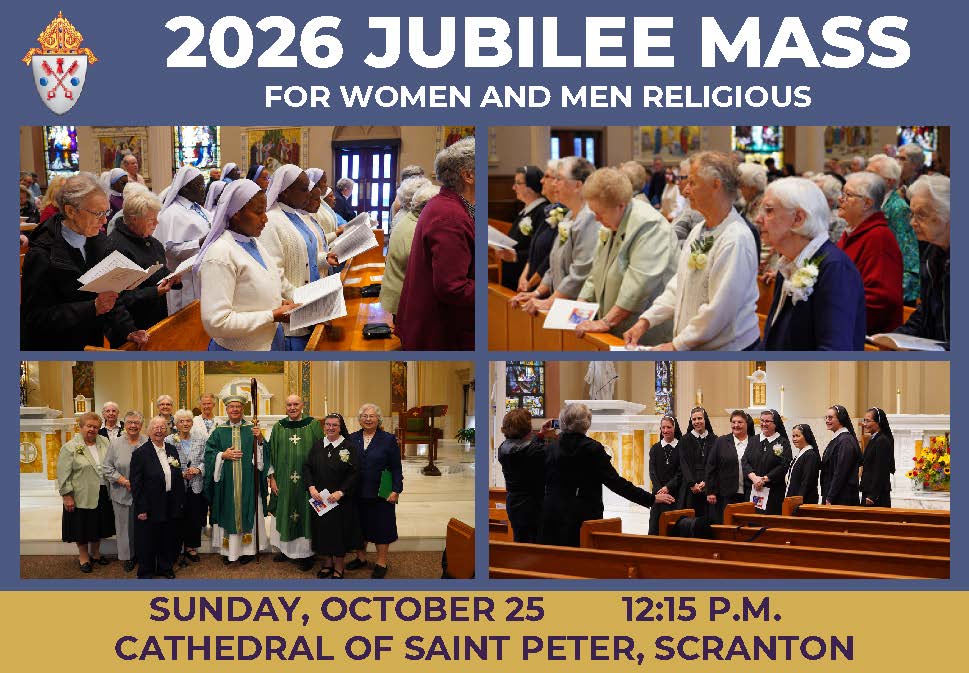
SCRANTON – Faithful from across the Diocese of Scranton are invited to participate in a joyful celebration as we honor the dedicated contributions of women and men in religious life during the annual Jubilee Mass for Women and Men Religious on Sunday, Oct. 25, 2026, at the Cathedral of Saint Peter in Scranton.
The Mass will begin at 12:15 p.m., with the Most Rev. Joseph C. Bambera, Bishop of Scranton, serving as the principal celebrant.
This special liturgy offers an opportunity to give thanks for the invaluable witness, service, and commitment of those who have devoted their lives to God through religious vocations. From teaching in Catholic schools to providing hospital ministry, prayer and pastoral ministry, women and men religious have had a tremendous impact on the life of the Church and the communities they serve.
Following the homily, all those in consecrated life will be invited to stand to renew their vows. This year, more than 2,010 years of consecrated life will be honored and remembered – which will be a powerful reminder of the ongoing importance of vocations to religious life – and our shared responsibility to pray for and support those who answer God’s call in such generous and selfless ways.
The importance of this witness continues today, as religious communities discern how best to serve the Church and respond to the needs of a changing world. In August, more than 1,300 leaders of women’s religious congregations and guests gathered in Orlando, Fla., for the annual assembly of Leadership Conference of Women Religious, marking its 70th anniversary. The gathering emphasized communion, collaboration and the continuing mission of religious life.
CTV: Catholic Television of the Diocese of Scranton will broadcast the Mass live for those unable to attend in person and will provide a livestream on the Diocese of Scranton website, YouTube channel and across all Diocesan social media platforms.
Social
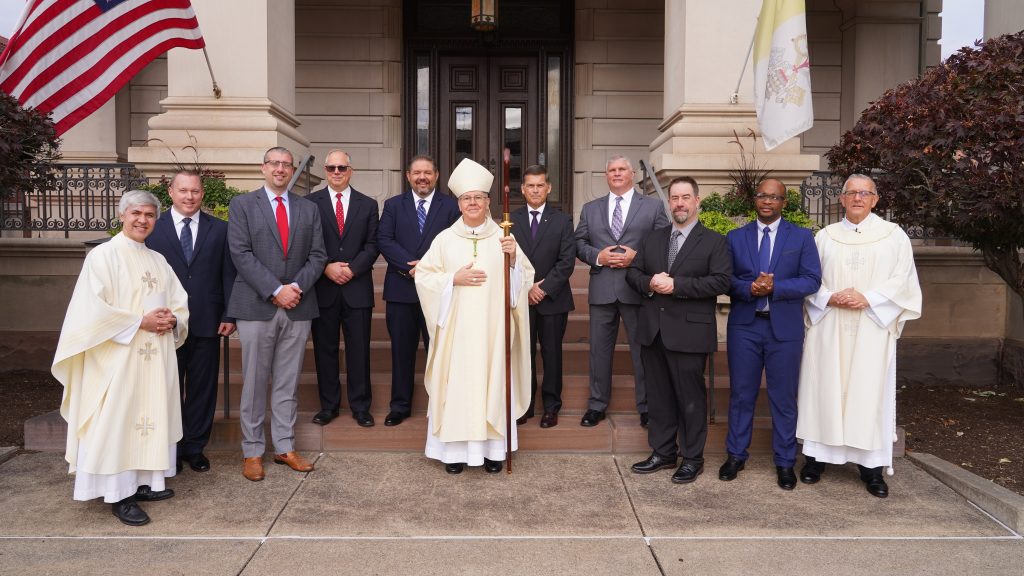
Men in formation for the Permanent Diaconate pose for a group photo after their Mass of Candidacy in 2024. On Oct. 24, 2026, seven of these men will be instituted as Acolytes. (Photo/Mike Melisky)
SCRANTON — Seven men in formation for the permanent diaconate in the Diocese of Scranton will take another important step in their journey of service to the Church when they are instituted as acolytes on Saturday, Oct. 24, 2026.
The Most Rev. Joseph C. Bambera, Bishop of Scranton, will celebrate the Rite of Institution of Acolyte at 10:00 a.m. at the Cathedral of Saint Peter in Scranton.
The men to be instituted are William Chechel, Jeffrey R. Kovaleski, Thomas J. Krzan, Kevin J. Martin, Stephen O. Muntzenberger, Justo Paula-Martínez and Paul M. Zwolan.
The institution of acolytes represents an important milestone in the formation of men preparing for the permanent diaconate. Through this ministry, they are entrusted with assisting the priest and deacon at the altar, helping prepare the gifts for the celebration of the Eucharist and, when necessary, distributing Holy Communion as extraordinary ministers.
More than a liturgical responsibility, the ministry calls men to deepen their understanding of the Eucharist and the relationship between worship and service. As they continue their formation, the candidates are challenged to carry the spirit of Christ’s self-giving love beyond the church and into their families, parishes and communities.
Another member of the same diaconate formation class, Daniel Cosacchi, was instituted as an acolyte on May 17 at Madonna della Strada Chapel at the University of Scranton.
The faithful are invited to participate in this special celebration as the men continue their journey toward the permanent diaconate.
CTV: Catholic Television of the Diocese of Scranton will broadcast the Rite of Institution of Acolyte live and provide a livestream on the Diocese of Scranton website, YouTube channel and across all Diocesan social media platforms.
Social
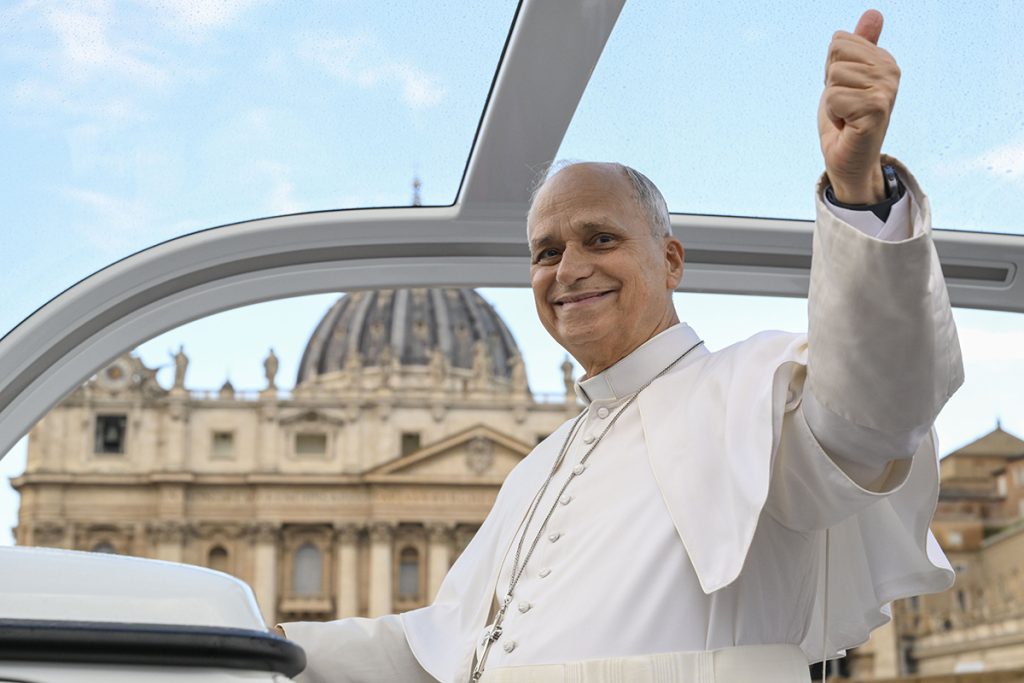
Pope Leo XIV gives the thumbs up as he arrives in his popemobile in St. Peter’s Square at the Vatican, Oct. 21, 2026, to hold his first weekly general audience since cancer surgery on Oct. 13. In an Oct. 21 message, the Holy See Press Office announced that Drs. Luigi Carbone and Stefano Margaritora confirmed Pope Leo needs “no further treatment” following his Oct. 13 surgery for lung cancer. (OSV News photo/Simone Risoluti, Vatican Media)
(OSV News) – Doctors have confirmed Pope Leo XIV needs “no further treatment” following his Oct. 13 surgery for lung cancer.
In an Oct. 21 message, the Holy See Press Office announced that Drs. Luigi Carbone and Stefano Margaritora said “the final histological examinations and molecular biology tests on the material removed” during the surgery confirmed the tumor was a “localized lung adenocarcinoma.”
The doctors said that “subsequent oncological evaluation confirmed that no further treatment is necessary.”
“This is really good news,” Dr. Nirmal Veeramachaneni, professor of cardiothoracic surgery at St. Louis University School of Medicine, told OSV News moments after the Vatican released the papal health update.
Although not part of the pope’s care team, Veeramachaneni — an oncology expert who also serves as medical director for lung cancer screening at SSM Health — said that based on his experience and the Holy See statement, Pope Leo’s prognosis seemed to be “excellent.”
Now, said Veeramachaneni, the pope will simply need “long-term radiographic follow-up to look for recurrence.”
Typically, he said, that entails a regular CT (computed tomography) scan, which uses multiple X-ray images to create a 3D composite of bones, organs and tissue.
He estimated the scanning intervals to range from “every six months” to “once a year for several years.”
Based on his own clinical and research experience, Veeramachaneni said the Vatican’s news was “actually what I was expecting” and “the most likely scenario.”
Veeramachaneni said that “the fact that they (Pope Leo’s medical team) proceeded straight to surgery told me a lot.”
“If they were concerned about the imaging, or if they thought this was a more advanced state of the disease, modern care would have meant chemotherapy up front,” he said.
The Vatican has not disclosed whether Pope Leo received any presurgical, or “neoadjuvant,” cancer treatment before entering Rome’s Gemelli Hospital Oct. 13 and undergoing a 90-minute video-assisted surgery that same day.
Vatican spokesman Matteo Bruni said Oct. 14 that prior to surgery, Pope Leo had undergone several diagnostic procedures — a robotic bronchoscopy with biopsy, a chest CT scan with contrast and a PET scan — which indicated the need for the operation.
The pope announced after leading the Oct. 11 Angelus prayer in St. Peter’s Square that doctors had found a “small, localized nodule” in his lung and had recommended intervention.
Following the video-assisted surgery — which saw the removal of the lower lobe of the pope’s right lung — Carbone, the pope’s personal physician, and Margaritora, chief thoracic surgeon at Gemelli, “confirmed the diagnosis of lung adenocarcinoma, as suspected by the preoperative tests.”
Veeramachaneni noted that cancer was at an “early stage.”
Chemotherapy would normally be advised “if this tumor was greater than four centimeters in size or the lymph nodes were involved,” he said.
“As part of a standard oncological examination, the surgeon would have either sampled or dissected out the lymph nodes that hug the central airway, as well as taking out the lymph nodes in the lobe itself,” he said.
Adenocarcinomas are cancers that begin in the glands lining the body’s organs, according to the Cleveland Clinic.
Lung adenocarcinoma is “the most common subtype of lung cancer,” and “falls under the non-small cell category,” said Dr. Stephen Liu, associate professor of medicine, director of thoracic oncology and director of developmental therapeutics at Georgetown University’s Lombardi Comprehensive Cancer Center.
Almost 9 out of 10 lung cancers are of the non-small cell type, growing more slowly than its small cell counterpart, which typically attacks the airways and spreads rapidly, according to the National Foundation for Cancer Research.
Liu added that lung adenocarcinoma is also “the most common” type of lung cancer “in people without a strong smoking history.”
Social
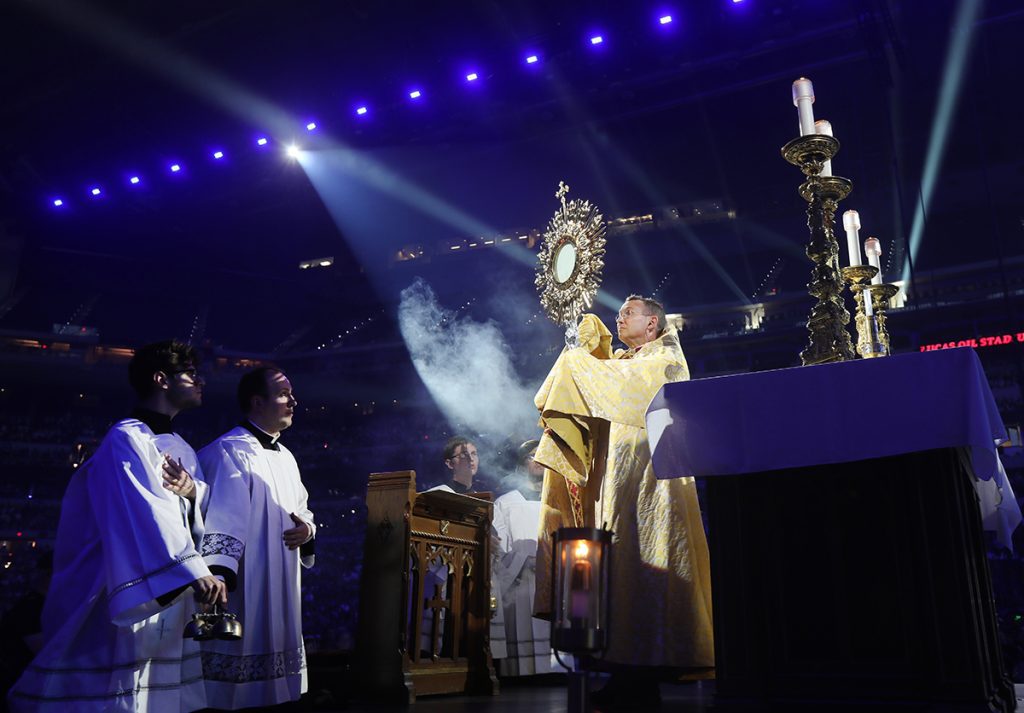
Bishop Andrew H. Cozzens of Crookston, Minn., chairman of the board of the National Eucharistic Congress Inc., blesses pilgrims July 17, 2024, during adoration at the opening revival night of the 10th National Eucharistic Congress at Lucas Oil Stadium in Indianapolis. He announced Oct. 20, 2026, that the NEC will return to Indianapolis in the summer of 2029. (OSV News photo/Bob Roller)
INDIANAPOLIS (OSV News) – The people gathered for a dinner in Indianapolis Oct. 20 erupted into cheers and applause when Bishop Andrew H. Cozzens of Crookston, Minnesota, made the announcement: “I’m privileged to announce that in 2029, the 11th National Eucharistic Congress is going to be back here in Indianapolis.”
The dinner at the Omni Severin Hotel followed a Mass at St. John the Evangelist Church in Indianapolis. Concelebrating were Bishop Cozzens and Bishop Timothy L. Doherty of Lafayette, Indiana, with Indianapolis Archbishop Charles C. Thompson as principal celebrant.
“As we look toward the 11th National Eucharistic Congress in 2029, we do well to keep before us the continued outpouring of graces and blessings stemming from the National Eucharistic Revival that continues to bear fruit throughout the Church, local and universal,” Archbishop Thompson said in his homily.
Before announcing the location of the 2029 congress at the dinner, Bishop Cozzens, board chairman of National Eucharistic Congress Inc., spoke of the impact of the 10th congress, held in Indianapolis July 17-21, 2024.
“Everywhere I go now, people tell me stories about how the congress impacted them,” he said. “I really want to say thank you to the people of Indianapolis and to your role in that.”
A press release announcing the 2029 congress identified specific impacts of the 2024 gathering, including “renewed participation” in Eucharistic adoration and confession, “greater reverence at Mass, increased confidence among clergy in preaching about the Real Presence, and growth in parish evangelization and service.”
The congress also has resulted in new adoration chapels opening, local Eucharistic initiatives flourishing, seminarian enrollment growing, new religious vocations and increasing numbers of people entering the Church, the release said.
To “really have an impact on the country,” Bishop Cozzens said the plan is to hold a National Eucharistic Congress every four years in various cities around the country.
In deciding where to hold the 2029 congress, several aspects were considered, he said. Among them were centrality, facilities, accessibility, hospitality and a proven ability to host national events.
“We looked at several potential hosts … but Indianapolis just came out on top again,” said Bishop Cozzens.
Of particular note was the “Hoosier hospitality here in Indianapolis and the way that you all welcomed the whole country here” in 2024, he said.
He also noted that returning to the city for the 2029 congress “really helps us to build on what we’ve done already. And it helps us in that way to do something that’s both bigger and better. … We expect it to be an event that will affect a generation of Catholics.”
Archbishop Thompson also shared his thoughts that evening on Indianapolis hosting the 2029 congress.
“We are grateful, we are honored to celebrate, to serve and to be the host,” he said after thanking Bishop Cozzens and the National Eucharistic Congress Inc. team “for all the great work that you do.”
Several speakers at the event noted the impact of the last congress, an impact Archbishop Thompson connected to the closing words of every Mass: “Go forth.”
He spoke of the “co-responsibility” of “every baptized person to take their role in that mission,” noting that the National Eucharistic Congress must “always be connected to service” and “has to be connected always with the larger Church.”
Archbishop Cozzens called the 2029 congress a “launching point” for two “great anniversaries for the Church.”
First is the 500th anniversary of the 1531 apparition of Our Lady of Guadalupe in Mexico.
“Because of the 9 million people who converted to the Catholic faith in the decade after she appeared, “she’s been declared the patroness of the new evangelization in our country,” he said.
“It’s part of why we chose the rose as the logo (for the next congress) with the Eucharist there at the center, because we want the congress actually to be a moment for us to devote to Mary and to teach us how to love the Eucharist,” said Bishop Cozzens.
He called the next major anniversary for the Church in 2033 “the great jubilee of our redemption,” when Christ was crucified and when the Church came into being at Pentecost.
“So, we want to help prepare the country for these two moments,” said Bishop Cozzens. “In 2029, you can think of it as a launching point for what we hope will have a great impact on the evangelization of the world.”
Seminarian Antonio Harbert is “really stoked” for that moment. The member of St. Joseph Parish in Shelbyville is a senior at Bishop Simon Bruté College Seminary in Indianapolis.
He is a witness to the increase in seminarians noted in the press release.
The college seminary, which accepts men from the archdiocese and four other dioceses, had 18 new seminarians enroll this fall. Last year, there were 20 seminarians total at Bishop Simon Bruté.
“We’ve almost doubled in seminarians from last year to this,” Halbert told The Criterion, the archdiocesan newspaper. “I would say that fruit comes from the Eucharistic Congress.”
Hosting the 11th National Eucharistic Congress will take effort, Archbishop Thompson noted.
“Whether it’s time, talent or treasure, it takes a lot of people to make this happen,” he said, but he is “eager” to start the process.
The planning process is just beginning, with information such as specific dates, event speakers and more to come later.
Social
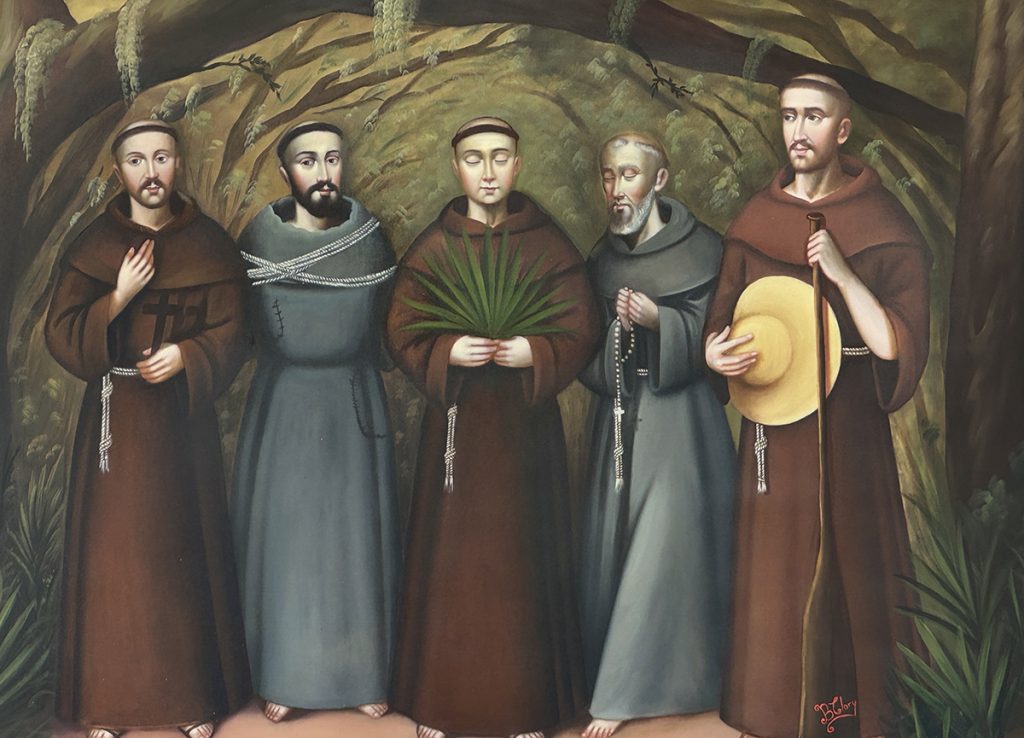
This oil on canvas of the five Georgia Martyrs titled “Faith breaks language barriers of the five Martyrs” was created in 2021 by artist Clorinda Galdos Bell. The Franciscan friars’ beatification has been set for Oct. 31, 2026, in Savannah. (OSV News photo/courtesy Clorinda Galdos Bell)
(OSV News) – While six years separate the two most recent U.S. beatifications of Blessed Michael J. McGivney in 2020 and Blessed Fulton J. Sheen on Sept. 24, mere weeks pass before the next: five Franciscan friars known as the Georgia Martyrs on Oct. 31.
Cardinal Frank Leo of Toronto will celebrate the 11 a.m. beatification Mass, which will be livestreamed on social media channels and the diocesan website, diosav.org, as well as by EWTN.
Speaking about the Georgia Martyrs with OSV News, Cardinal Leo said, “We all have that same command from the Lord Jesus to go make disciples.”
“The Georgia Martyrs offered more than self-sacrifice,” he said. “They brought it to the next level in terms of self-gift. … It was a choice and a decision to make a gift to the Lord by becoming a gift to his people, who needed to know him and to live for him.”
In 1597, the Spanish Franciscans Pedro de Corpa, Blas Rodríguez de Cuacos, Miguel de Añón, Antonio de Badajoz and Francisco de Veráscola were ministering at five missions along the coast and barrier islands of present-day Georgia when they were killed out of hatred for the faith by a band of Indigenous men between Sept. 14-17.
The friars’ murders were prompted by Father de Corpa angering the heir to a Guale chiefdom, Juanillo, by telling him that as a baptized Christian, he could not follow his culture’s custom and take a second wife. Juanillo and his men killed the priest at a mission near the contemporary city of Eulonia, Georgia, before killing four of the other five Franciscan missionaries ministering in the area. The sixth friar, Francisco de Avila, was kidnapped and tortured for months before being set free. The incident is known as the 1597 Guale Uprising.
At the time, the Spaniards knew the wider coastal area as La Florida, home to the settlement of St. Augustine, established in 1565. By 1595, the friars had established five missions along the coast. Prior to their murders, the six Franciscans appear to have lived among the Guale and other indigenous peoples in peace, without a military presence, for two years.
About a month after the friars were killed, the governor of La Florida led an expedition to locate the martyred friars’ bodies. According to the Diocese of Savannah’s website on the martyrs, there is no record of Friar Francisco’s remains being found. The bodies of Friars Blas, Miguel and Antonio were found buried in shallow graves on St. Catherines Island. The men in the October 1597 expedition reburied them, with the exception of the severed head of Friar Miguel, which they took with them.
Less than a decade later, when Franciscans had returned to the coastline to evangelize, the friars’ bodies on St. Catherines Island were exhumed and brought to St. Augustine, but their whereabouts today are unknown. Some scholars speculate that Franciscans took the martyrs’ remains with them to Cuba when St. Augustine transferred to British rule in 1763.
Friar Pedro de Corpa was decapitated and his body was not found; the location of his skull is uncertain. A skull recovered at the Fort King George State Historical Site in Darien may belong to Friar Pedro or Father Francisco, and testing is underway to learn more about its origins.
The National Eucharistic Pilgrimage drew attention to the martyrs in May, as the nine perpetual pilgrims spent the third day of their pilgrimage in southern Georgia, walking in a Eucharistic procession at Fort King George, where Friar Francisco is believed to have been killed.
The five Franciscans’ martyrdom is “a reminder of how the Church has, over the centuries, continued to send out missionaries to all peoples, to all nations, to faraway places,” Father Pablo Migone, vicar for mission advancement for the Diocese of Savannah, said during that visit. “That is something we have done from the very beginning from the words of Jesus to the apostles.”
The Beatification Mass is not ticketed, and seats in the Savannah Convention Center are first come, first served. Doors for the liturgy open at 8 a.m. Oct. 31. The convention center will host the Georgia Martyr Museum between 8-10:30 a.m. and 1-2:30 p.m.
The Mass coincides with Halloween, the eve of All Saints’ Day. It also coincides with the Jubilee Year of their order’s founder, St. Francis of Assisi, which commemorates the 800th anniversary of his death.
On Nov. 1, Bishop Stephen D. Parkes of Savannah will celebrate a Mass of thanksgiving at 11:30 a.m. at the Cathedral Basilica of St. John the Baptist in Savannah, which will also be livestreamed at the cathedral’s website, savannahcathedral.org.
Reports from civil and religious leaders in the months and years after the Franciscans’ deaths reveal that the slain friars’ contemporaries saw them as martyrs. New research in the 20th century about the history of La Florida and the Georgia Martyrs bolstered efforts to move forward with a cause for their beatification.
With the support of the Order of Franciscans Minor, the Diocese of Savannah opened the cause for the martyrs’ canonization in February 1984 under Savannah’s Bishop Raymond W. Lessard, who died in 2016. In January 2025, Pope Francis authorized the Dicastery for the Causes of Saints to formally recognize the five friars’ martyrdom “in hatred of the faith.”
Alongside the sainthood cause for the five Georgia martyrs is a separate cause for the Martyrs of La Florida Missions, which encompasses 58 people martyred in the region between 1549 and 1715. Known as Antonio Inija and Companions, Servants of God, their collective cause officially opened Oct. 12, 2015, and includes Dominican, Franciscan and Jesuit priests; lay men and women; and children, including an unborn child.
Social
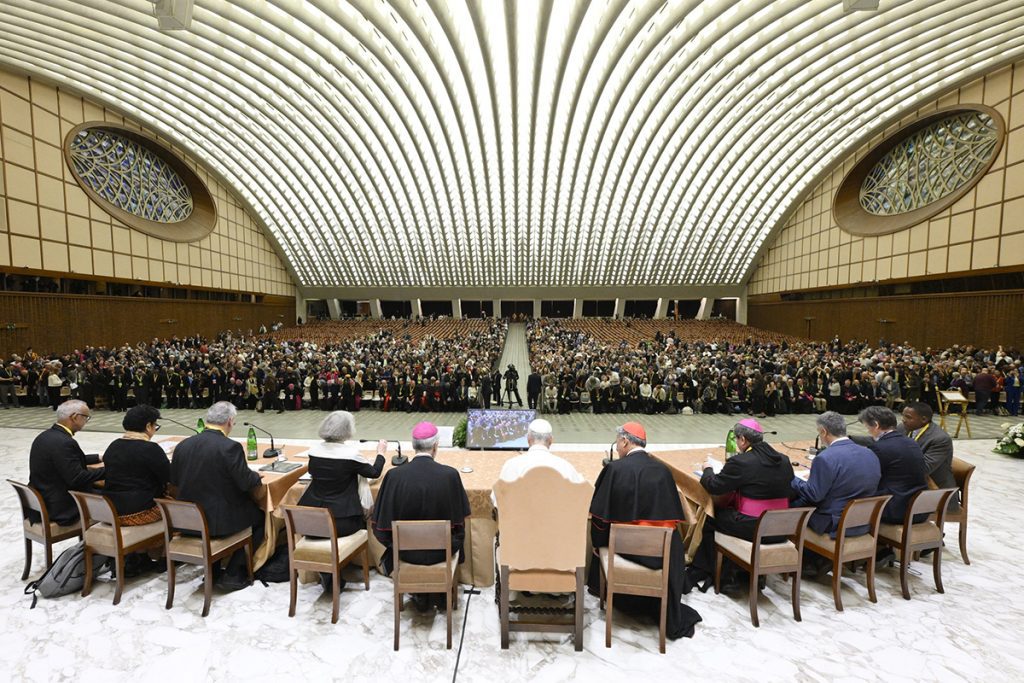
Pope Leo XIV, with regional representatives of synod teams, listens to and answers questions from participants in the Jubilee of Synodal Teams and Participatory Bodies in the Vatican audience hall Oct. 24, 2025. (CNS photo/Vatican Media)
(OSV News) – The Synod on Synodality – a three-year (2021-2024), world-and-Church-wide process of listening and dialogue initiated by Pope Francis — is marking two years since its conclusion.
But – as its coordinators quickly qualify – the synodal process, backed by Pope Leo XIV, isn’t over yet.
So where does it stand?
“We have to implement the outcomes, and we have to celebrate them as well — so that’s the phase we’re in,” Auxiliary Bishop Juan Miguel Betancourt of Hartford, Connecticut, told OSV News. He is chair of the Synod Implementation and Evaluation Task Force at the U.S. Conference of Catholic Bishops.
For those who haven’t followed along, here’s a quick review (by the Leadership Roundtable, a nonprofit promoting transparent and accountable leadership in the Church): “Pope Francis wants to hear from the whole Church about what is happening in local parishes. He and the bishops would like to know what individuals think we should all be doing to help make our parishes better. The way he has proposed doing this is a synodal process.”
Worldwide diocesan consultations, listening sessions and discernment processes with clergy, religious and laity followed; these were synthesized to identify common themes, after which synod delegates convened in Rome to discuss findings.
The process culminated with a final document.
“In 2028, the whole Church will celebrate the signs of emergence of the changes and developments on synodality — from the diocesan Church, then the national, then continental, and then the world Church. This is what we’re going to do,” Bishop Betancourt explained.
“But it’s just celebrating what is emerging, not really what is being finished — because that’s not going to happen,” he stressed. “We cannot refer to this synod as something that is finished, and we’re done with it.”
The vision of synodality — a Greek word for “walking together” meant to embrace both lay and clerical accompaniment, shared responsibility for mission, joint dialogue and discernment — is intended as a “way of being Church” versus an event or program, or even a multi-year progression of the same.
“Synodality is a spiritual journey — more than a structure; more than a way of governing or doing things; it is a way of living,” said Bishop Betancourt.
“So now, Pope Leo is looking into how things are going; coming along,” the bishop continued. “He acknowledges that in some parts of the world synodality is kicking in (in) a way that is really good … almost everybody’s on board … (but) there’s other places that they’re still in the early stages of formation, figuring out what synodality is — and then trying just to get on board with it.”
That “getting on board” has not been universal.
Various prelates and ecclesial commentators have criticized the process, lamenting an “undefined synodality” and a “democracy of the baptized,” while others objected to the apparent dilution of clerical leadership and the specter of endless rounds of consultation.
“There’s a spectrum of where dioceses are, but we knew this was going to happen — that’s just the reality of adopting anything that’s new or different,” commented Julia McStravog, associate director of planning and synodality in the USCCB’s Office of the General Secretary.
“But I can tell you, having accompanied the dioceses starting in 2021 … there has been a lot of what may not feel like big ‘in your face’ changes,” she said, “but these subtle ways in which they’re approaching their work that does emphasize the spiritual and pastoral aspects Bishop Betancourt talked about.”
“So across the dioceses,” McStravog continued, “you see pastoral councils are being formed in different ways. You see parish councils are being formed in different ways. The bishops are leading and interacting with and consulting with their councils in new ways, and they’re using synodal methodologies and synodal techniques in order to make really big decisions in the dioceses.”
“The bishops,” she added, “are really adopting the style and mode to engage in a consultative process with the people that they shepherd.”
McStravog admitted it’s a work in progress.
“It’s not perfect and it’s not everyone — it’s not 100% of people 100% of the time,” she reflected. “But again, from the outset, this is a journey. And it’s going to take a long time to spiritually form a billion Catholics throughout the world.”
McStravog further notes her own title now includes “synodality” — and that diocesan positions are cropping up with the same.
The shift has been from planning to proactivity — taking the next steps from discussing synodality to actually implementing and integrating it.
“I have seen it in conversation with the brother bishops,” shared Bishop Betancourt. “When this happened, it caught us — let’s say — kind of by surprise.”
But then, he said, “we started doing things.”
And for those who might still hesitate, Bishop Betancourt offers clarity: “Synodality is not about change — it’s about mission and evangelization.”
“Pope Leo already says that resistance is part of the change; it’s part of the process,” the bishop noted. “But what he wants for all of us, specifically, is that we adjust … He actually wants — and this is something that he mentioned during the summer, in our meeting with him in Rome — to preserve that communion; that we have to adjust; that we have to be patient.”
The synod’s final document — officially part of Pope Francis’ magisterium — made no formal changes to Church governance, but at their twice-annual plenary sessions, in June and November, McStravog said, the U.S. bishops now engage in fraternal dialogue.
“Yes, we’re encouraging and helping the bishops in their dioceses,” she noted, “but as a body, they, too, are practicing consultation and doing deep listening and synodal work together.”
Diocesan assemblies are scheduled for spring 2027.
“The reflection at every level — diocese, national, continental, worldwide — would be, what signs of synodality are emerging in our local churches?” Bishop Betancourt explained. “What can we share that is happening in our own local churches? And then, how can we celebrate that, and keep that journey going?”
“I think,” he continued, “that the Holy Father appreciates the work of synodality that has happened already in the United States. … All these things that we have done — even if many of us haven’t been aware that we were doing synodality.”
And the mission for the U.S. Church now, at this stage of synodality?
“How can we bring Jesus?” declared Bishop Betancourt.
“It’s the call to the new evangelization that Saint John Paul II asked us to do, but now it’s in a more concrete way, in the journey of synodality. How are we, with synodality, going to bring Jesus from the parishes to the world?”
And that mission is not just for the ordained.
“It’s the process of conversion of each one of us — as missionary disciples,” Bishop Betancourt emphasized. “Having that strong relationship with Jesus, deepening our relationship with Jesus — and then going out, beginning with our parishes, and then to the rest of the world.”
“We do what we can, right?” he reflected. “This is a slow process. This is a journey — but we will get there.”
Social
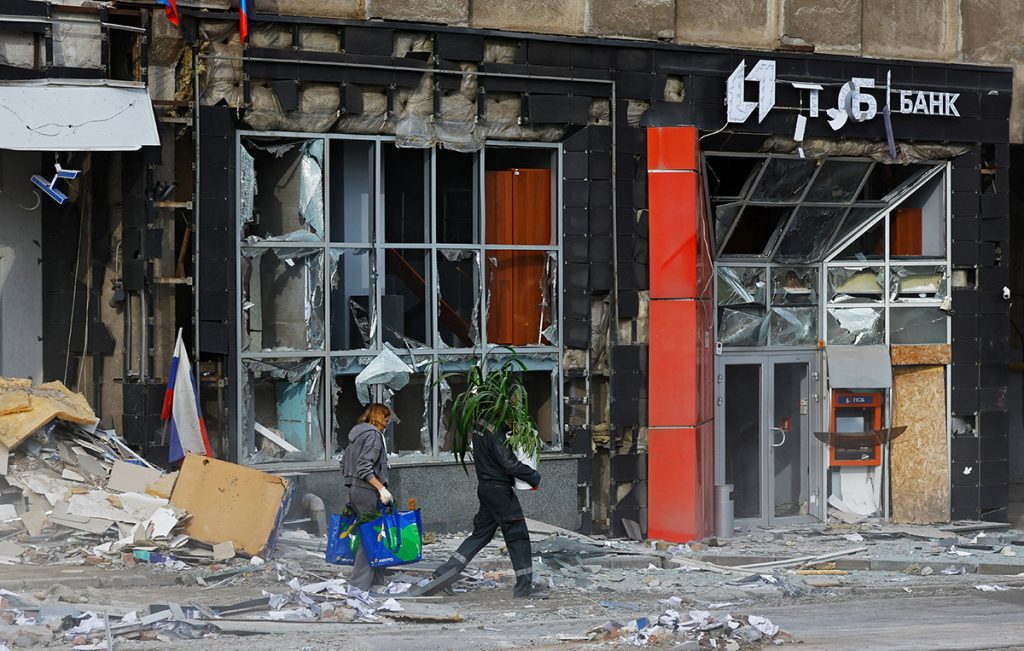
People carry items past a damaged building in Donetsk, a Russian-controlled city of Ukraine, Oct. 20, 2026, hit by what Russian-installed authorities described as a Ukrainian overnight drone strike, amid the Russia invasion of Ukraine. (OSV News photo/Alexander Ermochenko, Reuters)
(OSV News) – Pope Leo XIV spoke by phone with Ukrainian President Volodymyr Zelenskyy, expressing hope that Ukraine and Russia will cooperate on humanitarian aid and evacuations for civilians in the southern Ukrainian city of Oleshky, the Vatican said.
In an Oct. 19 statement, the Vatican press office said the conversation centered on “the grave situation” in the city, which has been under Russian military occupation since 2022.
Pope Leo’s phone call with Zelenskyy came less than a week after an Oct. 13 call with Russian President Vladimir Putin, while the pontiff was recovering from lung surgery at Rome’s Gemelli Hospital. In that call, the pope requested a humanitarian ceasefire, the Vatican said.
“His Holiness expressed the hope that cooperation between both parties will allow for the delivery of food and medical aid, and for the voluntary and safe evacuation of the civilian population,” the statement read.
The pope also reaffirmed the Holy See’s commitment “to promoting dialogue and peace.”
In a separate statement published Oct. 19 by the Ukrainian president’s office, Zelenskyy said he wished the pope “full and speedy recovery following surgery.”
“We are grateful that even during this difficult time for him personally, His Holiness remembers Ukraine and prays for our people,” Zelenskyy said.
According to his office, Zelenskyy gave the pope a detailed briefing on Russian strikes against Ukrainian cities, and the two “discussed the humanitarian catastrophe” in Oleshky.
Zelenskyy, the statement read, “noted that Ukraine is working to help our people there and is preparing the necessary decisions. His Holiness informed him about contacts with the Russian side on this matter.”
— Tensions with Washington —
Zelenskyy also briefed Pope Leo on reported disruptions to Ukraine’s defense communications, which have strained relations with Washington. According to NPR, Zelenskyy said SpaceX imposed restrictions on the country’s access to the U.S. military’s Starshield satellite internet network in response “to a message from the American government.”
Starshield is a military version of Starlink, the satellite internet service run by SpaceX, the aerospace company founded by Elon Musk.
Musk, however, denied that SpaceX played any role in the disruptions, saying that “Starshield systems are owned and controlled by the U.S. government” and that “any limits on speed or usage are decided by the U.S. military and ultimately” by U.S. President Donald Trump.
Trump and U.S. Secretary of State Marco Rubio also denied Zelenskyy’s claim that the US government ordered the disruptions, NPR reported.
Nevertheless, tensions between Ukraine and the United States have risen after Trump moved to waive sanctions against Russia in exchange for purchasing diesel in an attempt to lower rising prices due to war in Iran.
Zelenskyy’s office said the Ukrainian president’s conversation with Pope Leo “covered current security challenges and threats, including the periodic lack of warnings from partners about Russian ballistic missile attacks, which has happened three times recently.”
“The president thanked His Holiness for his support and all his efforts to achieve a dignified peace,” the statement read.
— Decrying crimes against humanity —
In a message marking the war’s 244th week, Major Archbishop Sviatoslav Shevchuk of Kyiv-Halych, head of the Ukrainian Greek Catholic Church, condemned Russia’s attacks against Ukraine’s energy infrastructure.
According to the Reuters news agency, Trump announced an energy ceasefire Oct. 11; however, neither Russia nor Ukraine confirmed the agreement.
Despite the so-called truce, Russia has continued to conduct attacks on Ukraine’s energy grid, which left 600,000 people without electricity, Major Archbishop Shevchuk wrote.
“Crimes against humanity of this kind were committed precisely when the U.S. president announced a so-called energy ceasefire between Russia and Ukraine,” Major Archbishop Shevchuk wrote, calling the timing of the attacks especially painful.
“It is … very important for us, as Christians, to understand that even peace negotiations and efforts to end a war must be governed by moral principles,” Major Archbishop Shevchuk added, saying that “Agreements reached without regard for such principles, in which energy resources are valued more highly than human life, are doomed to fail.”
On Oct. 19, Iranian-designed Russian Shahed drones killed six people and injured 14 in the Kharkiv region, an attack Zelenskyy called a “pure atrocity.” A one-year-old girl named Angelina was killed in the strike, with her mother Inna dying hours later in the hospital, Zelenskyy wrote in his post on X.
“These are horrific photos, but behind them are shattered lives and the truth about this war,” he said, sharing photographs from the playground where the attack occurred, killing among others an 11-year-old girl.
The head of the Ukrainian Greek Catholic Church said negotiations shouldn’t ignore the human cost and that any agreements must be assessed by “the extent to which they alleviate the suffering” of the people and not by “the political or economic benefits they yield or the high-profile political statements they generate.”
“And even as we gratefully acknowledge mediation efforts aimed at ending the war, it is essential to distinguish between restraining an unjust aggressor and coercing the victim,” Major Archbishop Shevchuk wrote.
He also reminded the international community that while Ukraine depends on aid, that dependence “gives no one the moral right to dictate its future without the participation of the Ukrainian people themselves.”
“We must not blur the distinction between the aggressor state and the people who have the right to defend themselves,” Major Archbishop Shevchuk wrote. “In international efforts to end any war — including Russia’s war against Ukraine — it is essential not to set peace against justice.”
Social
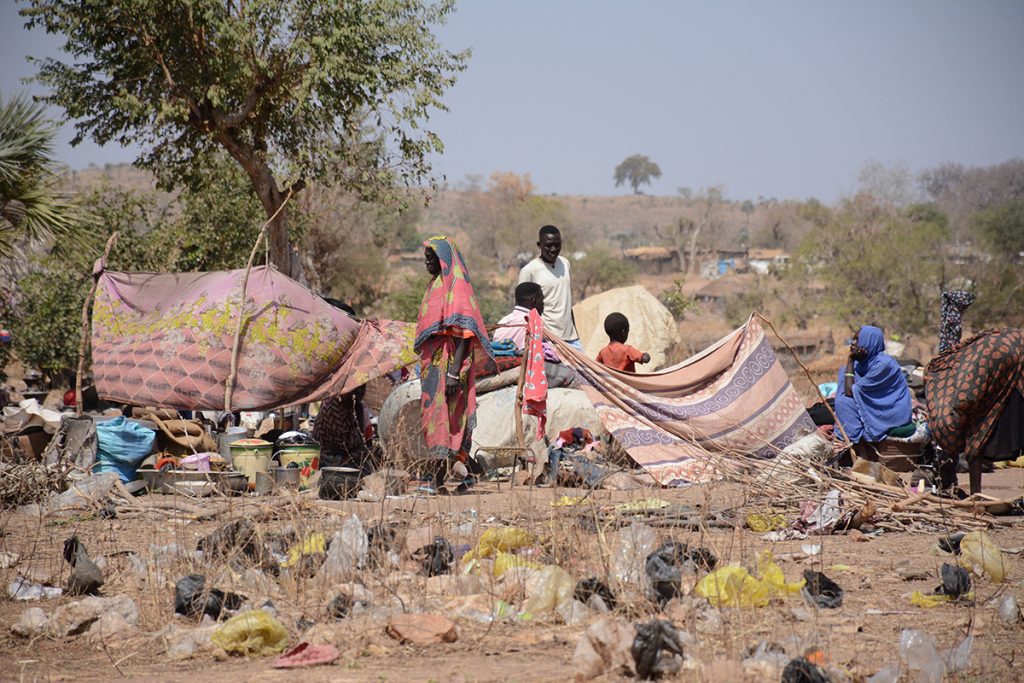
Displaced Sudanese families from Kadugli gather at Umdulu Camp reception area in Sudan Jan. 30, 2026, where they will be given basic supplies and allocated a place where to stay. (OSV News photo/Karl Schembri, Norweigan Refugee Council handout via Reuters)
WASHINGTON (OSV News) – The Trump administration on Oct. 18 extended protections from deportation to people from Ukraine and Sudan, allowing them to continue living legally in the U.S. for now.
Temporary Protected Status grants the U.S. government the power to shield eligible migrants from deportation if they are from countries experiencing dangerous conditions such as war, disaster, or other unrest. The Trump administration has sought to end TPS for several countries, notably Haiti, which is racked by extreme levels of gang violence, but it also recently granted an extension to migrants from El Salvador.
In a written statement provided to OSV News, a spokesperson for DHS confirmed the extension without sharing a rationale. The spokesperson stated an announcement on each country’s TPS “will be made at the appropriate time,” and until such announcements are made, nationals of those countries “present in the U.S. under TPS retain protection.”
David Spicer, director of policy and engagement for migration at the U.S. Conference of Catholic Bishops, told OSV News Oct. 19 the conference “is closely monitoring the situation facing people relying on TPS without clarity on the future of their designations.”
“These include hundreds of thousands of Salvadorans, Ukrainians, and Sudanese who are lawfully present in the United States, but face the reality of suddenly having their protection and work authorization revoked,” Spicer said. “The conference continues to urge the administration to abide by the requirements of the TPS statute, to carefully consider conditions in countries of origin and the threats to human life that could come with forcibly repatriating people, and to provide meaningful notice about the future of these designations so that families, employers, and communities can plan accordingly.”
Ashley Feasley, the legal expert in residence at the Immigration Law and Policy Initiative at The Catholic University of America Columbus School of Law, told OSV News that while the DHS statement “is a welcome reprieve to TPS holders from Ukraine and Sudan,” it “does little to clarify the growing confusion and uncertainty they face with regards to their lives here in the U.S.”
“In addition to enduring growing conflict and war in their home countries, these individuals must continue to navigate an unpredictable day-to-day existence here in the U.S. given so much recent uncertainty over TPS generally,” Feasley said.
“Congress created TPS and codified it into law and the Executive is required to implement that process accordingly,” she continued. “For both Ukraine and Sudan, it is clear that both countries face ‘ongoing armed conflict,’ as is described in the statute designating TPS. It is absolutely not safe for these individuals to return to their home country.”
Earlier this year, the U.S. Supreme Court allowed the Trump administration to end TPS designation for Haitian and Syrian nationals. Catholic leaders have also urged protection for people from those countries who would be subject to dangerous conditions in their countries of origin.
The Trump administration terminated TPS for Haiti after that ruling, and has since carried out mass deportations of Haitians back to Haiti, which is among the immigration policies the U.S. bishops have criticized, calling it incompatible with their God-given right to life, human dignity, and unity of the family.
Social
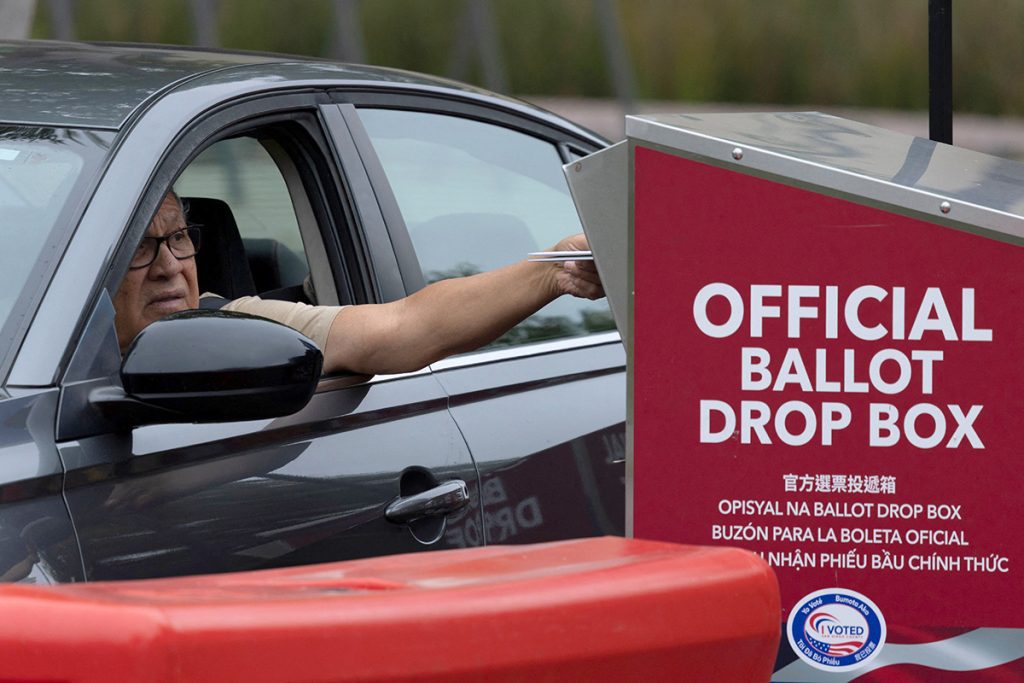
A person drops off an election ballot at a drive-through ballot drop box during the California primary election in San Diego June 2, 2026. Ahead of the Nov. 3 midterm elections, Archbishop Paul S. Coakley, president of the U.S. Conference of Catholic Bishops, issued a statement Oct. 14 reminding the faithful that “For citizens in a representative democracy such as our own, participation in public life—including voting—is both a right and a responsibility.” (OSV News photo/Mike Blake, Reuters)
WASHINGTON (OSV News) – Ahead of the Nov. 3 midterm elections, Archbishop Paul S. Coakley, president of the U.S. Conference of Catholic Bishops, issued a statement Oct. 14 reminding the faithful that “For citizens in a representative democracy such as our own, participation in public life — including voting — is both a right and a responsibility.”
“In a time of deep political division, the temptation is to be discouraged and to not participate in the election process. But discouragement is not a Christian virtue,” Archbishop Coakley of Oklahoma City said.
The midterm elections will determine the balance of power in Congress, as well as governors’ mansions and state legislatures across the country.
Archbishop Coakley said that as Catholics exercise their civic duty, “it is important to ensure that citizens not face unnecessary delays or complications in registering or exercising their right to vote.”
“Together, we can contribute to the common good of our nation as faithful citizens by supporting free and fair elections,” he said.
He also asked Catholics “to put their faith before politics.”
“The Church’s contribution to the public life of a nation is not a political or partisan program; rather, it reflects our commitment to the dignity of every person, who is created in the image and likeness of God,” he said. “One of the great dangers of our moment is the belief that any criticism of ‘our party’ somehow strengthens our opponents. A well-formed conscience does not operate on those terms.”
“Therefore, I encourage all to judge candidates and elected officials by their actions, not merely their promises, and how those actions promote the common good,” he continued. “We must reject rhetoric that appeals to fear, resentment, or division, and listen instead, to the Gospel call to love God and all our neighbors.”
“May Our Lady of Guadalupe, Patroness of the Americas, bless our nation as we turn once more to elections, that we might respect the dignity of each person and promote the common good of all,” he said.
A recent Pew Research Center survey found that among all Catholics, President Donald Trump’s approval rating dropped from 47% at the beginning of his second term to 30% in October 2026. Among Hispanic Catholics, it dropped from 31% to 18%, and among white Catholics from 59% to 39% over the same period.
More broadly, the same survey found that registered voters are more likely to support Democratic candidates than Republican ones across most religious groups. Pew found that among Catholics, white Catholics and Hispanic Catholics were divided over their support for congressional Republicans or Democrats in the midterms.
Social
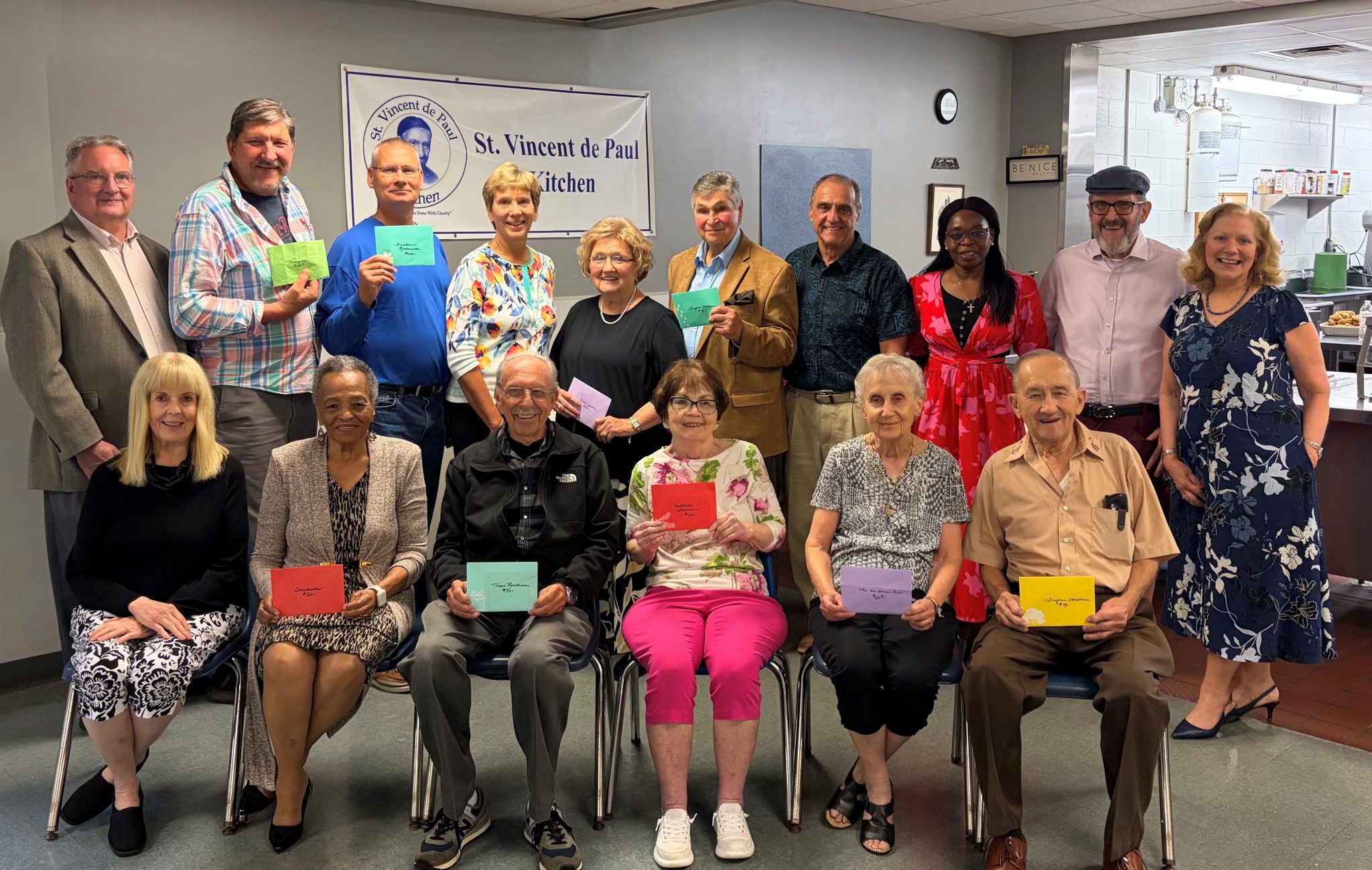
Saint Vincent de Paul Kitchen in Wilkes-Barre held its annual Volunteer Appreciation Dinner on Sept. 19, 2026. The dinner is held to recognize the many Kitchen volunteers that help serve more than 120,000 meals per year to those in need. The dinner is organized by the Saint Vincent de Paul Kitchen Advisory Board and is sponsored by Highmark. Shown in this photo are volunteers who won raffle prizes from local restaurants and retailers at the dinner, along with Joseph Mahoney, Chief Executive Officer of Catholic Social Services of the Diocese of Scranton (second row, far left); and Chris Bedwick, President of the Saint Vincent de Paul Kitchen Advisory Board (second row, far right). For information about volunteering at Saint Vincent de Paul Kitchen or becoming a meal Sponsor of the Day, call (570) 829-7796.