ST. LOUIS (OSV News) – Archbishop Fulton J. Sheen – the 20th-century theologian, evangelizer and Catholic communications pioneer – “opened the door to the evangelization of the world,” said Bishop Robert E. Barron of Winona-Rochester, Minnesota.
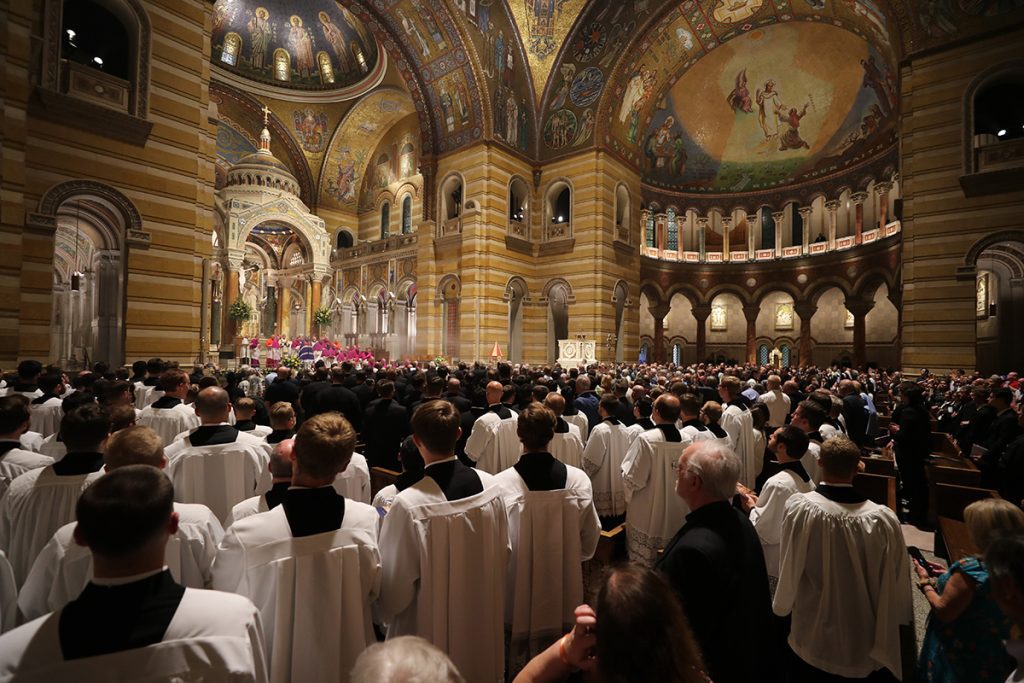
The bishop shared his thoughts on Archbishop Sheen in a Sept. 23 homily at the Cathedral Basilica of St. Louis, where hundreds gathered for vespers a day before the archbishop’s beatification in that city.
Archbishop Mitchell T. Rozanski of St. Louis presided over Evening Prayer, part of the Liturgy of the Hours, the Church’s continuous cycle of daily prayer at set times.
Although Archbishop Sheen’s canonization cause was introduced in 2002 by his home Diocese of Peoria, Illinois, organizers selected St. Louis as the beatification site in order to better accommodate the thousands in attendance.
Cardinals, bishops, priests, religious and lay faithful from around the country — along with Archbishop Gabriele G. Caccia, apostolic nuncio to the U.S. — were on hand for the vespers, which took place on the memorial of St. Pius (Pio) of Pietrelcina.
Addressing the congregation, Bishop Barron said, “I consider it one of the single privileges of my life to be able to preach this homily on the vigil of Fulton Sheen’s beatification.”
He described Archbishop Sheen as “my model and inspiration,” and as “one of the pivotal players in the modern history of the Catholic Church” who emerged amid a mid-20th-century Catholic “renaissance” that included “Graham Greene, Dorothy Day, Jacques Maritain, Henri de Lubac, Thomas Merton, Evelyn Waugh and many others.”
Bishop Barron said Archbishop Sheen was “by common consensus” regarded as “the premier preacher in the English language in the 20th century.”
What made Archbishop Sheen “a blessed, saintly man of God” was his friendship with Jesus Christ, said Bishop Barron.
Archbishop Sheen’s description of his vocational discernment in his autobiography, “Treasure in Clay,” offers “a template for anyone’s relationship to the Lord,” said Bishop Barron.
Citing passages from the book, Bishop Barron said three stages mark the development of that relationship: recognizing God’s transcendent holiness, reckoning with one’s need for redemption and the mandate for mission “as a bearer of grace to others.”
Archbishop Sheen embraced “unmerited divine love,” exemplified in Mary, whom he viewed in accord with Catholic theological tradition as “the prime instance of a human being receiving the unmerited love of God,” said Bishop Barron.
He noted that Mary “haunts the spiritual life of Fulton Sheen, from his baptism in the Church of St. Mary to his ordination in the cathedral dedicated to Mary, to his deep devotion to the rosary, and finally to his more than 30 journeys to Lourdes to visit, as he put it, ‘the woman I love.'”
Bishop Barron said that “nowhere was Fulton Sheen’s rootedness in the grace of Christ more apparent than in his practically lifelong dedication to the Holy Hour — the daily, uninterrupted, hour-long prayer in the presence of the Blessed Sacrament.”
The bishop stressed the importance of that practice in his own life, admitting he learned to embrace it from his students while he was rector of Mundelein Seminary from 2012-2015.
“I now savor the Holy Hour … in my private chapel every morning before commencing my work day,” he said.
As he contemplated God’s holiness, Archbishop Sheen was ready “to admit his failures, his bad judgments, his personal weaknesses,” said Bishop Barron.
Through radio and television broadcasts, extensive writings, speaking engagements and missionary travels, Archbishop Sheen devoted his life to making Christ known to the world, said Bishop Barron.
“No one in the 20th century walked the great path of mission with more flair and dedication than Fulton Sheen,” said the bishop.
And, he added, “I believe that Fulton Sheen is, par excellence, the saint of the New Evangelization,” the Church’s renewed commitment — called for in particular by St. Paul VI and St. John Paul II — to fulfill Christ’s command to bring the Gospel to all people.
“Anyone who seeks fresh language to bring the Gospel to our culture, anyone who preaches the ancient word with a heart on fire, anyone who dares to use the media of communication available to us today, is indebted to Fulton Sheen and finds in him a powerful heavenly friend and intercessor,” said Bishop Barron.
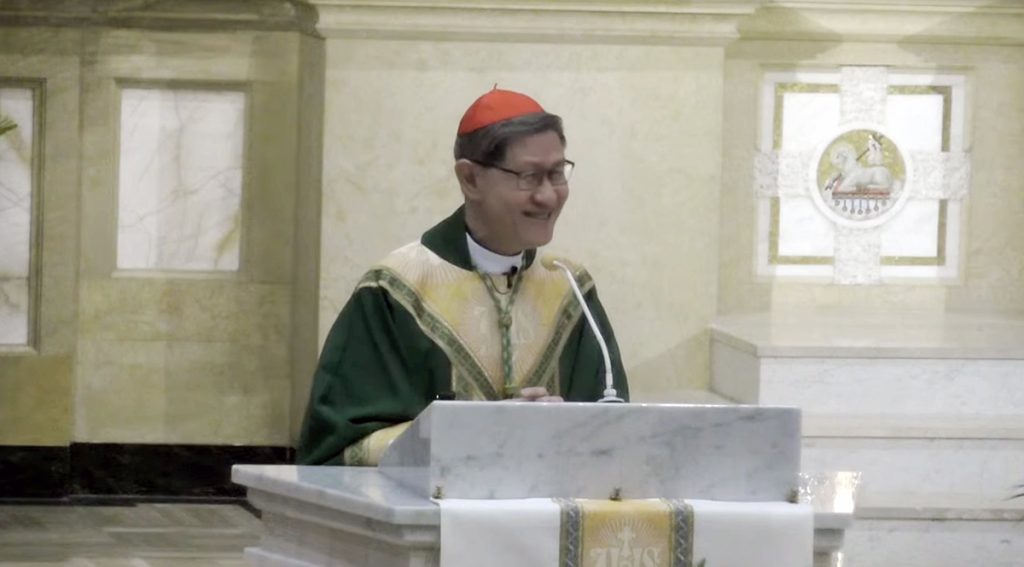
(OSV News) – The grace of the beatification of Archbishop Fulton J. Sheen comes with corresponding responsibility for Catholics in his home diocese of Peoria, Illinois, Cardinal Luis Antonio Tagle told Catholics there during Mass Sept. 22.
“This is a grace for all of us here, but also a heavy responsibility,” he said in his homily in Peoria’s Cathedral of St. Mary of the Immaculate Conception, where Archbishop Sheen’s remains are entombed. “From now on, when people learn that you are from Peoria, they will say, ‘Oh, are you as missionary-oriented as Bishop Fulton Sheen? Are you deeply entrenched in the Word of God, like the Blessed Fulton Sheen?'”
He said, with a laugh, that he hoped that they would not deny being from Peoria, but rather answer, “Yes, I am from Peoria, and this is a blessing from the Lord.”
— Beatification preparation —
Cardinal Tagle celebrated the morning Mass at Peoria’s cathedral while visiting the central Illinois city of 113,000 to venerate the relics of Archbishop Sheen, who will be beatified Sept. 24. Serving as Pope Leo XIV’s papal delegate, the cardinal will preside over the beatification Mass in St. Louis, about 170 miles southwest.
Cardinal Tagle, 69, serves as a pro-prefect for the Holy See’s Dicastery for Evangelization, leading its Section for the First Evangelization and New Particular Churches, and is the archbishop emeritus of his native Manila. He is an alumnus of The Catholic University of America in Washington and in 2024 served as the Holy See’s envoy to the 10th National Eucharistic Congress in Indianapolis.
In the homily, he joked that Catholics from Peoria should not taunt the faithful from nearby Chicago, asking them, “Has Chicago produced a blessed? Oh, no? … Poor Chicago.”
Cardinal Tagle pointed to the Mass’ first reading from Proverbs 21:1-6, which reminds the faithful that “to do what is right and just is more acceptable to the Lord than sacrifice.”
“The heart of a wise person is in the hands of the Lord, and his heart allows the Lord to direct its destiny,” he said, “and when the heart is guided by the Word of the Lord, it will be just … The Lord is more pleased with the heart that is open to his will, that’s attentive to his promptings and is ready to act on his inspiration.”
— A ‘heart that listens’ —
Cardinal Tagle underscored the importance of listening by relating it to the need for understanding between married couples, consecrated religious men and women and their superiors, and priests to their bishops.
“All of us expect to be listened to,” he said, but listening to one another “is at the heart of being a wise person and a follower of the Lord.”
The liturgy’s Gospel reading from Luke 8:19-21 recounted Jesus saying, “My mother and my brothers are those who hear the word of God and act on it.”
Cardinal Tagle said the reading showed that “heart that listens” in Mary, who was both Jesus’ mother and disciple. “She must have said, ‘My son recognizes that I became the worthy dwelling place, his dwelling place, because I listened to the word of God’ and after listening, made herself available.”
— The obedient heart —
A listening heart, the cardinal continued, also reflects the humanity of the Christian. “Pope Leo has been directing all of us to our being persons,” he said, alluding to “Magifica Humanitas,” his recent encyclical on humanity and artificial intelligence. “We are not machines. We are not gadgets. We are persons with hearts.
“Where is your heart?” he continued. “Does it still beat? Does it still hear? Does it still see? Is it still obedient? If it is a truly human heart, then it is capable of relating with God and doing what God says.”
The cardinal encouraged the congregation to follow the example of Mary and Archbishop Sheen in obedience to God. Then, when they say they are from Peoria, he said, people not only associate them with the birthplace of Archbishop Sheen, but with a place where, “like Fulton Sheen, you all listen to the word of God and act on it.”
“Then Peoria becomes part of the wider family, the wider family of God, and Jesus will be pleased,” he said.
— Evening Holy Hour —
At the end of Mass, Cardinal Tagle recognized the Filipino Catholics present at the Mass and briefly addressed them in their native language. He then greeted the full congregation on behalf of Pope Leo.
“When I go back to Rome, I will surely report to him about the beatification, and will tell him about this Mass and your presence at this Mass,” he said.
He also noted the Holy Hour that he planned to attend later that evening, which is the penultimate Holy Hour in a nine-day series leading up to beatification.
Archbishop Sheen famously adopted a daily Holy Hour as part of his own spiritual practice while in formation for the priesthood at St. Paul Seminary from 1917-1919, and he maintained the practice through his life.
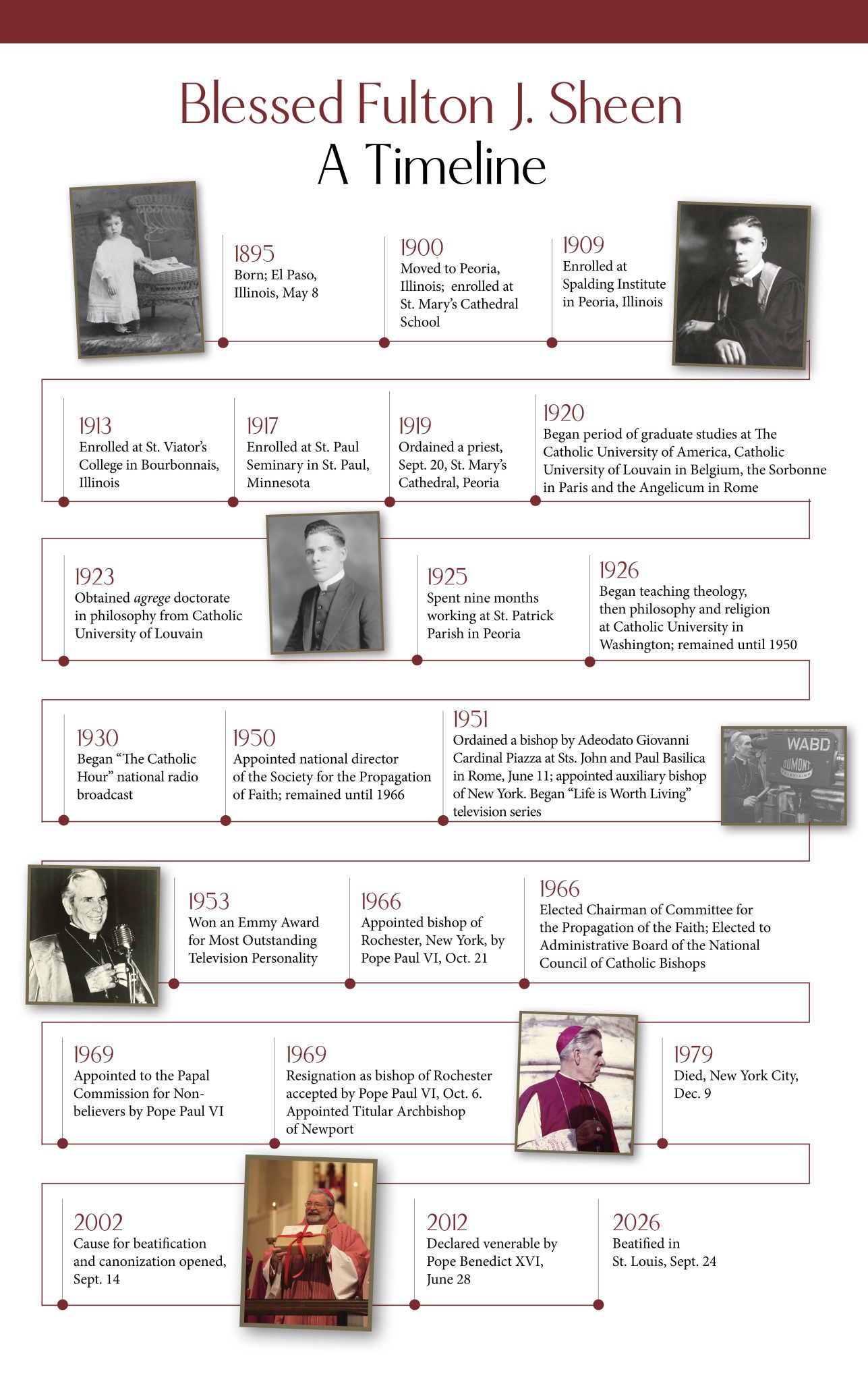
Archbishop Sheen was ordained in 1919 as a priest of the Diocese of Peoria. He taught philosophy at The Catholic University of America and rose to fame first through his radio show “The Catholic Hour” and then TV show “Life is Worth Living.” He meanwhile served as national director for the Society of the Propagation of the Faith, an arm of the Holy See now part of the Pontifical Mission Societies, supporting the Church’s evangelization and humanitarian relief efforts around the world. He was an auxiliary bishop of the Archdiocese of New York before serving as bishop of Rochester, New York, from 1966 to 1969. Upon his retirement, Pope Paul VI gave him the title “archbishop.” He continued to preach and give retreats, and died at age 85 in 1979.
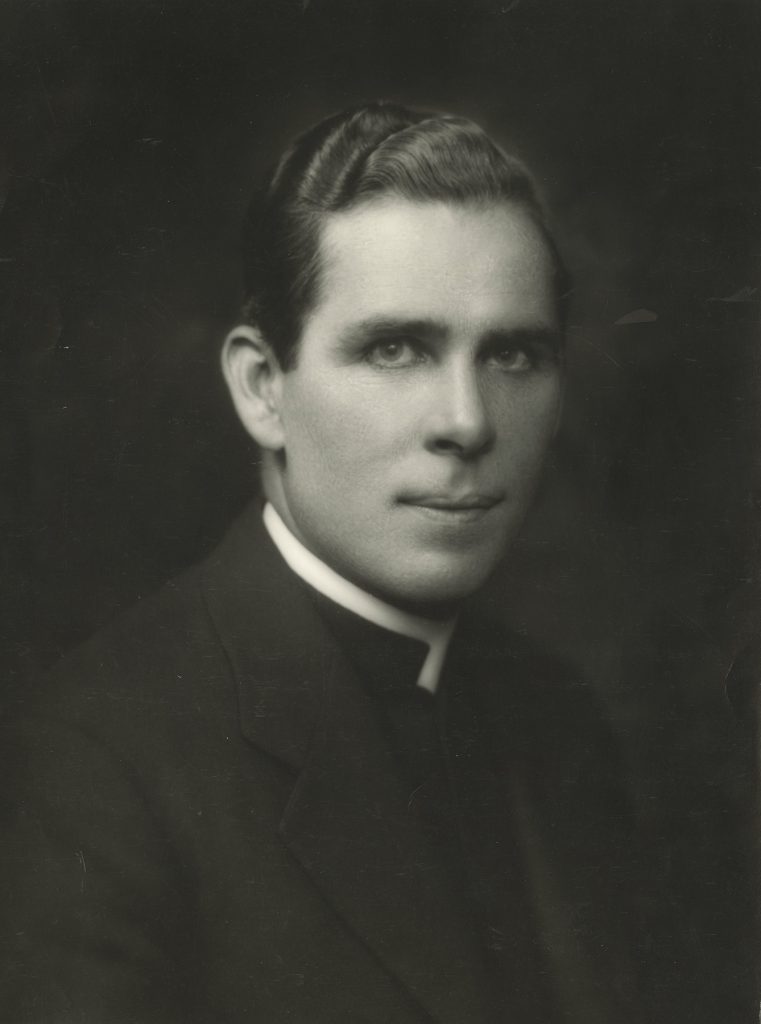
(OSV News) – It was while a professor at The Catholic University of America in Washington that Archbishop Fulton J. Sheen began to use radio as a powerful tool for evangelization. It was a medium that soon garnered him a national audience and reputation.
After completing his doctoral studies at the University of Louvain in Belgium, then-Father Sheen was awarded the highly prestigious agrégé honor after further postdoctoral work, including the publication of a book. In 1926, he returned to CUA, where he had previously begun his graduate studies in philosophy.
Now a faculty member, Archbishop Sheen took on a demanding teaching load and began writing prolifically, leading to the publication of his book “Religion without God” in 1928, a sequel of sorts to his dissertation, “God and Intelligence.” The young priest-scholar also became well-known and popular on campus for his frequent lectures to clubs and groups, as well as his involvement in the newly-founded American Catholic Philosophical Association.
His reputation soon extended beyond CUA’s campus as invitations to speak poured in from around the country. From 1926, Archbishop Sheen began delivering the Lenten sermons at St. Paul the Apostle Church in Manhattan, one of the city’s largest parishes. His first radio appearance came in 1928, after which he was quickly flooded with invitations to speak on radio programs nationwide.
Amid this busy schedule, he also became a sought-after retreat leader for religious women, forming a particular friendship with the Sisters of the Holy Child Jesus, thanks to his bond with a nun at their new Rosemont College near Philadelphia. His presence in New York City’s Catholic pulpits expanded further when he was invited to preach at St. Patrick’s Cathedral on the four Sundays of Advent in 1929.
Despite his growing fame, Archbishop Sheen was acutely aware of the need to ground himself spiritually, especially in the virtue of humility. He faithfully dedicated himself to a daily Holy Hour before the Blessed Sacrament each morning and often retreated to monasteries for longer periods of prayer and meditation. During this period of rising prominence, he became close to a convent of Carmelite nuns in New Albany, Indiana, often writing to the superior to request the nuns’ prayers and supporting the convent financially through regular, generous contributions.
In 1934, Archbishop Sheen published his third book, “Philosophy of Science,” in which he aimed to demonstrate the harmony between recent advancements in mathematics and physics with Thomistic philosophy. He researched and wrote this book while managing a demanding teaching schedule, and spending increasing amounts of time lecturing and preaching around the country.
Recognized for his academic accomplishments, Archbishop Sheen was granted tenure and promoted to associate professor at CUA in 1935. During the mid-1930s, he typically spent two days each week teaching on campus, while traveling to New York City on weekends to preach at St. Patrick’s Cathedral and teach classes for converts — an apostolate for which he would become especially renowned.
His rigorous schedule was well-documented: a 1940 article in Time magazine noted that Archbishop Sheen maintained around 150 speaking engagements annually on top of his teaching commitments at the university. By 1947, Archbishop Sheen had been promoted to full professor, and his resume boasted 33 books, 13 pamphlets and 34 volumes of radio addresses.
It was during this time that Archbishop Sheen fully developed his distinctive public speaking style, captivating audiences in person, on the radio and eventually on television. While he devoted hours to preparation, he always spoke without notes and often opened with a self-deprecating anecdote to establish a sense of connection with his audience. This approach proved especially effective as he increasingly addressed radio audiences.
As mentioned, Archbishop Sheen’s first radio appearance was in 1926, but his radio career truly began in 1930, when he embarked on a 20-year tenure hosting “The Catholic Hour” on NBC radio, which eventually reached an audience of 4 million listeners per broadcast. In 1940, Archbishop Sheen made his first television appearance on Easter Sunday, in what is regarded as the world’s first Catholic television broadcast.
After 22 years on the radio, Archbishop Sheen — who had been consecrated a bishop in June 1951 — began hosting the television series “Life is Worth Living” in 1952. Initially aired for five seasons on two of the nation’s major networks (DuMont and ABC) and later by other distributors until 1968, “Life is Worth Living” reached an audience of 30 million at its peak, sometimes even outpacing Milton Berle’s show on NBC, which aired at the same time.
Having refined his presentation style — including his famous use of a chalkboard — Archbishop Sheen captivated audiences with his talks on faith, the meaning of life and moral living, resonating with listeners beyond just American Catholics. The Jesuit weekly America magazine eventually dubbed him: “the greatest evangelizer in the history of the Catholic Church in the United States” for his groundbreaking use of media to spread the Gospel.
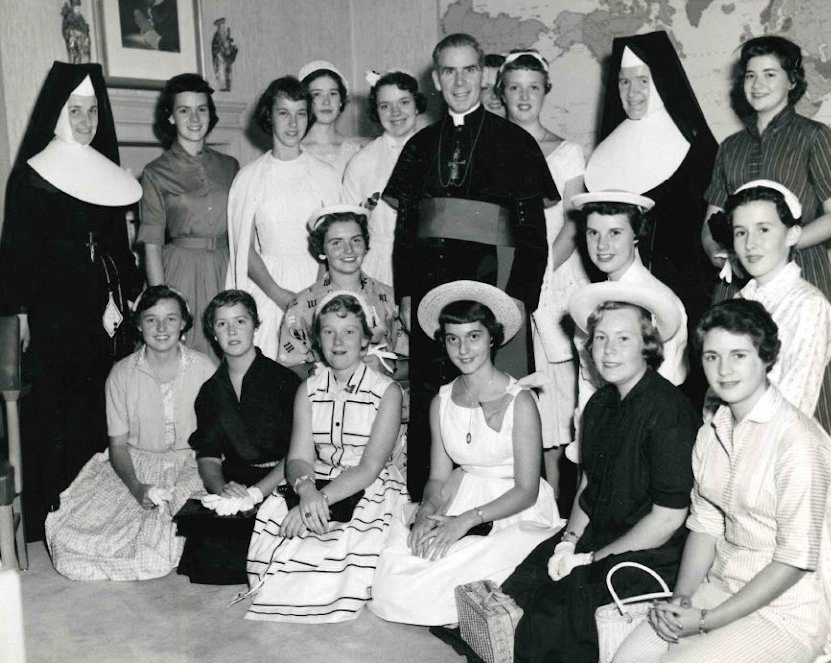
(OSV News) – When Archbishop Fulton J. Sheen is beatified Sept. 24 in St. Louis, attention will rightly fall on the celebrated television preacher whose broadcasts brought Catholic teaching into millions of American homes.
But for almost two decades, behind Archbishop Sheen’s extraordinary reach stood a largely unknown group of women who opened thousands of letters, recorded donations, thanked contributors, and helped transform his words into material support for missionaries and young churches around the world.
Archbishop Sheen served from 1950 to 1966 as the national director of the Society for the Propagation of the Faith, one of the four Pontifical Mission Societies. The society coordinates World Mission Sunday, the annual worldwide day of giving that supports the Church’s work in more than 1,100 mission territories.
It was a responsibility central to Archbishop Sheen’s priesthood and public ministry. Alongside his radio and television work, he traveled, preached missionary appeals and served as editor of MISSION Magazine, which began being published by the national office of the Society for the Propagation of the Faith in 1951.
When the prelate spoke about the missions on television, preached an appeal or published a new issue of the magazine, the response would arrive in the form of 8,000 to 10,000 letters a day, filled with thank-you notes and donations.
Envelopes poured into the society’s national office in New York. Some contained large checks. Others held a few dollars, coins saved by children or brief notes explaining the sacrifice behind the gift.
And behind the scenes, a small army of women opened those envelopes, recorded the offerings and made sure the donors received a response.
Helen Fitzpatrick was one of “the gals,” as she still affectionately calls them.
Now 89, Fitzpatrick began working part-time at the society in 1954, while a senior at St. Vincent Ferrer High School in Manhattan. After graduation, she joined the staff full-time and remained for about a decade.
Her principal responsibility was ensuring that acknowledgment notes were sent to those who supported the missions. The work was constant.
“No matter where he (Archbishop Sheen) was, the office was never without work,” Fitzpatrick recalled. “Every time he would send out an appeal or print the magazine, our office would be swamped.”
Bernadette Schumann, also in her 80s, remembers that the women worked across two rooms, surrounded by correspondence that connected ordinary American Catholics with the missionary Church.
“There were so many letters and so much work, but we knew every envelope represented someone who cared about the missions,” said Schumann, who goes by “Bernie.” “We were proud to be part of it.”
Archbishop Sheen also made sure the staff understood the spiritual purpose behind the paperwork.
“At 3 every afternoon, we stopped whatever we were doing and prayed the world mission rosary together,” Schumann said. “Bishop Sheen made sure that the work we did for the missions was always rooted in prayer. He also took the time to introduce us to visiting missionaries, to make sure we could ‘see’ who we were helping, even if we couldn’t all come to the missions with him.”
For Beatriz Mendoza Orlansky, the path to the Society for the Propagation of the Faith began with exile and an unexpected change of plans.
One of 10 children, she left Cuba with her family in 1960 and resettled in Miami after Fidel Castro came to power. Later that year, she traveled to New York with a cousin and a friend because, she said, “that was the dream we all had.”
Her family already knew Archbishop Sheen. Before the Cuban Revolution, he had traveled to the island to celebrate the marriage of one of her relatives. The prelate also arranged a scholarship for her sister Sofia to attend Rosemont College, a Catholic women’s college in Pennsylvania then operated by the Sisters of the Holy Child Jesus.
Young, single and hoping to become a flight attendant, Mendoza approached Archbishop Sheen with a request. TWA (Trans World Airlines) — which he had dubbed “Travel With Angels” — sponsored his television program, and she wondered whether he might put in a good word.
“He told me that I wasn’t going to be a stewardess,” she recalled.
Instead, Archbishop Sheen put her to work for the missions.
“My job was to open the letters, collect the money and send the thank-yous,” she said. “It was a gift to work there with him.”
By the time she joined the staff, the daily rosary was no longer part of the office routine. But the 3 p.m. pause remained.
“He would always come out at 3 p.m. and share with us a three-minute reflection that would remind us why what we did mattered,” she said.
During those years, the office began producing donor acknowledgments in-house, an operation substantial enough to resemble a small print shop. A sign at its entrance captured the staff’s spirit: “The impossible, we do immediately. Miracles might take a little longer.”
Mendoza and her husband, Hector Orlansky, an Argentine whom she married 52 years ago, both came to regard Archbishop Sheen with deep admiration.
“He was one of my heroes,” Hector said, “a man with a culture and wisdom I have never seen in my life.”
Dozens of women helped sustain the Society for the Propagation of the Faith during Archbishop Sheen’s 16 years as national director. Some of the women married and raised families. Others entered religious life. Most are no longer living, and their contributions were often known only to their colleagues and families.
Mary Regis McLoughlin, who died in 2022, served as the working editor of MISSION Magazine during the 1960s, managing its day-to-day production while Archbishop Sheen remained its named editor.
Sister Marlene Brownett, a member of the Society of the Holy Child Jesus who died in 2024, worked in the Propagation of the Faith office before entering religious life. She later became Archbishop Sheen’s close friend and served on the board of the Archbishop Fulton J. Sheen Foundation.
None of the women interviewed by OSV News expects to be in St. Louis for the beatification. But the celebration will also belong, in a small way, to them — and to the many women whose names are now lost to history.
Unknown to the millions who tuned in each week to hear the man dubbed “God’s microphone,” their work helped ensure that his missionary appeals produced more than admiration. Letters were answered, donors were thanked, missionaries received support and countless small sacrifices were joined to the Church’s global mission.
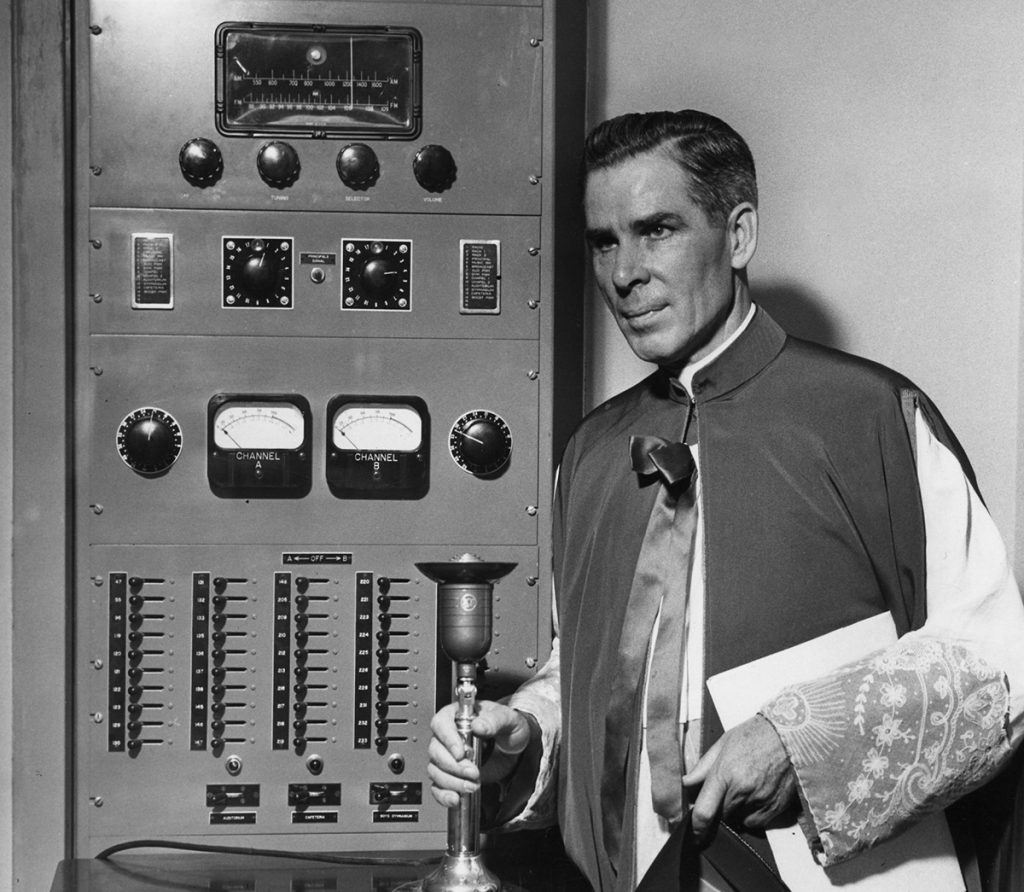
(OSV News) – With his beatification scheduled for Sept. 24, Archbishop Fulton J. Sheen will be memorialized in the Church for reasons far beyond his contributions to the Church’s intellectual life or his evangelical zeal, incredible and legendary though they are. As the Church prepares to acknowledge the reasonable hope that he is in heaven, Sheen’s life of heroic virtue now belongs to the ages – and indeed, what better could be remembered about his or any life?
Sheen is a model for those striving for holiness. Through his practice of the theological and cardinal virtues, which comprise the primary characteristics of candidates for sainthood, Sheen’s life gives a glimpse of what ours could and should resemble.
Faith
Faith illuminated Sheen’s life above all else. He knew that his Redeemer lives, and it shaped and defined everything about him. “If you do not live what you believe, you will end up believing what you live,” Sheen once said.
The strength of Sheen’s faith meant he could do nothing other than dedicate himself to the mission of making Christ known and beloved. Initially immersed in academia, Sheen studied philosophy and theology. He wrestled with the enduring questions of faith and reason, and, as a professor, he clearly taught their integration.
A successor of the Twelve, Sheen possessed a faith marked by an apostolic zeal for souls. He put his many gifts to the service of transmitting God’s word in fresh, attractive and convincing ways, and the internal depth of his faith came across so magnetically that he attracted millions to the truth.
A faithful son of the Blessed Mother, Sheen devotedly adhered to her example. He abandoned himself to God’s providence, following Mary’s directive to do whatever Christ tells us.
Hope
Sheen had a great hope and longing for eternal life. He trusted that God was in control and that God’s designs all worked for the good. To multitudes, Sheen imparted that life truly is worth living.
Amid troubled times and with a joyful persuasion, Sheen proclaimed to the world that because of Christ’s death and resurrection, we know God has the final word. Sheen gave people reasons for hope amid darkness. Ultimately, he wanted others to desire eternal life as much as he did.
Sheen’s exercise of hope also meant he knew the importance and value of suffering as a share in Christ’s cross. Well-acquainted with suffering, Sheen trusted that not only did it have a purpose for the good, it was to be embraced for our salvation. He once said, “In the end, we will discover that sometimes when we are very good the suffering is to make us better, and we will have a higher place in heaven.”
Charity
Charity is intrinsic to the Christian life. St. Paul said it is the “greatest” of the virtues. As Sheen put it himself, “it does not require much time to make a saint. It requires only much love.”
Sheen once said that “the greatest love story of all time is contained in a tiny white host.” This was the love that transformed him. His daily Eucharistic Holy Hour was legendary. From the day of his ordination to the day of his death, Sheen spent an hour a day praying in the presence of the Blessed Sacrament. From his office desk, through an open door, he could gaze upon the tabernacle at all times. His union with Christ enabled him to more fully, more accurately and more convincingly lead others to Christ in all he said and did. Sheen was a man of many talents and accomplishments, but it was Christ who enabled him to use them in the best ways.
It was charity that motivated Sheen’s zeal for souls. Bringing others to Christ was the greatest good he could perform in service to them, and it often came in the form of self-sacrifice. With a pastoral heart, Sheen lived for others. He offered wise counsel with fatherly love. And he gave of himself constantly. Even his time was not his own, for he devoted himself to his studies and in preparation for his ministry of evangelization, for work on behalf of the missions or in the diocese that he governed.
Where Sheen saw a need, he responded in charity. He loved his neighbor as himself. He once preached about our judgment: “Show me your hands. Have you a scar from giving? A scar of sacrificing yourself for another? Show me your feet. Have you gone about doing good? Were you wounded in service? Show me your heart. Have you left a place for divine love?”
Sheen’s love of Christ also was manifested in a love for the poor and marginalized, often in hidden ways. He also worked to raise funds for the foreign missions and donated the vast majority of the earnings from his books and television show for that purpose. “Never measure your generosity by what you give, but by what you have left,” Sheen wrote.
Prudence
Sheen exercised prudence by trusting in God’s providence. It attuned him to listen for God’s voice, even when God spoke through others. Sheen did not rush to judgments, taking time to prayerfully discern. When he listened to others, either those who were seeking advice or those who were giving it to him, Sheen exhibited a twofold attentiveness: first, to the person with him, but, moreover, to what God might be saying in the given situation. This was no easy task for a man of Sheen’s enormous responsibilities and fame.
A supernatural prudence shone through his dealings with others. Keenly aware of how greatly others admired him or wanted to be in his inner circle, Sheen navigated such relationships with grace and distinction, employing equal amounts of caution and concern.
Justice
Sheen acted with justice toward God and others. Not taking himself too seriously, Sheen recognized that any talents he had were because of God working through him. In all that he said and did, Sheen remembered that his work was the Lord’s. Known for leading many to the Faith, particularly through his media ministry, Sheen once was asked by Pope Pius XII how many converts could be attributed to his work. Sheen replied, “I am always afraid if I did count them, I might think I made them, instead of the Lord.”
Sheen’s preaching and teaching also demanded the dignity of the human person. That all are made in the image of God was no abstract theological concept for Sheen, but it was a lived reality. Sheen advocated for social justice — from racial harmony to an end to war and violence. He treated people equally and made himself available to all, no matter their status. Sheen was approachable to the greatest as much as to the least.
Fortitude
Sheen exhibited fortitude amid an abundance of difficulties in both private and public life. Committed to a life of holiness and virtue, he refused to compromise on his own convictions and beliefs. In the face of trials, Sheen remained a joyful and indefatigable herald of the Gospel, admired for maintaining peace of the soul.
Sheen’s happiness was found in the knowledge that God always brings good out of any situation. Publicly, Sheen’s fortitude was seen in his preaching of hard truths. Consider here his prophetic critiques of American society or his staunch denunciations of communism at the height of its flourishing. Amid his successes and popularity, Sheen quietly yet bravely faced envy, contempt and their resulting pain — especially from other members of the hierarchy.
“The real test of the Christian then is not how much he loves his friends,” Sheen once wrote, “but how much he loves his enemies.” By the end of his life, a purified Sheen could say, “I’ve had a great deal of suffering in the 83 years of my life — physical suffering, and other suffering, which should never [have] happened, but lasted over many years. And yet, as I look back, I know very well that I have never received the punishment that I deserved. God has been easy with me.”
Sheen exhibited heroic doses of self-control, humility and kindness, which also were antidotes to the temptations presented to him throughout life, especially those associated with his accomplishments, accolades, position and fame.
Temperance
Sheen allowed God to reign in his heart. As a man of temperance, he was not controlled and dominated by the passions of the will. He was not known for immoderate temper or humiliation of others, but instead for an attractive peacefulness that he achieved through self-control and moderation. In his interactions with others, Sheen often was meek, easy-going and gentle.
Not dependent or attached to earthly goods, Sheen’s habits of life were marked by simplicity, though he also appreciated the finer things of life. Not intent on storing up worldly treasures, Sheen cultivated a storehouse for eternity. He acknowledged his own sinfulness and sought reconciliation.
In the end, Sheen knew, like St. Augustine, that only in God could his heart find rest.
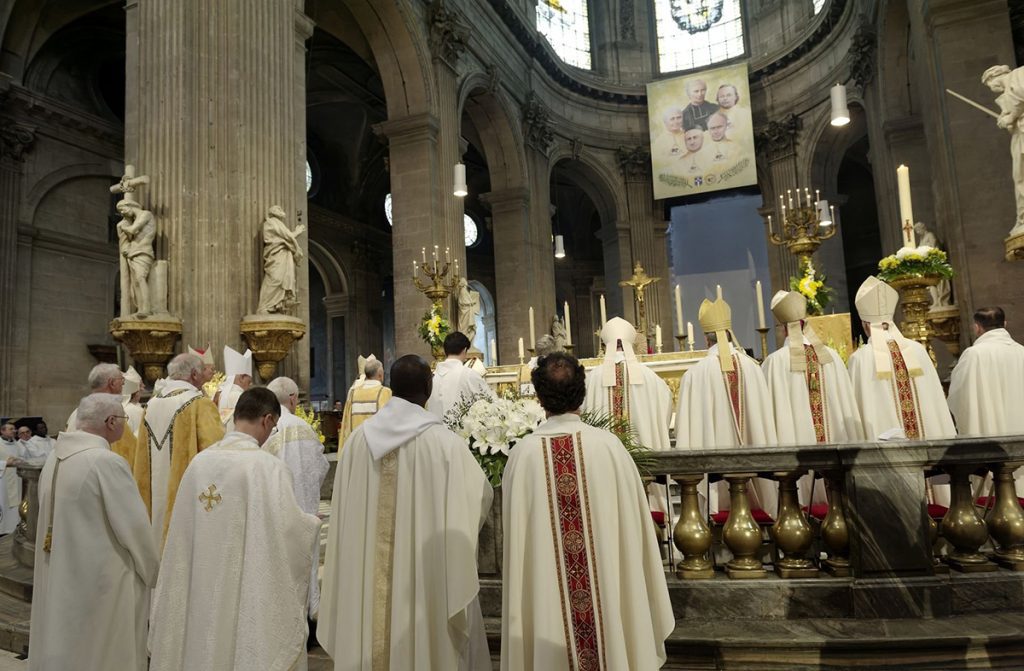
(OSV News) – Beatifications are a tremendous milestone in the process of canonization. The Latin word “beatus,” a title bestowed on the individual in question at a beatification, means “blessed” or “happy.” This word also lends its name to the Eight Beatitudes, which lay at the heart of Jesus’ Sermon on the Mount, described by St. Augustine as “the perfect charter for the Christian life,” or roadmap to holiness.
A beatification is a papal act that declares it is worthy of belief that those who are beatified enjoy the beatific vision; that is to say, they are in heaven because they were killed “in odium fidei” (in hatred of the faith) as a martyr, lived a life of heroic virtue, or offered their life selflessly to preserve the life of others.
— What is meant by ‘beatification’? —
Beatification is the penultimate stage in the process that seeks canonization, whereby the pope solemnly and irrevocably proclaims that the person is truly in heaven. A beatification comes not only after a long juridical process in which a person’s life, reputation and writings are meticulously investigated.
While this process ends with canonization, two major hurdles must be cleared for beatification. After all phases of the investigation are completed, the individual is declared “venerable” – whereby the pope recognizes that the virtue by which the person lived is worthy of the Church’s imitation and worthy of veneration.
Except in the case of martyrs, beatification comes only after a miracle has occurred, been reported and rigorously investigated. A miracle is required for canonization also, even for martyrs, but this necessity has occasionally been waived by the pope.
Canonization causes begin with a local emphasis. Devotion to and veneration of the individual begins first with those who knew the person individually or by reputation. The fame for holiness and intercessory powers (or martyrdom) gradually spreads first regionally, then universally. For this reason, a beatification has most commonly been celebrated locally, by a papal representative, while a canonization is typically celebrated in Rome and always by the pope himself.
— A brief history of beatification —
Before the 11th century, local churches moderated the recognition and veneration of holy men and women. Diocesan bishops, individually or collaboratively, typically investigated and approved a person’s “cultus.” As the medieval papacy expanded its authority, canonizations became reserved to the pope, something formalized in 1234 under Pope Gregory IX. Subsequently, the Holy See permitted limited local veneration of certain persons not yet canonized. When Benedict XIV refined canonization procedures in the 18th century, many already venerated locally were recognized as blesseds.
In 1971, with the rite for Maximilian Kolbe, Pope Paul VI became the first pope to preside personally at a beatification. He presided similarly on several subsequent occasions. Pope John Paul II regularly presided at beatifications, often in a local setting during a pastoral journey, and the practice continued throughout his papacy.
This post-conciliar innovation unconsciously blurred the lines of beatification and canonization. In 2005, Pope Benedict XVI desired to return to the Church’s more traditional approach of delegating a representative to preside over the beatification on the pope’s behalf. A twofold consideration was at play: to more clearly delineate between beatifications and canonizations, and also more clearly involve the local churches. The pope reserved the option to preside over a beatification, as it is always an act of the pope.
— Beatification vs. canonization —
While the pope unequivocally proclaims an individual is in heaven with a canonization, a beatification is more specifically aimed at officially permitting public cultus for the individual whose virtues to a heroic degree, or martyrdom, have been formally approved.
A blessed may be venerated publicly and celebrated liturgically only if the law permits. While canonized saints may be invoked in the public and official prayers of the Church throughout the world, keeping with the theme of locality in beatification, those who are beatified enjoy this on a more restricted or local basis.
The beatified are afforded public cultus in the diocese or religious order in which their canonization cause was promoted. This would include inscription in local liturgical calendars, permitting celebration of a liturgical memorial (commonly referred to as a “feast day”) at Mass and in the Liturgy of the Hours, displaying the blessed’s image in a church or naming churches in their honor.
Other congregations or dioceses can request the same for the beatified in their jurisdictions, especially appropriate for those who have some ties to the blessed (former residence, location of burial, or even the entire nation for those enjoying broad cultus, and the like). The requests for veneration and liturgical commemoration of the blessed in these additional locales must receive approval from the Holy See.
After beatification, use of a halo is also permitted in artistic depictions. If first-class relics are available of the blessed, they may be distributed for public veneration by the faithful.
Although there are currently three blesseds on the United States’ liturgical calendar, the U.S. bishops have in recent decades decided to rarely pursue inscription of beatified Americans on the calendar until they have reached canonization.
— Where is a beatification held? —
The celebration of a beatification occurs in a special rite, most typically situated in the context of a Mass, although it is permitted to occur in some circumstances in a celebration of the Liturgy of the Hours.
It is to be celebrated in the diocese where the cause has been promoted, although it is permitted to hold the beatification in a place more suitable in the same ecclesiastical province or region. This latter option is true for the Sept. 24, 2026, beatification of Archbishop Fulton J. Sheen, whose cause has been promoted by the Diocese of Peoria but whose beatification is being celebrated in the more urban St. Louis, Missouri, a couple hours south by car.
In rare cases, there is also the option that the Holy See might decide to hold the beatification in Rome.
— What happens at a beatification? —
When celebrated within Mass, the beatification rite takes place between the Penitential Rite and the Gloria.
First, a formal request for beatification is made to the papal representative by the local bishop of the diocese where the cause was promoted. This is followed by a public reading of a short biography of the person to be beatified, with special emphasis on his or her virtues.
A formal decree of beatification is read, in the form of an apostolic letter from the pope. Typically this is read in its official Latin and followed by another reading in the vernacular. By this public proclamation of the decree, the person is officially counted among the blessed.
Following this, an image of the newly beatified is revealed, usually with a halo for the first time. A first-class relic, if available, or another relic is then presented to the papal delegate, usually venerated with incense and adorned with candles and flowers.
After the Gloria, the collect prayer proper to the newly beatified’s liturgical cultus is prayed for the first time. The Mass then proceeds as usual.
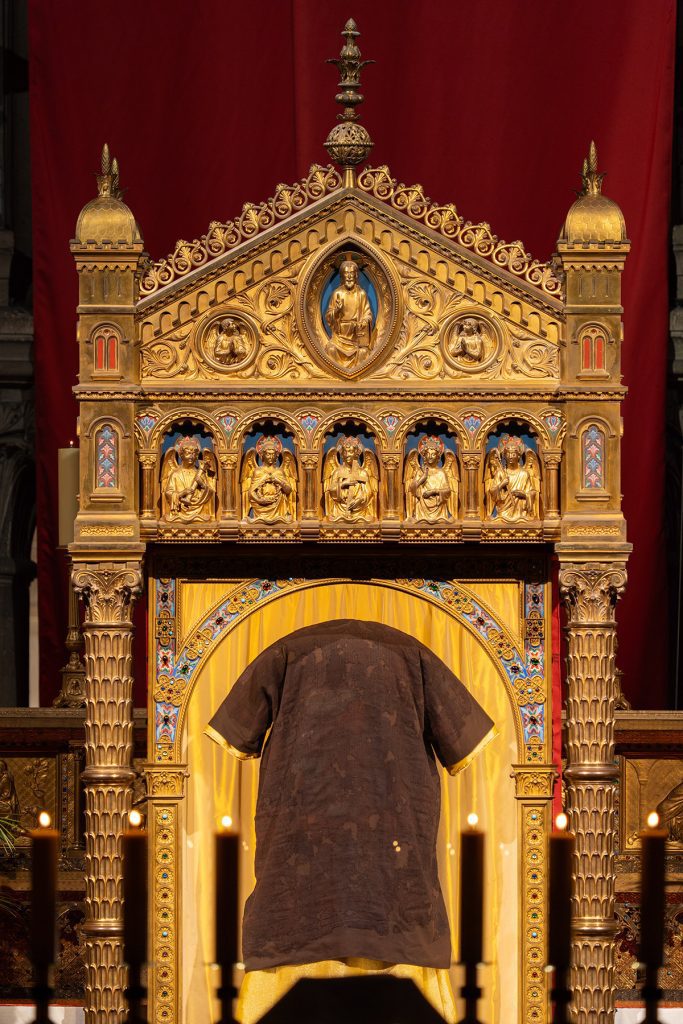
PARIS (OSV News) – Pope Leo XIV will make history during his Sept. 25-28 visit to France as the first pope to venerate the Holy Tunic of Argenteuil, the relic long believed to be the seamless robe worn by Christ during his Passion.
On the evening of his arrival in Paris Sept. 25, he will go to the Stade de France — an iconic venue for the 2024 Olympic Games, located north of Paris in the city of Saint-Denis — to take part in a prayer vigil attended by 80,000 young people ages 17 to 35.
On this occasion, he will venerate the Holy Tunic of Argenteuil, immediately after visiting Notre Dame Cathedral, where the pontiff is scheduled to pray before the crown of thorns. The tunic will be brought to the stadium from the basilica in Argenteuil especially for the event, a move local authorities have called “exceptional,” “unprecedented” and “historic.”
“In modern times, the tunic has never been officially taken out of the basilica,” Argenteuil’s official website stated. “This is a major first, just as (Pope) Leo XIV will be the first pope to behold it.”
The Holy Tunic of Argenteuil has been venerated as Christ’s tunic in France for over 1,200 years. Emperor Charlemagne received it around the year 800 from Empress Irene of Constantinople. He entrusted it to his daughter Theodrada, who was abbess of the Abbey of Argenteuil. Over the following centuries, the village of Argenteuil became an important pilgrimage site in France, attracting kings and queens eager to venerate the tunic, including St. Louis in the 13th century.
During the French Revolution, the parish priest of Argenteuil cut the tunic into pieces to better hide them and thus protect them from looting by the revolutionaries. In the 19th century, it was almost entirely sewn back together, and placed in a special reliquary inside the new Basilica of St. Denis in Argenteuil. From then on, it was displayed for public veneration every 50 years, until — following its restoration in 2016 — it was decided not to wait that long between each display.
In April and May 2025, the Diocese of Pontoise organized the last special public display on the occasion of the Jubilee of Hope. The event generated immense enthusiasm, drawing more than 200,000 pilgrims of all ages and social backgrounds.
Since July, a 39-year-old Parisian carpenter, Gabriel Hostachy, a practicing Catholic, has been working to prepare a special reliquary for the special display aligned with papal presence. Made of oak and linden wood, with a glass panel that allows the tunic to be seen, it is over 12 feet tall and was designed to withstand any attempted break-in or theft.
The tunic itself is made of brown wool. It is 4 feet long and 3 feet wide. Recent scientific research results vary but acknowledge that the fabric is contemporary with Eastern textiles from the first centuries of the Christian era. The bloodstains on it are of the same blood type as those on the Shroud of Turin.
Originally seamless, the tunic is often presented as an opportunity to pray for Christian unity, in remembrance of the moment when Christ’s clothes were divided at the time of his crucifixion, when the soldiers decided not to “tear it,” as the Gospel of John recalls: “Let’s not tear it, but cast lots for it to see whose it will be,” soldiers said to each other, “in order that the passage of scripture might be fulfilled: ‘They divided my garments among them, and for my vesture they cast lots.'”
Bishop Benoît Bertrand of Pontoise, who is officially the “Guardian of the Holy Tunic,” since Argenteuil is located in his diocese, places great importance on the concern for Christian unity.
In fact, as the last public display of the tunic was taking place, many of the cardinals planned to attend could not join as they were called to Rome for the conclave.
The disappointment over the lack of celebrating the display of the tunic in the presence of world’s top cardinals turned “into intense prayer for the Church, and for the future pope,” the bishop of Pontoise told OSV News at the time.
The theme of unity will be central during the vigil at the stadium, which will bring together young people from a wide variety of social backgrounds. A large number of young Catholics from the Diocese of Saint-Denis, known for its working-class neighborhoods, with a significant population of immigrant origin, will be present, along with some of their non-Christian friends.
Many young people from Paris and other dioceses will also be attending, including some who regularly attend charismatic communities or participate in the Pentecost Pilgrimage from Paris to Chartres, which follows Latin Mass.
In August, tickets to attend the vigil with the pope were snapped up within minutes of registration opening. As a result, many young people will watch it on video Friday evening during events organized by parishes or Catholic schools.
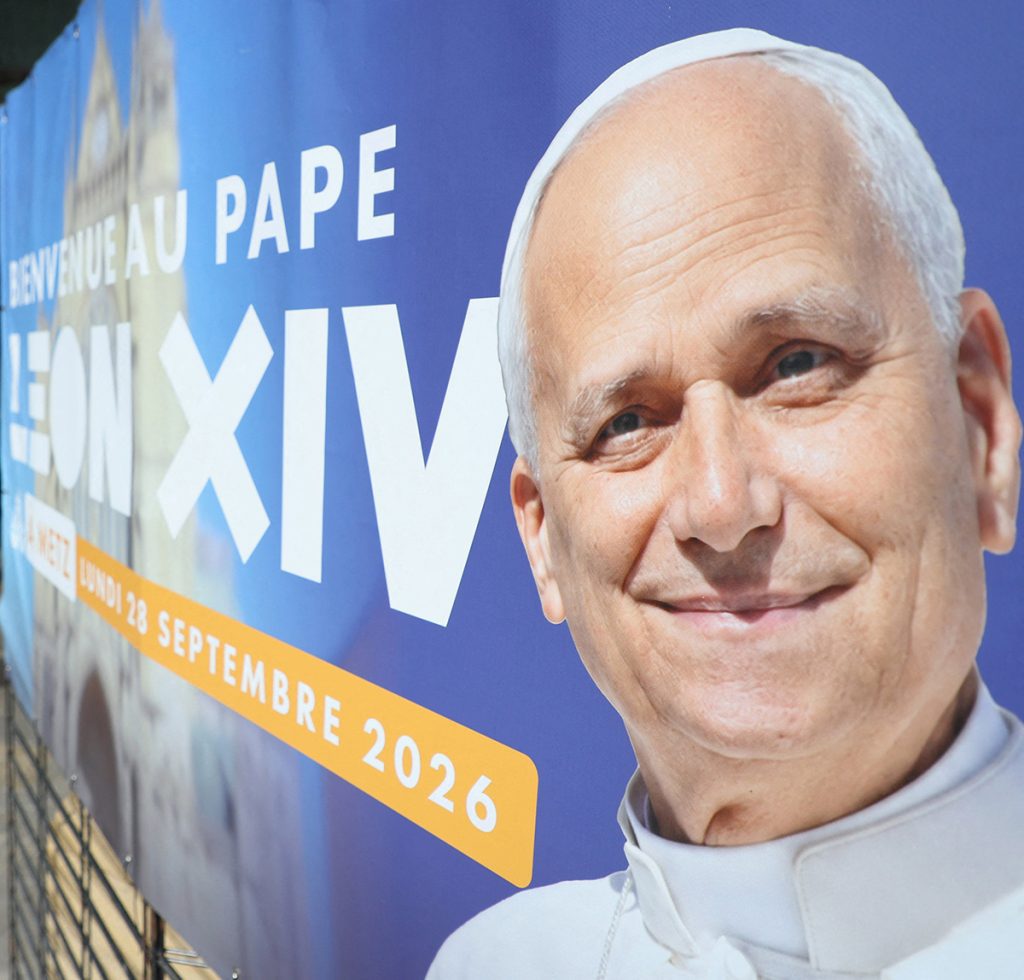
PARIS (OSV News) – As France prepares to welcome Pope Leo XIV, the country’s Catholics hope for a “breath” of “new life” into their Church from the pope.
They don’t know the pontiff well, but are still counting on the “Leo effect,” a newly released survey has shown.
According to the Sept. 15 poll conducted by the French Institute of Public Opinion, or IFOP, and commissioned by Catholic media outlets Famille Chrétienne, Aleteia and RCF Notre Dame, more than a quarter of respondents — 26% — said Pope Leo’s apostolic visit could “breathe new life into the Church in France.”
Asked what they would like Pope Leo to address in the country, nearly 1 in 3, or 28%, said “peace and global conflicts,” with the respondents also hoping “he will speak candidly about the issue of sexual abuse.”
While 58% of French respondents don’t have an opinion on whether Pope Leo defends Catholic values well, 32% of those who will welcome the pope for the Sept. 25-28 visit to Paris, Lourdes and Metz said the American pope defends them “quite well.”
French commentators point out that the country’s Catholic community is looking forward to “Leo’s effect.”
For Jérôme Fourquet, director of the opinion department at IFOP, French Catholics are looking for a momentum similar to the one seen during World Youth Day 1997 with St. John Paul II.
“One of the goals of (Pope) Leo XIV’s visit to France is precisely to create such moments of fervor,” he told Famille Chrétienne, commenting on the newest survey.
For Bishop Pierre-Antoine Bozo, spokesman for the French bishops’ conference, “there is a genuine thirst in the heart of modern man,” and in France, “this spiritual curiosity is awakening” and is seen widely through a record number of baptized Catholics.
“I would add that the pope’s message has the power to resonate with the existential aspirations of many French people,” he said. “He comes to light a spark on fertile ground,” he told Famille Chrétienne.
Fourquet predicts that “those who are 15, 20 or 25 years old today” and who take part in events with the pope — “will later be able to testify to the extraordinary impact it had on their lives.” For some “it will even shape their life choices,” he said, pointing out to many priests admitting in the past they found their vocation through WYD 1997.
While “Leo XIV is not very well known to the French public,” Bishop Bozo added, this apostolic journey “is precisely the opportunity for them to get to know him — to meet him not only as the head of the Church but also as Robert Prevost, with his own distinct personality.”
What French Catholics greatly appreciate, and wait for, the survey has shown, is the papal message of peace.
“In a world defined by sound and fury, (Pope) Leo XIV’s personality stands out very clearly indeed,” Forquet emphasized. “He is a figure of an era where aggression has become the norm,” and in this moment “There is a real need for a stabilizing force,” he said. Pope Leo “answers this latent expectation among a segment of the population.”
Nearly 600,000 people have registered to attend the pope’s Mass in Paris on Sept. 26 — a truly massive turnout, according to observers.
Archbishop Laurent Ulrich of Paris described it as “a number that exceeds all our expectations” in a Sept. 16 press release.
“Given this large turnout, the Archdiocese of Paris is setting up an additional area, secured by law enforcement,” he said, announcing that the area for participants was extended but registration has been closed for that event.
Still, sociologist Yann Raison du Cleuziou cautioned that enthusiasm does not signal a broad Catholic revival.
For Raison du Cleuziou, professor of political science, historian, sociologist of religion and one of the most renowned experts on French Catholicism, the numbers are not yet proving a comeback of Catholicism as a major force in French society.
“We should not conclude from this that Catholicism is regaining significant influence” as “secularization continues in France,” he told OSV News.
“The enthusiasm for the reopening of Notre Dame in 2024 was genuine,” he said, noting “renewed spiritual vitality in certain parishes and movements, and an objective increase in adult baptisms in recent years,” but the number of practicing Catholics, he said, “continues to decline.”
According to Raison du Cleuziou, it’s not communities or the Church as an institution that introduces change in society these days. “Individuality plays a decisive role in society far more so than communities and institutions,” he said, “and the voice of the Catholic Church as such is no longer taken into account.”
“In this context, the future of the Church in France depends on those who remain,” Raison du Cleuziou noted. “In general, it is the most conservative Catholics — those who are very devout and closely follow the Church’s teachings — who have been most successful in passing on the Catholic faith from one generation to the next. Three-quarters of today’s seminarians come from these families.”
For Raison du Cleuziou, today’s younger generations of Catholics in France are very different from those in the 1970s. They are not ashamed of their Catholicism — on the contrary — they want to show off that they’re proud of who they are.
“They want to clearly display their identity, rather than fade into the background, at the risk of being diluted by the dominant secular culture. Seminarians, for example, are increasingly in favor of wearing the cassock, at least occasionally, whereas it had almost completely disappeared after the (Second Vatican) Council.”
“Young people also feel the need for beautiful, meaningful liturgies that combine both a sense of inner reflection and solemnity in the liturgy, along with traditional theological instruction, and clear guidelines for everyday life,” Raison du Cleuziou noted. “And they are reviving individual devotions and collective expressions of popular piety that had been set aside by their elders, such as processions with banners or devotion to the Sacred Heart.”
Still, the “dominant group in France today,” about 70% of the French population, is the “nonreligious,” Raison du Cleuziou told OSV News.
“Among those over (the age of) 60, nearly one in two still identifies as Catholic, but among 18- to 29-year-olds, that figure has dropped to just 15%,” the expert pointed out. “Young Catholics therefore feel like a very small minority. And they are closely followed by Muslims, who now make up 13% of their age group and openly embrace their faith and religious practices without any hesitation.”
In this context, he said, “the presence of Catholics who have immigrated to France, for example, those from Africa, is important,” as immigrant Catholics “embrace their faith openly, calmly and simply,” he said, adding they integrate well into parishes, which are now more vibrant in cities than in the countryside.
For Raison du Cleuziou, the phenomenon of catechumens and neophytes, who often come from families that were once Catholic, is an important indicator of the state of French Catholicism.
“They say they had an ‘experience of encountering Jesus’ that has transformed their lives,” he explained. “It was this encounter that led them to seek to deepen an intimate relationship with Christ they have discovered.”
“For these newly baptized individuals, belonging to the Church as an institution was not a priority at first,” Raison du Cleuziou concluded. “They are not very familiar with the Holy See and the pope. Nevertheless, the visit of Pope Leo XIV, who will meet with some of them, is sure to intrigue them and should pique their interest.”
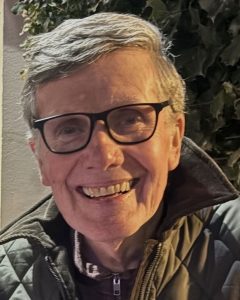
Attorney Joseph A. O’Brien, Scranton, passed away peacefully on Monday, September 14, 2026 while surrounded by his family. He is survived by his wife of 55 years, Barbara Scanlon O’Brien.
Born in Gainesville, Florida, he was the eldest of five children of the late Atty. James Edward O’Brien and Mary Athy O’Brien. He was raised in Dunmore and was educated at Scranton Preparatory School, Georgetown University, and Seton Hall University Law School. From 1967 to 1971, he served in the United States Air Force. During his military service, he attended the Defense Language Institute, where he graduated as valedictorian. Following his language training, he was assigned as an intelligence analyst at the National Security Agency. His military and intelligence service reflected a deep commitment to the nation and principles he held dear.
He began his legal career as a law clerk to the Honorable Richard P. Conaboy of the Lackawanna County Court of Common Pleas and the Honorable William J. Nealon of the United States District Court for the Middle District of Pennsylvania. Following his clerkships, he served as an assistant district attorney in Lackawanna County. He entered private practice at Oliver Price & Rhodes, where he made partner in 1979 and continued to practice law for the remainder of his life. He counted his partners at Oliver Price & Rhodes among his closest and most cherished friends.
He was an exceptional lawyer, a respected member of the Bar, and an active member of the community. He served as General Counsel to the Roman Catholic Diocese of Scranton, the Congregation of Sisters, Servants of the Immaculate Heart of Mary, St. Joseph’s Center, the Congregation of Sisters of Saints Cyril and Methodius, the Religious Teachers Filippini, and numerous other Catholic organizations and institutional nonprofits. An accomplished civil and criminal trial attorney, he litigated cases in all Pennsylvania and federal trial and appellate courts.
He believed in public service and the ability of local government to improve people’s lives. He served as Lackawanna County Solicitor from 1984 to 2004 and served as a solicitor for numerous municipalities in Lackawanna County throughout his career. He was active in the Democratic Party and served as Secretary of the Lackawanna County Democratic Party for twenty years. He valued his political friends from both sides of the aisle.
He was an assistant professor at Marywood University for three decades, where he taught Business Law, Federal Taxation, and other courses. He served as a member of the Scranton Prep Board of Trustees from 1991 to 1997 and as Northeast Pennsylvania Chair of the Georgetown University Alumni Admissions Program for fifty years.
Joe was a loving husband, father, brother, Poppy, uncle, and friend. He was a longtime member of the Country Club of Scranton, where he was a participant in the Round Robin Men’s League, the Friday Game, and the Wednesday Group. He enjoyed the Club immensely and treasured the moments he spent there with family and friends. In particular, he cherished the memory of countless rounds with his brothers, John, Jimmy, and Andy. He passed his love of golf to his children and grandchildren.
Joe delighted in watching his grandchildren play sports and he was their biggest fan both on and off the field. He was a lifelong fan of Scranton Prep, Georgetown athletics, and the Philadelphia Phillies. Each year he looked forward to a Red October.
In addition to his wife, Barbara, he is survived by five children, Rosemary Granet and husband, Jason, Scranton; Christina Haggerty and husband, Matthew, Scranton; Kathleen Mucci and husband, Michael, Summit, N.J., James O’Brien and wife, Christina, Ardmore, and Atty. Michael O’Brien, Philadelphia, and fifteen grandchildren, Noah, Rose, Grace, Daniel, and Marie Granet; Abigail, Caroline, Cecelia, Matthew, and Joseph Haggerty; Ella, Margaret, and Holly Mucci; and James and Charlotte O’Brien. He is also survived by his sister Janet Spengeman and husband Peter, sisters-in-law Noel O’Brien, Cissy O’Brien, Sally O’Brien, Colleen Scanlon, and many nieces, nephews, great-nieces and great-nephews, and many cousins.
He was preceded in death by his brothers, Atty. James E. O’Brien, Jr., Andrew O’Brien, and Atty. John O’Brien.
Friends may call at Saint Paul Church on Thursday, September 17, from 3:00 P.M. to 7:00 P.M. A Mass of Christian Burial will be celebrated by Rev. Jeffrey Tudgay on Friday, September 18, at 10:00 A.M. at Saint Paul Church, 1510 Penn Avenue, Scranton, with Interment with military honors inn Cathedral Cemetery.
For those unable to attend in person Joe’s Mass will be livestreamed on the Vanston and James Funeral Home Facebook page.
Throughout his life, Joe was a devoted Catholic and placed the highest value on Catholic education. In lieu of flowers, memorial contributions may be made to the Diocese of Scranton Scholarship Foundation, 300 Wyoming Avenue, Scranton, PA 18509, the Scranton Preparatory School, 1000 Wyoming Avenue, Scranton, PA 18509; or to the James E. O’Brien and Russell J. O’Malley Memorial Scholarship Fund at the Scranton Area Community Foundation, 615 Jefferson Avenue, Suite 102, Scranton, PA 18509.